
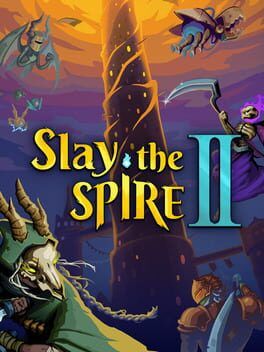

Mega Crit’s sequel has shattered Steam records as the biggest roguelike deckbuilder ever. Here’s why it caught fire so quickly, what that means for console launches, and how it could reshape the wider roguelike market.
Slay the Spire 2 did not ease itself into Early Access. It kicked the door in.
Within hours of its March 5, 2026 launch on Steam, Mega Crit’s sequel was pulling six‑figure concurrency. By day one it was already past 150,000 players at once, then 280,000, and, according to SteamDB tracking and multiple reports, it has since surged past 400,000 concurrent users, topping out around 430,000 players. That would make it not just the biggest deckbuilder on Steam, but the most‑played roguelike on the platform’s history charts, leapfrogging competitors that had months or years to build an audience.
For an indie studio shipping an unfinished card game sequel in Early Access, these numbers are wild. But they are not accidental.
From cult classic to Steam juggernaut
The original Slay the Spire quietly rewired the indie landscape. It turned “roguelike deckbuilder” from a niche experiment into a template, inspiring everything from Monster Train to Wildfrost and spawning an entire subcategory on Steam.
That foundation is a big part of why Slay the Spire 2’s Early Access debut looks less like a risky soft launch and more like a full‑scale blockbuster release. The first game is still a fixture in the top‑rated charts, still a favorite for streamers, still something every aspiring card game designer studies. When Mega Crit finally stamped a date on the sequel, you could feel years of pent‑up demand snap into place.
The result was visible the minute Steam opened the floodgates. Slay the Spire 2 vaulted ahead of big budget shooters and live service behemoths on the top sellers list. It also broke through the usual indie ceiling on concurrency numbers, tripling the original’s all‑time peak within a day and overtaking other roguelike heavyweights that had set records only weeks earlier.
Early Access launches usually start modest and build over time. Slay the Spire 2 instead behaved like a tentpole release, front‑loaded with anticipation from both long‑time fans and an entire generation of players who discovered roguelike deckbuilders because of the first game.
Why this sequel is connecting so fast
A record‑breaking launch is rarely just about marketing or nostalgia. Slay the Spire 2 is landing because Mega Crit made smart, visible choices about how to evolve a genre that has been copied endlessly since 2019.
First, it respects muscle memory. Runs still hinge on the same satisfying loop of drafting cards, taking calculated risks on the map, and praying your relics line up with your build. The interface is familiar, the pacing is snappy, and veterans can play on instinct from the opening fight. That matters when hundreds of thousands of people slam “Play” on day one. There is very little friction between hitting Start and having a classic Slay the Spire moment.
At the same time, there is enough new stuff in every run to make even seasoned players feel off‑balance. New characters radically alter how you think about tempo, energy, and risk management. Encounter design leans harder into asymmetrical fights that punish autopilot play. Alternate act routes and events create more forking paths per run, which makes the game far more rewatchable on Twitch. That streamer friendliness is crucial in 2026, where discovery is often tied to how compelling a game looks in 30 seconds on someone else’s feed.
Crucially, the sequel is also launching in a world that has caught up to its design. Back when the original came out, explaining “roguelike deckbuilder” meant a paragraph of caveats. Today, the pitch is instantly understood. Hades, Inscryption, Balatro, and dozens of others have trained a much wider audience to accept permadeath, randomization, and long‑tail progression as standard. Slay the Spire 2 benefits from that cultural shift. Its systems look less intimidating to newcomers, yet its ceiling for mastery is still sky high.
The quality of the Early Access build is another piece of the puzzle. Reports across outlets point to a remarkably stable launch, with Overwhelmingly Positive user reviews, strong Linux support, and no major technical meltdowns beyond Steam itself briefly groaning under the player surge. When a game launches this polished, more players are willing to jump in early and stick around while the balance and content curve improve.
Early Access as a live stress test
These record concurrency numbers are not just a bragging right. For Mega Crit, they function like a live stress test for design. With hundreds of thousands of players hammering every edge case, broken card interactions and degenerate builds surface almost immediately. That gives the team invaluable data before any 1.0 console launch.
It also proves something that publishers have quietly debated for years: a deck‑heavy, turn‑based roguelike can compete in raw engagement with the biggest genres on Steam, as long as it offers clarity, replayability, and a clean on‑ramp. That shifts how platform holders and storefront curators think about featuring games like this in their premium slots and subscription libraries.
What the surge means for console launches
Right now Slay the Spire 2 is only on PC, but its runaway success is already changing the conversation around consoles.
Platform‑specific outlets are openly pining for ports, and with good reason. The original Slay the Spire quietly became a staple on Switch, PlayStation, and Xbox, especially on handheld‑style hardware where “one more run” fits naturally into short play sessions. The sequel’s Early Access numbers will only make those platforms more aggressive about securing a day‑and‑date 1.0 release or, at minimum, a tight exclusivity window for marketing.
For Mega Crit, these Steam charts are leverage. When your PC build has already proven it can sit near the top of global concurrency, you can negotiate better placement on console storefronts, stronger promotional pushes, and potentially even Game Pass or PS Plus deals that guarantee a baseline of revenue. You are not pitching a promising indie, you are pitching one of the most played roguelikes on Steam.
The bigger question is timing. The developers have been clear that Early Access will last more than a year, as they expand content and refine balance. That makes an early console port unlikely. But instead of that being a problem, the Steam surge actually buys them time. Console audiences now have a powerful reason to wait for a “complete” version, especially if Mega Crit can frame 1.0 as a definitive edition with extra acts, relics, and quality‑of‑life features honed by millions of PC runs.
Expectations, however, are now sky high. The original Slay the Spire set a bar for how well a deckbuilder can feel on a controller. The sequel’s success all but guarantees that PS5, Xbox Series, and whatever Nintendo hardware is next will expect a slick, latency‑free card interface, cross‑save or at least shared progression hooks, and possibly some platform‑specific bonuses. Anything less will feel conservative for a game that has already rewritten the genre’s sales ceiling.
A new benchmark for the roguelike deckbuilder scene
When one game explodes, the whole ecosystem feels it. Slay the Spire 2’s Early Access breakout is poised to reshape the expectations and strategies around roguelikes and deckbuilders well beyond Mega Crit’s studio.
For one, it resets the definition of success. Previously, a strong roguelike deckbuilder might consider 20,000 to 30,000 concurrent players a dream launch. Slay the Spire 2 has shown there is a much larger hunger for this style of play, provided it is attached to a trusted brand and a refined core loop. Investors who once might have dismissed card‑heavy roguelikes as niche are going to look at these charts and reevaluate their assumptions.
It will also put more pressure on new entries to specialize. The days of “Slay the Spire, but with X twist” were already waning, and this sequel accelerates that trend. With the original and its follow‑up occupying the center of the subgenre, upstarts will need sharper identities whether that is story‑driven runs, heavy meta‑progression, PVP, co‑op focus, or blending deckbuilding with real‑time combat. The baseline of card quality, encounter variety, and build creativity has been raised.
On the flip side, the game’s success is a win for the entire roguelike space. It reinforces the idea that systems‑first, highly replayable games can go toe‑to‑toe with sprawling open worlds and service titles. When Slay the Spire 2 tops charts, it does so not by dangling battle passes or seasonal cosmetics, but by offering endless permutations of meaningful decisions, all framed in a run‑based structure that respects player time. Other developers, from tiny indie teams to AA studios, will take note.
Where the climb goes from here
The most interesting part of Slay the Spire 2’s Early Access story is that it is still, technically, the beginning. The current version has already generated record traffic and rave reviews, but the complete game that hits 1.0 on PC and consoles will almost certainly look different.
Balance passes will reshape tier lists. New acts and characters will open up fresh strategies and probably spark new meta‑breaking combos. Quality‑of‑life changes will smooth out the few rough edges that remain. And when that final version finally climbs onto PlayStation, Xbox, and Nintendo’s storefronts, it will do so with years of data and goodwill behind it.
For now, the message from Steam is blunt. A carefully crafted roguelike deckbuilder, built on a beloved foundation but unafraid to take risks, can dominate the charts even in a packed release calendar. Slay the Spire 2 is not just having a strong Early Access launch. It is redrawing the map for what this entire genre can be.