
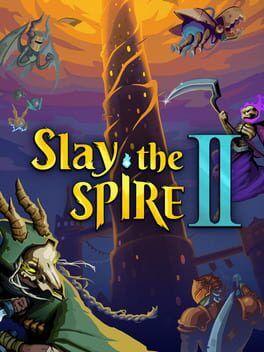
A launch-window look at how Slay the Spire 2’s new classes, co-op focus, and revised meta progression iterate on one of the most influential deckbuilder roguelikes ever made.
Slay the Spire 2 does not feel like a spin-off or a content pack. Even in its earliest PC early access days, Mega Crit’s sequel plays like a confident second draft of one of the most important roguelike deckbuilders ever released. Runs are still fast, brutal, and wildly swingy, but the ways you build a deck, pace your ascent, and commit to long term goals have all shifted in subtle ways that add up to something that feels immediately familiar and quietly new.
If the first game became a staple on PC, consoles, and handhelds by stripping the genre to its cleanest possible form, Slay the Spire 2 is about testing how far that formula can stretch without losing its edge.
A familiar climb with a wider frame
Structurally, the basics are the same. You pick a character, fight through three main acts of enemies and elites, draft cards after each battle, and shape your build around relics, events, and the odd desperate shop visit. Your deck is still your life bar, your damage output, and your solution to every problem the Spire throws at you.
The early access build widens that frame in two key ways. First, routes feel more expressive. Encounters, events, and elite placements show a touch more variance than in the original. You still read the map like a risk-reward puzzle, picking between question marks and predictable fights, but the game seems more comfortable pushing you into strange event chains or multi fight gauntlets. Second, pacing is tuned around the knowledge that many players already speak the language of Slay the Spire, which means it wastes less time easing you in and more time daring you to overreach.
That shift is clearest in the new classes and how they interact with meta progression.
New slayers, new verbs
The three original characters return, reworked enough that veterans will constantly bump into cards that twist old archetypes. Ironclad still leans on strength scaling and self healing, Silent still dances between poison and shiv storms, and Defect still channels rotating orbs. Their core fantasies are intact, but card pools introduce more cross archetype tools and clearer incentives to specialize earlier in the run.
The real seismic change comes from the new faces. The standout is the Necrobinder, a risk reward specialist built around a macabre pet system. She fights alongside a disembodied hand, Osty, whose size and power scale with its own health pool. Many of her cards spend her life or Osty’s to generate bursts of tempo, then swing back with giant heals or defensive spikes if you manage your resources carefully.
In practice, that means your deck is constantly flirting with disaster. You are encouraged to leave yourself at what would be lethal health totals on other characters in exchange for decadent damage turns, trusting that a delayed heal or defensive payoff will land before the next boss slam. It is a class that feels tuned for returning players, both mechanically and mentally. The game expects you to know how far you can push a run and then invites you to step one square past that.
Alongside her, the second new character (still being tuned in early access) continues the trend of pushing class identity further than before. Where the original cast mostly played with different resource dials on the same engine, Slay the Spire 2 uses its new characters to test new verbs. Summoning, positional effects, even light multi unit management in co op start to bleed into deck construction.
This matters because it gives the sequel something the first game often lacked in its earliest hours: a sense that picking a new class means truly learning a new game.
Meta progression that widens, not flattens
One of the sneaky reasons the first Slay the Spire became a forever game was its restrained meta progression. Unlocks expanded possibilities without turning later runs into easy mode. Slay the Spire 2 leans into that philosophy rather than chasing roguelite trends where your profile level is as important as your play.
Between runs, you still unlock cards, relics, and sometimes entire archetypes for each character. The sequel evolves this with a more explicit sense of “run shaping” rather than raw power. Early impressions suggest three big shifts.
First, starting conditions are more flexible. Meta upgrades tend to add alternative starter relics, tweak opening deck lists, or unlock optional challenges that alter reward distributions. Picking a slightly different starter can completely change how you evaluate your first few card rewards without pushing your numbers too high.
Second, unlock trees are a bit clearer. Where the first game often doled out new toys in a more opaque sequence, Slay the Spire 2 surfaces your progression goals in a way that makes it easier to say, “I am going to chase X archetype unlock this week.” For a game that invites hundreds of hours of play, that small bit of direction is valuable.
Third, there is a stronger relationship between meta progression and co op. Certain unlocks appear to have obvious multiplayer implications, such as cards and relics that buff allies or manipulate shared resources. That means you are not just gearing up a personal profile but nudging your group’s future runs toward particular styles of play.
The critical piece, at least so far, is that none of this feels like it trivializes the core challenge. Early access runs still kill you brutally if you bloat your deck or misjudge an elite. Meta progression mainly widens the design space in which those mistakes happen.
Co op, coordination, and chaos
Four player co op is the headline mechanical shift, but it is also the one most likely to scare solo purists. It works better than it has any right to on paper.
The co op mode lives in the same structure as solo runs but layers in small, constant decisions about who gets what and when. Enemies are shared, routes are chosen as a group, and rewards often ask you to negotiate. Does the Necrobinder greed the high risk relic that supercharges her damage at the cost of party health, or do you play it safe and hand it to Ironclad to smooth out the frontline?
The secret is that co op does not dilute the purity of deckbuilding so much as refract it. You still obsess over draw orders and synergy lines, but now you are also building around the person sitting two characters down from you. Cards that were niche in solo suddenly become core tools when you can rely on another player to exploit the window they create.
From a launch window perspective, this feels like the biggest structural experiment in the sequel. It turns Slay the Spire, famously a lonely obsession on Switches and Steam Decks, into something closer to a weekly tabletop night where everyone brings their own broken combo and hopes the Spire lets them show it off before it crushes them.
Iterating on a genre it helped define
Slay the Spire 2 does not scrap the genre blueprint it helped write. Instead, it looks at what newer deckbuilder roguelikes borrowed or pushed and folds in the lessons that fit.
Run variety is up across the board. Events lean harder into dynamic outcomes that ripple across multiple floors. Bosses and elites more often force you to interact with your deck in uncomfortable ways, punishing over tuned glass cannons or lazy block stacks. Relics encourage narrower, more expressive builds rather than general purpose stat bumps.
There is also an underlying sense that Mega Crit is more willing to break and rebuild systems mid early access. The card pool already shows evidence of reworks and aggressive tuning, and the Steam page messaging is clear that this early access period is less about a gentle polish pass and more about letting the community help shape the cards that will define the long term meta. If you were around for the first game’s gradual evolution, this feels like a more confident sequel repeating the trick with a larger audience.
In the short term, that means a launch window where balance is a little wild and tier lists calcify and crumble weekly. In the long term, it is exactly what you want from a sequel to a run based strategy game.
How it feels to actually play right now
All of this systemic talk matters less than how it feels to slam cards on the table. On that front, Slay the Spire 2 already captures the prickly tension of the original.
Turns are snappy. Animations are clear without being fussy. The new art style sharpens silhouettes and telegraphs attacks better, which matters a lot when you are threading a block breakpoint or planning around a multi stage enemy intent. Sound design is punchy, with a heavier emphasis on crits, debuffs, and big defensive turns that makes the rhythm of a fight easy to read.
Runs remain short enough to encourage “one more” syndrome but long enough that a successful ascent still feels like a story. You remember the event where you traded half your health for a cursed relic that ended up enabling your final boss combo. You remember the floor where your Necrobinder sat at single digit health for four fights in a row because the payoff kept being worth it.
Crucially, early access rough edges are where you would expect them. Some card descriptions are slightly opaque, a few enemies spike harder than others, and co op lobbies can hiccup. None of it cuts into the core loop.
The early verdict
As a launch window snapshot, Slay the Spire 2 looks less like a radical reinvention and more like a carefully built expansion of everything that made the original a permanent icon in PC and handheld libraries.
New classes such as the Necrobinder genuinely change how you think about risk. Meta progression is more visible and goal oriented without smothering the roguelike purity that made victories feel earned. Co op turns solitary theorycrafting into a shared puzzle without hollowing out the strategy.
If you bounced off the original because the structure felt too stark, the sequel’s wider variety and clearer progression goals might pull you back in. If you already have hundreds of hours in the first game, Slay the Spire 2 feels less like a replacement and more like a new, taller tower to climb beside it.
The Spire has opened again. So far, it looks like the wait was worth it.