
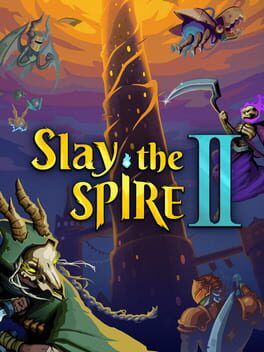

How four‑player co‑op reshapes strategy, pacing, and replay value in Slay the Spire 2, and why this multiplayer mode feels essential instead of tacked‑on.
Slay the Spire was almost monastic in how it wanted you to play. One brain, one deck, one climb. Its brilliance came from that tight feedback loop between your decisions and the Spire’s response. So when Mega Crit announced that Slay the Spire 2 would launch with four‑player co‑op, there was a very real fear that multiplayer might blunt what made the original special.
Instead, co‑op is already the sequel’s defining feature. It does not just bolt extra players onto a single‑player design. It rewires how you think about risk, economy, and even turn order, while still feeling immediately readable to anyone who burned dozens of hours on the first game.
How co‑op changes the strategy game you think you know
Solo Slay the Spire is about building a self‑sufficient engine. You hoard relics that make your own deck smoother, prune weak cards, and calculate whether you can afford to take one more elite on the way up. Every decision routes through a single question: “Does this make my deck stronger?”
In Slay the Spire 2 co‑op, that question quietly flips to “Whose deck does this make stronger?” The answer is no longer always “mine.”
The sequel builds around that shift. Teammate health, block, energy, and hands are all visible, and co‑op brings in multiplayer‑specific cards and relics that only make sense when another human is on the other side of the board. You see cards that funnel block to allies, manipulate turn order, or set up global debuffs that another player can cash in. Potions can target teammates. Some relics are clearly more efficient in a support role than in a standard solo build.
What this does in practice is turn every fight into a mini‑draft for the party as a whole. A poison‑oriented character might pass on an otherwise strong damage card because it synergizes better with the ally who is already committing to strength scaling. A support‑leaning build might intentionally stay low on raw damage and lean into card draw, debuffs, or defense because their value is multiplied when other decks can exploit those effects.
The best part is that these decisions are still familiar. You’re reading cards, planning turns, assessing risk, just as in the original. The difference is that you are now planning around another person’s deck as much as your own. The strategic expression shifts from “my perfect build” to “our perfect party,” and those are not always the same thing.
Pacing: from solitary think‑tank to shared tempo
One of the most surprising things about Slay the Spire 2’s co‑op is that it rarely feels slow, even though four players are making decisions instead of one.
The big reason is that turns are simultaneous. Everyone can play in real time, with the game resolving actions cleanly enough that you can pile on attacks, pass block, or trigger reaction effects without waiting for three other complete turns to finish. You still get those slow, tanky turns where someone is staring at their hand for 30 seconds, but it happens alongside your own calculations instead of replacing them.
Outside of combat, the pacing changes in a different way. Rest sites, shops, and event nodes transform from quick solo reflexes into small negotiations. Who needs the campfire upgrade most? Who gets the rare card from an event? Is it worth taking a risky elite path because one player is peaking in power while another is fragile but scaling?
Where the original had you mentally solving a puzzle alone, co‑op replaces some of that internal monologue with a group conversation. A tough route choice becomes a mini‑strategy meeting. A close defeat turns into a postmortem full of “If we had just passed that relic earlier” or “Next time you take the draw engine and I’ll go full block.”
The net effect is that runs feel more socially dense without stretching out to a painful length. The game’s encounter timer and enemy health scaling keep fights brisk even for full groups, and because everyone is doing something most of the time, the perceived downtime is low. Compared to the original, the rhythm is less meditative and more conversational, but it still respects your time.
Replayability: more runs, and more ways to remember them
Slay the Spire 2 already increases baseline replayability with alternate acts, new characters, and a reworked structure. Co‑op quietly multiplies that even further.
At a mechanical level, every extra player is another axis for synergy. Switching from a two‑player run to a four‑player group does not just add more decks. It fundamentally changes which cards and relics are attractive. A support‑style card that is mediocre in solo can become run‑defining when you have three allies to benefit from it. Multiplayer‑specific options only deepen that effect.
This means that you are not just chasing “the busted Ironclad build” again and again. You are exploring team compositions. Two defensive specialists keeping a glass‑cannon partner alive through a boss barrage. A utility character who never tops the damage charts but sets up insane multi‑turn combo lines for someone else. Experiments with double‑down archetypes versus complementary ones.
There is also a softer form of replay value that co‑op taps into: stories. The original Slay the Spire was excellent at producing personal war stories. Co‑op turns those into shared memories.
Instead of telling friends about the time you barely stabilized at 2 HP, you are all in voice chat when it happens, watching a desperate sequence of card plays come together to keep the run alive. The highs and lows become communal, which makes repeating runs feel less like starting from zero and more like adding chapters to an ongoing campaign.
For a genre that already lives and dies on “one more run” energy, that shared memory factor is huge.
Why multiplayer feels essential instead of gimmicky
Plenty of strategy games slap “online co‑op” on the box and call it a day. Slay the Spire 2 gets away from that problem because the design keeps circling one idea: everything you could do in solo should either stay intact or become more interesting with more players.
Combat is still the same tight, lethal puzzle, only now there are more tools and more constraints. You can rescue teammates, shore up weaknesses, and execute multi‑deck combos, but if you miscommunicate, you can just as easily waste a crucial turn or step on each other’s plans. The stakes are real. A single greedy play can still sink the run, and in co‑op you now have witnesses.
Out of combat, the decisions that made the original satisfying are not sidelined. They are elevated. Relic distribution, route planning, event risk assessment, and deck pruning all exist, but every one of them now has a social dimension. Who takes the cursed power relic? Who accepts the max HP loss to gain a rare card the whole team can lean on? When do you stop over‑investing in a weak build and funnel resources into the two players who are actually carrying?
Crucially, none of this feels like a minigame glued to the side. If you stripped co‑op out of Slay the Spire 2 at this point, the game would feel smaller. That’s the key difference between a gimmick and a pillar.
Who co‑op is really for
The obvious audience for Slay the Spire 2 co‑op is people who already love the original and want to share that obsession with friends. But the mode is tuned in a way that supports a few distinct groups particularly well.
It is excellent for duos who already enjoy puzzle‑heavy co‑op: partners who like working through complex board games together, tactics fans who theorycraft in Discord, or friends who used to stream Slay the Spire to each other just to chat builds. Two‑player runs give you enough interdependence to feel different from solo while staying readable.
It also works surprisingly well for mixed‑experience groups. A veteran can anchor the party’s pathing and event choices, while newer players experiment with flashy builds without feeling like they are going to instantly wipe the run. Because some cards and relics reward support roles, a less experienced player can contribute real value by focusing on defensive or utility lines even if they are not yet optimizing every line of play.
At the same time, co‑op is not a casual mode in disguise. The underlying game is still punishing, and in many cases enemies scale to match the extra firepower. People who bounce off deckbuilders entirely because of text density or turn‑planning might not suddenly fall in love with it here. The mode lowers the barrier to entry without removing the sharp edges.
Does co‑op broaden the audience for deckbuilders?
It probably does, but in a specific way. Slay the Spire 2 is not suddenly a party game. What co‑op does is make a traditionally solitary genre easier to introduce and easier to stick with.
Deckbuilders can be intimidating when you are alone in front of a wall of card text, worried you are “doing it wrong.” Here, you can literally see how other players approach the same problem, in real time, and talk through decisions as you go. That makes the learning curve less vertical. It also makes the game a natural candidate for small friend groups who already gather online to play co‑op roguelites, survival games, or MMOs, but might not normally install a card game.
More importantly, co‑op offers a different fantasy. Solo play is about being the mastermind who cracked the Spire. Co‑op is about becoming a team that solved it together. That fantasy overlaps with the appeal of tabletop co‑op card games and has a much wider reach than pure single‑player theorycrafting.
For designers, Slay the Spire 2 quietly sets a new bar. It shows that you can add multiplayer to a finely tuned single‑player deckbuilder without diluting its depth, as long as you are willing to make co‑op a structural concern instead of a side dish.
The bottom line
Slay the Spire 2’s co‑op is not just “Slay the Spire, but with friends.” It changes whose deck you care about, how quickly runs flow, and why you are eager to queue up the next climb.
Where the original perfected the solo deckbuilder run, the sequel’s multiplayer turns that same ascent into a shared project full of negotiations, blame, and celebration. The math is still ruthless. The decisions are still tight. What co‑op adds is the feeling that every win and every collapse now belongs to the group, and that makes the climb more replayable than ever.