
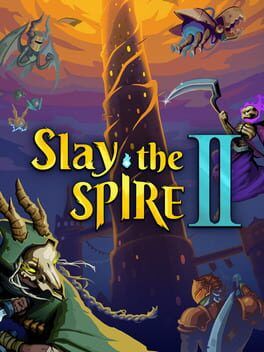

How Slay the Spire 2’s experimental co‑op turns a solitary deckbuilder into a social strategy game, and why Mega Crit’s "non‑linear" patching philosophy is already testing player patience.
Slay the Spire was always a private obsession kind of game. You put on headphones, disappear into the numbers, and emerge three hours later either victorious or vowing revenge. Slay the Spire 2 arrives in early access looking at first glance like more of the same. It shares the same map structure, the same escalating tension of elite fights and bosses, even the same meta of chasing busted relic combinations.
What makes it feel like a real sequel rather than a glorified expansion is not a flashy new character or a radical overhaul of cards. It is co‑op.
Co‑op as the sequel’s real hook
On paper, turning a deliberate, mathy, roguelike deckbuilder into a multiplayer game sounds like a bad fit. These are games you stop and think through one card at a time. You puzzle over lines for minutes. Introducing another human risks turning that reflection into chaos.
In practice, Slay the Spire 2’s co‑op is where the game suddenly feels new. PCGamesN’s early impressions come across almost surprised at how natural it is to share a run with another player. Mega Crit clearly understood that the secret was information design rather than wild new mechanics. Both players can see the essentials at a glance: health totals, energy, intent icons, and previews of what cards will do. That visibility lets you coordinate without turning the screen into a dense spreadsheet.
Co‑op fundamentally changes the psychology of a run. In solo play, every decision is selfishly optimal. You weigh relics, card picks, and campfire upgrades against one goal, your own power curve. In multiplayer, every choice becomes social. Do you pass a powerful relic because it is a better fit for your partner’s build. Who takes limited healing when both of you are limping toward a boss. Do you use the campfire to rest, or does one player push for an upgrade so they can carry harder next act.
This shift makes familiar scenarios feel tense again. The same old hallway fights can spiral if one player overextends on a setup turn, leaving the other to scramble for block. Miscommunication around exhaust synergies or vulnerable stacks can turn a comfortable elite encounter into a nail‑biter. Conversely, a well‑timed buff or clutch block from your partner creates hero moments the original game never really had.
The net effect is that Slay the Spire 2 becomes a social story generator rather than just a personal puzzle box. You argue over route choices. You celebrate high‑rolls together. You groan in sync when a misplay trashes a carefully set up combo. That sense of shared disaster and triumph is something no new character could have delivered.
Communication tools and low‑friction co‑op
For now, most of the best co‑op experiences rely on an external voice channel. There is no in‑game voice chat, so players are falling back on Discord or other tools to keep runs flowing. That said, Mega Crit has added small but smart touches to keep friction down.
The shared map is a great example. Planning a route is not a solo meta game any more. You can draw paths, mark points of interest, and negotiate choices without feeling like you are wrestling the UI. Reward screens similarly communicate enough about each player’s deck and relic situation that you can make informed decisions quickly.
What matters is that none of this overwhelms the core clarity of combat. Slay the Spire’s big achievement was always how legible it made complex interactions. Slay the Spire 2 preserves that legibility while doubling the number of brains involved. When a card changes intent icons across multiple enemies and both decks are firing off triggers, you still feel in control rather than lost.
On the other side of that coin, co‑op also exposes the game’s bugs and edge cases more brutally than solo play. Rock Paper Shotgun has already highlighted patches aimed at spectacular multiplayer exploits, including relic interactions that could generate infinite block. Many of the strangest situations in early access are happening in multiplayer, where two players can combine tools in ways designers did not foresee. That unpredictability is both exciting and, for some players, frustrating.
Early access balancing and the community’s growing pains
Those frustrations are spilling over into how players perceive Mega Crit’s early access patching strategy. The first big balance pass for Slay the Spire 2 triggered a noticeable wave of negative Steam reviews, especially from players who felt their favorite builds had been gutted or that the game’s difficulty had lurched sideways instead of forward.
Mega Crit’s response, as summarized by Rock Paper Shotgun and echoed in a detailed Steam post, hinges on a few core ideas. First, this is early access in the strictest sense. The team is explicit that every change right now is experimental. They are running a long‑term live balance lab, not delivering a steady march toward a final, polished meta. The studio projects one to two years of this process before they consider the game as settled as the first Slay the Spire eventually became.
Second, they are driving patches from a blend of data, design intent, and player feedback. They are looking at completion rates, card pick rates, win streaks, and other telemetry. They are reading qualitative reports. Crucially, they say that the most actionable feedback does not come from angry Steam reviews but from the in‑game reporter that players can use to flag specific problems.
That distinction has already rubbed some in the community the wrong way. To a subset of players, leaning on data and curated feedback reads as “we know better than you,” especially when a patch hits a beloved strategy. To others, it is reassuring that the game is not being steered purely by knee‑jerk sentiment.
The third pillar is the one Mega Crit has repeated most clearly. Progress will not be linear, and no change is necessarily permanent. This is the line that has shown up in their Steam notes, in RPS coverage, and in social media posts. It is both a philosophical stance and a warning label. Some patches will overcorrect. Some builds will be too strong or too weak for a while. The goal is not to buff everything up and smooth every edge in one clean arc. The goal is to explore the design space, even if that means the game feels worse for certain archetypes on certain patches.
Is Mega Crit setting expectations well enough
The question is whether that messaging is actually landing with the majority of early access players. On one level, Mega Crit is being clearer than many studios. They have an opt‑in beta branch that gets the spiciest experimental changes first. They are transparent that the beta branch will be the playground, while the main branch trails behind with only those changes that feel stable enough for a wider audience.
They are also specific about their tools. By directing players to the in‑game reporter and explaining how they use that data, Mega Crit is inviting the community to interact in a more structured way than just review bombing. Their timeline of one to two years of ongoing balance passes sets a realistic horizon. Anyone buying into Slay the Spire 2 now should know that they are paying for a shifting target, not a locked‑in meta.
Yet expectation setting is not only about clear statements. It is about aligning those statements with how people actually engage with your game. Most players do not read long Steam posts or carefully follow developer Twitter threads. Their experience of “how the game is doing” comes from the patch notes pop‑up, from how their favorite build feels after the update, and from the Steam reviews and subreddit chatter that spike when things go wrong.
Mega Crit’s phrase that “progress will not be linear” is accurate, but it can also sound abstract next to the tangible feeling of a deck getting weaker overnight. When co‑op is the big new selling point, that is amplified. Having a shared run crumble because a key synergy was nerfed feels like a broken promise between friends, not just a personal annoyance. A partner who took time to learn a specific character or combo suddenly finds their role less effective. That can be enough to make a duo put the game down for a while.
The studio’s challenge over the next year is not just technical balance but emotional pacing. If each patch wrecks a different cluster of builds with little perceived upside, the community will frame early access as a series of mood swings rather than a collaborative tuning process. Players need to feel progress even when you are experimenting. That might mean highlighting clear goals for each patch, calling out not just what changed but why, and revisiting unpopular decisions faster on the beta branch.
Co‑op, balance, and the long road ahead
Co‑op makes all of this more high stakes and more promising. On the one hand, multiplayer reveals balance problems faster, and loudly. A broken relic or degenerate combo discovered by a duo can spread through the community in hours. When Mega Crit moves to clamp down on it, the outrage is equally rapid.
On the other hand, co‑op is the feature most likely to keep people coming back through the turbulence. You can forgive a rough patch or a clumsy nerf more easily when the real draw is hanging out with a friend, theorycrafting new decks, and laughing through disasters together. The novelty of shared decision making, of joint pathing and split rewards, buys Mega Crit some goodwill while they tinker under the hood.
So far, the studio’s communication strikes a cautious but honest tone. They are not pretending each patch is an upgrade in every respect. They are not promising that your favorite build is safe. They are explicit that the game will feel inconsistent for a while and that they are willing to revert changes that do not land well. For players who value transparency, that is a strong foundation.
The risk is that the broader audience only hears the pain, not the plan. As Slay the Spire 2’s co‑op word of mouth grows, Mega Crit would be wise to surface their philosophy inside the game itself. New early access players should see, front and center, that they are signing up for an experiment. Clearer in‑client messaging around the beta branch, balance goals, and the role of player reports would turn that “non‑linear progress” slogan from a forum quote into a lived expectation.
If Mega Crit can manage that, Slay the Spire 2’s turbulent early years might end up looking like a long co‑op run. Messy, occasionally infuriating, full of misplays and corrections, but ultimately worth it for where you end up together.