
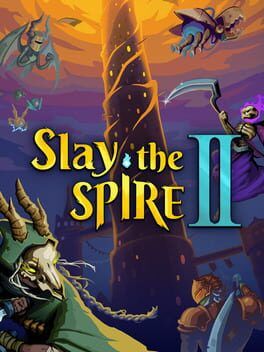

How Slay the Spire 2’s explosive Early Access launch, streamer visibility, and genre pedigree translated into a reported 5.3 million units and $108 million in March revenue.
Slay the Spire 2 has reportedly done something almost unheard of for a roguelike deckbuilder: move 5.3 million units on Steam in a single month.
According to estimates from Alinea Analytics’ Rhys Elliott, the sequel generated roughly $108 million in revenue in March and topped the overall Steam sales charts. These are not official Mega Crit numbers, but even as modeled data they paint a picture of a sequel that massively outperformed genre expectations and even dwarfed the trajectory of the original Slay the Spire.
For context, the first game took nearly two years in Early Access and another couple of months post 1.0 to cross 1.5 million units. Slay the Spire 2 has, by these estimates, more than tripled that figure in a single month of availability. Taken at face value, this would place it not just at the top of the roguelike deckbuilder pile, but among the strongest premium PC launches of 2024 so far.
Within the roguelike deckbuilder space, nothing really compares to the scale suggested here. Genre peers tend to build over time, trading in long tails rather than day-one fireworks. Hades and Hades II are often treated as benchmarks for roguelike visibility, but they blend action and narrative; card-driven titles traditionally inhabit a much smaller commercial niche. Even breakout deckbuilders like Monster Train, Inscryption, or across-the-aisle fellow card-heavy titles such as Marvel Snap have either launched as lower-priced indies, free-to-play, or spread their growth gradually across platforms.
That is what makes Slay the Spire 2’s reported March so significant. If accurate, it signals that the original game’s slow-burn success fully converted into blockbuster-scale pent-up demand. The sequel is behaving less like a niche follow-up and more like a mainstream event release.
Early Access is a big part of why that shift was possible. The first Slay the Spire quietly built a reputation in Early Access, steadily gathering “word of mouth” momentum from hardcore roguelike fans, theorycrafters, and content creators who latched onto its endlessly replayable run structure and deckbuilding depth. Over years, that audience became a sort of informal marketing arm, continually resurfacing the game through guides, challenge runs, and mod spotlights.
Slay the Spire 2 is benefiting from the compound interest on that investment. Rather than starting from zero, it entered Early Access with a massive pool of players who already understood what a new character, new cards, and alternate acts could mean for their playtime. In practical terms, that turns Early Access from a purely developmental phase into a revenue and visibility accelerant. Each update is not just a patch note list, it is an excuse for lapsed players to jump back in and for creators to reintroduce the game to larger audiences.
Streamer and creator visibility are the other obvious multipliers here. The original Slay the Spire became a fixture on Twitch and YouTube precisely because its run-based structure lends itself to bite-sized sessions, while its decision density rewards high-skill play and on-the-fly commentary. Every card choice, relic pickup, and pathing decision is a moment that can be explained, debated, and optimized. That makes it ideal content for streamers who want a game that is mechanically deep but easy for viewers to follow.
The sequel arrived into an ecosystem where those content pipelines were already built. Established creators could pivot from the first game to the second without needing to teach their audiences what Slay the Spire is. Instead, they can focus on what has changed, why new archetypes are exciting, and how altered act structures play out over many runs. When a game is this streamable, every patch and balance pass becomes more than a technical update; it becomes a full content cycle for channels with hundreds of thousands of followers.
That amplification matters when you look at the revenue estimates. At $108 million in March, Slay the Spire 2 was reportedly ahead of big-budget competitors on Steam, including heavy hitters like Crimson Desert and Resident Evil Requiem for that month. Those games arrive backed by major marketing spends and production values tailored for splashy trailers. Slay the Spire 2, like its predecessor, leans much more on systems-driven storytelling and emergent player narratives.
If streamer and Early Access visibility can carry a card-based roguelike to these numbers, it sends a clear signal to the rest of the market. First, it validates the idea that deep systemic games with strong run variety can monetize attention as efficiently as visual showpieces, provided they give creators enough decision moments per minute. Second, it underscores how a long Early Access tail on a first entry can function as a runway for turning the sequel into a genuine tentpole.
It is also helpful to frame Slay the Spire 2’s March in terms of long-term value rather than just launch fireworks. Roguelikes live and die on retention, and deckbuilders in particular rely on a metagame that players want to revisit over the course of months or years. The original Slay the Spire did not just sell copies; it became part of the evergreen PC library, a staple in Steam backlogs and “just one more run” sessions. That status dramatically changes the ceiling for a sequel. When millions of players already see your game as an endlessly replayable habit rather than a 20 hour playthrough, they are much more likely to buy in early and stay through balance passes and content expansions.
The question now is whether Slay the Spire 2 can sustain this reported level of performance beyond its explosive start. If Mega Crit can maintain a cadence of meaty updates and keep the game’s meta in a healthy, watchable place, the sequel is well positioned to own the roguelike deckbuilder conversation for years. For genre fans, that likely means a flood of imitators and experiments chasing a blend of accessibility, depth, and streamability that Slay the Spire helped define.
For the rest of the industry, 5.3 million units in a single month is a reminder that some of PC gaming’s biggest sales stories are no longer reserved for photorealistic action games. Sometimes, a pile of cards, a lethal elite in the next room, and an audience waiting to see whether you topdeck salvation are more than enough to drive blockbuster-scale business.