
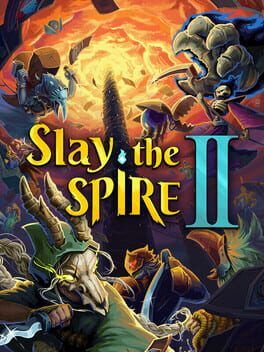

Mega Crit is spacing out Slay the Spire 2 updates so it can focus on experimental modes, an alternate Act 2, and the next playable character. For Early Access players, the slower cadence may be a healthy sign.
Image: IGDB
Store links: Slay the Spire II on Steam
Mega Crit is trading patch frequency for bigger Early Access swings
Slay the Spire 2 updates are slowing down again, and this time Mega Crit is tying the change directly to the kind of content that can reshape runs: experimental game modes, an alternate Act 2, and another playable character. In the August Neowsletter, quoted by Rock Paper Shotgun and PCGamesN from Mega Crit’s Steam post, the developer said its bi-weekly beta branch cadence has helped it cross “quite a few features and content” off its list, but that piecemeal releases make it harder to develop “the bigger, more impactful content” players are waiting for.
That is the tension for Early Access players. A slower schedule can feel like lost momentum, especially for a sequel to one of PC’s defining roguelike deckbuilders. But the confirmed reason for the slowdown is not silence, cancellation, or a vague promise of polish. Mega Crit says it is shifting focus toward larger additions, and those additions target the parts of Slay the Spire 2 that most directly determine replay value: route structure, character identity, and rule-set variation.
The studio has not promised an exact new cadence. In the Steam post cited by both outlets, Mega Crit said updates will be “a bit further apart, at least for a while,” adding that it cannot guarantee the exact pace or whether that pace will be regular. PatchBot’s mirror of the latest Slay the Spire 2 patch notes also notes there will not be a patch on August 27 because the team is taking a break in the last week of August, and that there may be a longer wait in general while the studio focuses on “BIG” content. PCGamesN reports that it will be at least a month before any of that new content reaches the beta branch.
The cadence change follows months of unusually active iteration
The slowdown lands differently because Slay the Spire 2 has already had a busy Early Access runway. Rock Paper Shotgun reports that the game launched into Early Access in March, with Mega Crit initially moving at a solid pace. In May, according to RPS, the studio shifted from a previously promised weekly update plan to updates every two weeks. Now the team is spacing things out further, at least temporarily.
The public patch record supports the picture of a fast-moving beta branch rather than a stalled one. PatchBot lists recent beta updates including v0.108.0 in early July, v0.109.0, a v0.109.1 hotfix, v0.110.0, and v0.111.0 on August 14. Spire Codex, which mirrors Slay the Spire 2 patch notes and announcements from Steam, similarly lists regular community announcements, beta patch notes, hotfixes, and Neowsletters across April, May, June, July, and August 2026.
Those patches have not only been typo fixes. PatchBot’s summaries mention balance changes, bug fixes, new Epoch art, Traditional Chinese translation work in progress, new Neow relics, a keyboard-only control option, polished card portrait art, character VFX, multiplayer cards, modding updates, and a major main branch update with an RNG rework. Rock Paper Shotgun also points to earlier coverage of a boss removal and replacement, which underlines how willing Mega Crit has been to make large design cuts during Early Access.
That history is important because a slower update schedule after several months of rapid changes can be read as a production shift, not a retreat. The confirmed fact is simple: Mega Crit says smaller, frequent drops were making bigger work harder to schedule. The interpretation is equally practical: for a deckbuilder built around deep interactions, there is a point where adding another balance tweak every two weeks is less valuable than giving new systems enough time to arrive as coherent pieces.
An alternate Act 2 could matter more than another pile of cards
The most structurally interesting tease is the Slay the Spire 2 alternate Act 2. Mega Crit has confirmed it is working on another Act 2, while PCGamesN reports that the new region will be randomly switched with the Hive, similar to how Act One can split between Underdocks and Overgrowth. If that implementation holds, the addition is much larger than a new set of encounters tucked into an existing pool.
In a run-based deckbuilder, an alternate act changes the pressure profile of an entire campaign. Act identity affects which enemies test early damage, which fights punish slow scaling, which events tempt risky choices, which bosses gate weak builds, and how reliably a player can prepare for the next threshold. A second Act 2 option means players cannot simply memorize one middle-game rhythm. They have to draft with uncertainty in mind.
That is the clearest positive signal in the slower Mega Crit Early Access cadence. Alternate acts need space because they touch a wide web of balance. Enemy health totals, elite rewards, event odds, relic strength, potion value, card upgrade priorities, and character-specific matchups all have to survive repeated runs. If Mega Crit released pieces of that act one hallway at a time, it could produce noise without revealing whether the region works as a full strategic arc.
What remains unannounced is the act’s theme, enemy roster, event structure, bosses, and whether it will land first on the beta branch in a partial or complete form. Mega Crit has shown little publicly, and the reporting emphasizes that the studio is avoiding major spoilers. For now, the confirmed takeaway is that Slay the Spire 2’s map variety is being expanded at the act level, which is exactly where roguelike deckbuilders get long-term freshness.
A new character is the biggest possible test of the sequel’s card economy
Mega Crit is also working on a Slay the Spire 2 new character. The studio has not revealed the character’s name, mechanics, starting relic, card pool, or release timing. The public tease, as both Rock Paper Shotgun and PCGamesN note, is deliberately tiny: a bandage-wrapped foot.
That sounds like a joke because it is being presented like one, but a new playable character is one of the heaviest additions a Slay the Spire game can make. A character is not a skin laid over the same verbs. It is a drafting language, a risk model, and a set of exceptions. Every new card pool changes how often players see certain answers, how aggressively they can remove starter cards, how they evaluate relics, and how they approach act bosses. In Early Access, it also creates a fresh balance burden because the character has to function across existing acts, alternate regions, ascension tuning, future modes, and whatever relic and event changes arrive alongside them.
That is why the slower schedule can be good news if Mega Crit uses the time well. A character released too early may be fun for a weekend and then spend months swinging between overtuned and undercooked. A character released with a more complete support ecosystem can give players a real reason to relearn the game. For a series where the joy often comes from discovering that one strange card is secretly the hinge of a whole build, the quality of a character’s internal puzzle matters as much as the raw number of cards added.
The unconfirmed part is everything beyond the foot. There is no supported basis in the provided material to identify the character, infer a class fantasy, or assign mechanics to the bandages. Treat the image as a teaser, not evidence.
Experimental modes could widen the game without raising the grind ceiling
The August Neowsletter also says Mega Crit is working on experimental game modes. Rock Paper Shotgun connects that tease to Mega Crit discussing three new modes back in April, while noting that the developer has not shown much of the current work. The important word here is “experimental.” These Slay the Spire 2 modes are not confirmed as final features, and Mega Crit has left itself room to test, revise, or cut ideas before they become permanent parts of the game.
That caution pairs with another confirmed design stance from the newsletter’s Q&A. According to Rock Paper Shotgun and PCGamesN, co-founder Casey Yano said there are no plans to go up to Ascension 20, with Ascension 10 described as close to the highest difficulty planned for the game. The reason given is practical: with more characters in the sequel, grinding out Ascension 20 would become a chore. Yano also said that as more content enters the game, Mega Crit will get a clearer picture of how it wants to tackle challenging difficulty.
That is a telling answer. Instead of stretching the same climb across more mandatory difficulty rungs, Mega Crit appears to be looking at variety through regions, modes, and characters. The confirmed design philosophy around enchantments points in the same direction. In the Q&A, Yano said the team likes enchantments but has no plans to let players stack multiple enchantments on a single card, because the studio wants the focus on deckbuilding rather than cardbuilding and wants to avoid snowballing.
For players, that suggests the sequel’s long-term challenge may come from broader run contexts rather than a taller ladder. That is healthier for a game with multiple characters because it gives players new problems to solve without asking every player to repeat the same twenty-step climb across each roster slot.
The risk is communication, not content ambition
A slower cadence still carries risk. Early Access communities are built around visible movement, and Slay the Spire 2’s beta branch has trained players to expect a steady rhythm of changes. When a developer says it cannot guarantee a regular pace, the burden shifts to communication. Mega Crit’s August message is specific enough to be reassuring, but players will still need clear updates on what is being tested, what is delayed, and what is being cut.
The team break at the end of August gives this change an immediate shape. PatchBot’s v0.111.0 summary says there will be no patch on August 27 because Mega Crit is taking a break during the last week of the month. Beyond that, Mega Crit has not given a firm date for the next beta branch update. PCGamesN reports that the larger content is at least a month away from beta branch release, but the studio’s own quoted language is less calendar-specific: updates will be further apart for a while, with no guaranteed exact pace.
That distinction matters for anyone deciding whether to jump in now or wait. If you are playing Slay the Spire 2 because you enjoy watching balance shift and trying beta changes as they land, the next stretch may feel quieter. If you prefer returning when a run can feel meaningfully different, the slower cycle is a reason to keep an eye on the next major beta drop rather than checking every other Wednesday.
The strongest reader guidance is to treat this as a consolidation phase. The game is still in Early Access, the beta branch is still active, and the confirmed roadmap targets are substantial. But Mega Crit has not dated the alternate Act 2, the new character, or the experimental modes, and it has not promised that every experiment will ship unchanged.
A slower Slay the Spire 2 update schedule can be a good sign
The hopeful read is not that fewer updates are automatically better. It is that Mega Crit has identified the point where Slay the Spire 2 needs larger design packets to move forward. Frequent patches are excellent for correcting bad numbers, smoothing controls, adding art, fixing localization issues, and responding to broken interactions. They are less suited to building a new act, proving out a character, or testing modes that may alter the rules of a run.
That is where the current Slay the Spire 2 updates story becomes encouraging for Early Access players. Mega Crit is not asking players to wait for vague future content while offering no detail. It has named three categories of work that directly affect replayability: modes, an alternate Act 2, and a new character. Each one expands variety in a different direction. Modes change the rules. An alternate act changes the route. A character changes the deckbuilding grammar.
The best version of this slowdown is a sequel that becomes less predictable in the places that count. Slay the Spire’s enduring appeal has always lived in the moment a familiar climb suddenly asks a new question. If Mega Crit can use the quieter patch window to make those questions sharper, stranger, and better balanced, Early Access players may look back on this slowdown as the stretch where Slay the Spire 2 stopped merely changing often and started changing shape.