
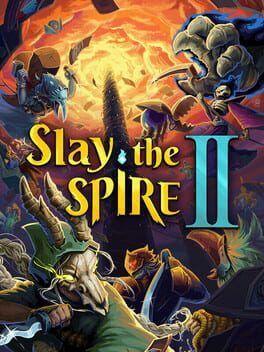

Mega Crit’s v0.113.0 beta patch brings Slay the Spire 2 its first new Early Access character, plus faster deckbuilding in Blitz and a punishing Dread mode for Ascension veterans.
Image: IGDB
Store links: Slay the Spire II on Steam
The biggest beta patch yet is also a warning label
Slay the Spire 2 beta patch v0.113.0 is live on the public beta branch, and Mega Crit is calling it the game’s biggest beta patch so far. The concrete headline is substantial: the update adds The Fool as the first new Early Access character, introduces two new modes named Blitz and Dread, and folds in a long list of content, event, quality-of-life and balance changes.
The tension is that this is not a normal main-branch content drop. According to Mega Crit’s Steam patch notes, as quoted by Rock Paper Shotgun and Output Lag, the studio says the patch contains “some really impactful bits of content” that need “lots of testing” before they reach the main branch. Output Lag also reports that the main branch received a separate update to the previous beta version, v0.111.0, so players who launch the default build should not expect The Fool, Blitz or Dread to appear there yet.
For a deckbuilder, that distinction matters. New characters and new modes do not merely add more buttons to the menu. They reshape card valuation, relic priorities, unlock incentives, route planning and the way players test balance. Mega Crit is effectively asking the Slay the Spire 2 community to treat this Slay the Spire 2 beta patch as a live balance lab, especially around a character the studio says will receive “a great number of content and balance changes” before main-branch release.
The Fool turns early access into a new deckbuilding problem
Mega Crit’s official description of The Fool is deliberately light: “a silly musician who wields a bow.” The studio’s notes do not fully list the character’s deck, relics or mechanics, and Rock Paper Shotgun notes that players are expected to discover much of the character’s strategy for themselves. That secrecy is part of the design test. The Fool is arriving early enough that the card pool can still move, but late enough for returning players to compare the character against established Slay the Spire 2 habits.
PCGamesN reports from hands-on play that The Fool’s starting relic is Song Bow, which begins combat with six Aim. In that account, Aim powers the next Arrow, while the early card Foolish Shot fires an Arrow for 15 damage. Arrows are a limited resource, PCGamesN says, and enemies hit by them become Impaled. To regain an Arrow, the player must usually hit that target three more times or kill it outright, which creates an immediate sequencing question: do you spend the Arrow for burst now, or hold your damage engine until you can reliably recover it?
That is a sharper resource puzzle than a simple damage keyword. PCGamesN’s examples suggest a character built around committing to targets and then profiting from the follow-up. Quiver adds another Arrow, Serrated Arrows makes Impaled enemies take 25% more damage from attacks, Nock grants Aim, Rain Shot spreads its damage to other enemies, and Uproot dislodges an Impaled Arrow while applying Vulnerable. If those reported mechanics survive beta tuning, The Fool asks players to think in loops rather than isolated plays: fire, mark, pressure, recover, repeat.
PCGamesN also reports a second layer built around Melody terms such as Wah, Cho and Ki, with cards changing effect depending on which Melody has been activated that turn. The examples given include Steady Cadence dealing damage and drawing for each Melody, Wah Blast hitting all enemies and striking again after Cho or Ki, and Cho Chorus granting block while playing Wah and Ki cards still in hand. That creates a different kind of hand-evaluation problem from the Arrow system. Instead of only asking whether a card is efficient, The Fool appears to ask whether the card completes the right musical phrase in the right order.
There are additional reported wrinkles. PCGamesN describes Stretch as a mechanic that boosts the next block card, and Sadness and Joy as generated cards, with Sadness being an unplayable retained status and Joy being a zero-cost skill that grants energy, draws a card and exhausts. Kotaku, after several runs, described The Fool as feeling extremely strong but emphasized that this is the reason the patch is in beta. That is the sensible read: The Fool looks like a high-synergy character whose power may depend heavily on whether the beta keeps those loops fast, slow, reliable or fragile.
Blitz cuts away the map economy and forces faster decisions
Blitz is the mode most likely to pull lapsed players back immediately because it changes the session shape. Mega Crit describes it as a “condensed and chaotic deckbuilding-focused mode,” according to the Steam notes cited by multiple outlets. The key rules are blunt: the map is gone, Gold no longer matters, and the Merchant’s wares “feel a bit off.”
That is a major structural change for Slay the Spire 2. In a standard run, route planning and economy management are core strategic layers. Players judge hallway fights against elites, rest sites, question marks, shops and upgrades. Gold gives shops a delayed-payoff texture, and the map lets players decide how much danger to accept before a boss. Blitz strips that scaffolding back. If the map is absent and Gold is irrelevant, the mode shifts attention toward immediate deck construction, reward selection and adaptation to whatever the run serves next.
Kotaku, after trying the mode, reports that the Merchant’s shop contains free buffs and card rewards instead of the usual relics and specific cards. That is hands-on reporting rather than an official rule list in the provided notes, so it should be treated as an observed beta implementation, not a promise for the final main-branch version. Still, it clarifies the design target. Blitz appears to turn the Merchant from an economy checkpoint into another deck-shaping event.
The unlock requirement is also approachable. Mega Crit says Blitz unlocks after completing an Ascension run on any difficulty, and it has five Ascension levels shared across all characters. That gives experienced players a reason to reinstall or switch branches without demanding full endgame completion. It also gives Mega Crit a broader testing pool than Dread will. Players who understand Ascension but do not live at the ceiling can still stress-test how Slay the Spire 2 feels when its strategic friction is compressed.
Dread gives Ascension veterans a new ceiling to hit
Dread is aimed at the opposite end of the player base. Mega Crit describes it as a brutally difficult mode for players who have reached Ascension 10 on every character, including The Fool. That last clause is important. Returning veterans cannot simply bring old mastery into Dread on day one unless they also learn the new character well enough to clear Ascension 10.
Once unlocked, Dread enables all Ascension modifiers. Mega Crit’s notes say bosses are stronger, bosses buff all enemies in their Act, and Curses pile up as the climb continues. The studio’s own summary, reported by Rock Paper Shotgun and Output Lag, is terse: “Death is expected.”
From a strategy perspective, Dread sounds designed to punish solved habits. A normal high-Ascension player can often plan around known breakpoints: how much damage Act 1 elites demand, when to accept a curse, when to keep a greedy card, when to rest. Dread’s boss-linked Act buffs and accumulating Curses threaten those calculations over a full run. If a boss influence makes an entire Act nastier, the cost of early greed rises. If Curses keep arriving, thin-deck precision and draw consistency become less reliable over time.
That makes Dread a better retention tool than a simple Ascension 11 label would have been. It is not presented as a small numeric bump. It changes the pressure profile across the run and demands mastery of the full roster. For players who already thought Ascension 10 had become routine, this Slay the Spire 2 Dread mode is the clearest invitation to come back now, provided they are willing to play on the beta branch and accept an unstable balance target.
The balance patch changes the climb around the new modes
The Fool, Blitz and Dread are the attention magnets, but v0.113.0 also changes the underlying run texture. Noisy Pixel’s reproduction of the patch notes lists a general change that rest sites can now appear one floor earlier in every Act. That single line has wide strategic implications because rest site timing affects upgrade planning, sustain risk and how aggressively players can path into fights before a boss.
The patch also adds new events. Noisy Pixel lists Waterfall of Obvious Secrets and Wuppy in Trouble for the Underdocks, Museum of Torture for Act 2, and Shrine of the Warlord and Thermae Nonupeipe for Act 3. The same notes list new event cards tied to those additions, including Dingy Dagger, Mighty Weapon and Mighty Shield. Events are a hidden balance lever in Slay the Spire because they change the expected value of question-mark rooms. Adding several new events can make old route heuristics less reliable, especially in a beta where players are still learning outcomes.
There are also targeted relic and event adjustments. Noisy Pixel reports that Neow’s Dowsing Rod relic has been buffed so its Dowsing card transforms after four question-mark rooms instead of five, with the transforming question-mark room no longer able to be combat. The same source lists a nerf to Nonupeipe’s Brilliant Scarf, moving its trigger from the fifth card to the sixth card. Doors of Light and Dark has also been changed so the Light Door upgrades one chosen card instead of two random cards.
Output Lag highlights card-level reworks as well, including Ironclad’s Expect a Fight now giving 15 Block and making Attacks in hand cost one less Energy until played, and Silent’s Expertise retaining the whole hand for the turn. Those examples show the patch is not only about new toys. Mega Crit is adjusting class incentives at the same time it introduces new modes that will expose balance problems quickly.
Quality-of-life changes are part of the package. Rock Paper Shotgun reports that the standard-run character select screen now starts on the last character played, and controller navigation at the Merchant has been improved. Those are small changes compared with The Fool, but they matter in a patch built for repeated beta runs. Less menu friction means more test data and, for players, fewer annoyances while learning a changed game.
Should you switch to the beta branch now?
If you want the new content immediately, yes, but with the correct expectations. Output Lag reports that players need to right-click Slay the Spire 2 in Steam, open Properties, go to Game Versions & Betas, and choose the public-beta branch. The Fool, Blitz and Dread are beta-branch features for now, while Mega Crit has said the content needs testing before reaching the main game.
The best reason to opt in is curiosity about systems. The Slay the Spire 2 The Fool update appears to add a character with multiple interlocking resource tracks: Arrows and Impaled targets, Aim scaling, Melody sequencing, Stretch defense, and Sadness-to-Joy style hand manipulation as reported by PCGamesN. That is exactly the kind of character whose best builds will not be obvious from card text alone. Early beta players get to participate in discovering which synergies are real, which are traps, and which are overtuned.
Blitz is the strongest practical hook for returning players who want a faster hit. Its no-map, no-Gold structure removes two major standard-run planning layers and appears to concentrate the experience around deckbuilding choices. Dread is the long-term challenge hook, gated behind Ascension 10 on every character, including The Fool, and built to push players who have exhausted the current endgame.
Players who mainly want a polished, stable version should wait for the main branch. Mega Crit has explicitly framed The Fool as unfinished, and hands-on impressions already differ in emphasis: PCGamesN focuses on the character’s intricate mechanics, while Kotaku’s early runs found the character extremely powerful but likely subject to tuning. That is not a contradiction so much as the normal shape of a live beta. The new patch gives Slay the Spire 2 a meaningful reason to return today, but it also asks players to accept that today’s best strategy may be tomorrow’s patch note.