
The latest Skywind progress showcase proves the volunteer Morrowind remake is closer than ever, but key production bottlenecks and the realities of fan development still stand between Vvardenfell and release.
A new look at Vvardenfell in 2026
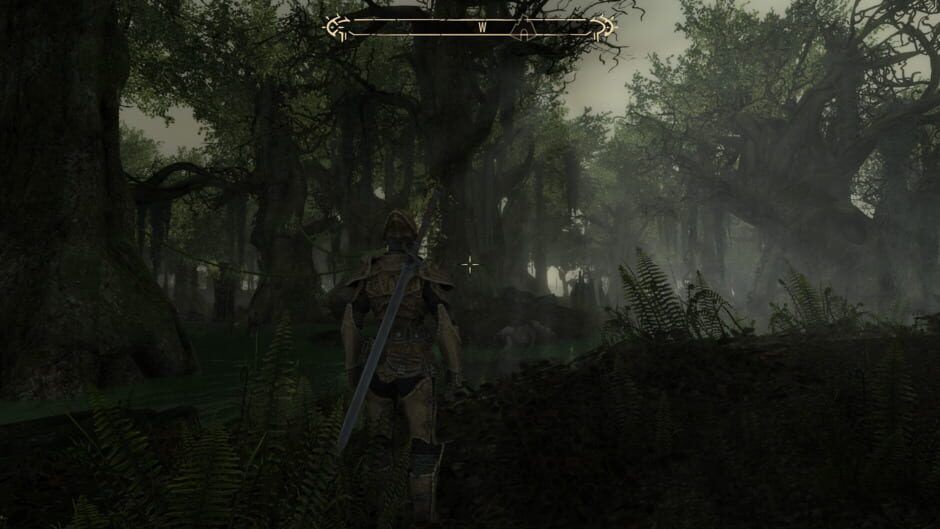
More than two decades after The Elder Scrolls 3 first dropped players on a creaking prison ship, Skywind’s latest 2026 showcase makes an old promise feel real again. The fan team’s new “Road Continued” progress video, highlighted by Rock Paper Shotgun, PCGamesN and PC Gamer, shows a version of Morrowind rebuilt in Skyrim Special Edition that finally looks like a complete RPG rather than an ambitious proof of concept.
The update walks through region tours, dungeon crawls and combat encounters that could pass for a modern Bethesda release at a glance. New spell effects crackle in the ash-fog, underwater combat looks sharp rather than janky, and the world map of Vvardenfell is now close to fully realized. It is a far cry from the blocky mushrooms and muddy fog that defined the 2002 original.
Yet even with that impressive progress, the team still refuses to hint at a release window. In their own words, only “a handful of bottlenecks” remain, but they are the kind of bottlenecks that can stall a volunteer project for years if the right people do not show up.
The bottlenecks keeping Skywind from the finish line
On paper Skywind’s numbers look encouraging. Recent breakdowns put 2D art, music, writing and most voice recording near completion. Every quest has been written, the vast majority of NPCs have been cast and recorded, and major regions like the Ascadian Isles, Molag Amur and the Bitter Coast are already explorable in-engine.
Where the project still struggles is in the disciplines that turn all that content into a finished, shippable mod. Animation work is still a major sink, both for creatures and for bringing Morrowind’s distinctive spellcasting and melee style into a more modern third-person framework. Voice mastering and sound design are also lagging, with raw recordings waiting to be cleaned, balanced and integrated with in-game ambience and effects.
Implementation is another hidden time sink. The team reports strong numbers on written quests, but actually hooking those scripts into the world is an ongoing task. That means building encounter logic, placing NPCs and objects, wiring up branching dialogue, and then testing it all until it is as robust as anything in vanilla Skyrim.
Finally there is localization. The mod has drawn global attention, but fully translating thousands of lines of text and voiced dialogue is a long-term effort that cannot really begin until other systems are locked down. It is the sort of work that cannot be rushed without sacrificing the authenticity of Morrowind’s lore-heavy writing.
How a volunteer relay race really builds an RPG
Those bottlenecks are amplified by Skywind’s structure. Unlike a studio with salaried staff and fixed deadlines, this is a volunteer project that has passed through the hands of more than a thousand contributors over the years. Developers describe it as a relay race, not a static team. People join in bursts of enthusiasm, tackle a set of tasks, then step away when life changes, leaving their work to be picked up by the next volunteer.
That reality shapes everything about Skywind’s production. Instead of building a stable department of animators or systems programmers, the project has to constantly recruit for very specific roles. The current call to action focuses on 3D artists for clothing and clutter, asset implementers who can push finished models and textures into the Creation Kit, dialogue editors and integrators, gameplay programmers for AI and systems, and QA testers to stress test quests and combat.
Quality expectations make staffing even trickier. The team is trying to meet or exceed Bethesda’s own bar across environments, audio and performance, and that means being choosy about who gets to work on core content. For everyday players that translates into a better looking and better playing mod. For the coordinators wrangling applications and portfolios, though, it slows throughput and increases the risk of gaps when a key specialist moves on.
Project management in this context becomes as important as art or code. Coordinators have to keep documentation up to date so that someone can step into an area months after the previous volunteer left. Pipelines for assets, scripts and level design need to be simple enough that part-time contributors can understand them without weeks of onboarding. The showcase video’s polished regions are as much a testament to that invisible scaffolding as they are to individual talent.
Visual upgrades that reimagine, not replace, Morrowind
What makes the 2026 showcase stand out is how confidently Skywind now interprets Vvardenfell, rather than just porting it. The volcanic silhouettes and fungal forests are instantly recognizable, but they now sit in a denser, moodier world built on Skyrim’s lighting and materials.
Cliff racers glide through ash-thick skies that feel heavy rather than flat grey. Cities like Balmora and Vivec are dressed with far more props, signage and vertical detail, closer to how players probably imagined them back in 2002. Interior cells benefit from richer volumetric lighting and higher fidelity clutter, which pushes them closer to Skyrim’s later DLC zones than to the bare stone rooms of the original.
Combat and magic enjoy similar upgrades. New spellcasting animations and particle effects make Morrowind’s spell list feel dramatic instead of abstract. A glimpse at underwater combat and updated creature behavior hints at a version of Vvardenfell that can fully leverage Skyrim’s AI and physics. Even the world map has evolved into a more modern, textured presentation without losing its old hand-drawn sense of geography.
The result is not simply Morrowind “with better graphics.” It is a reauthoring of the game in a different engine, guided by two decades of hindsight about how players actually explore open worlds, how they read visual cues in cities and dungeons, and which parts of the original truly mattered.
Why a 2002 RPG still commands this kind of effort
Projects like Skywind do not stay alive for over a decade on nostalgia alone. Morrowind occupies a particular place in RPG history as a world that felt alien and specific rather than generic fantasy. Giant mushrooms, insect shell armor, crab shell houses and ash storms carved a visual identity that continues to stand out in an industry where medieval forests and snowy peaks blur together.
That distinctiveness explains why so many modders are willing to rebuild it with modern tools. Recreating Vvardenfell in Skyrim’s engine is not just about higher resolutions or better lighting. It is about re-presenting a singular setting in a way that contemporary players can approach without bouncing off old interfaces and ancient tech.
There is also a generational factor. Many of the people now contributing to Skywind grew up with Morrowind and later graduated into 3D art, programming or game audio. Volunteering on a high profile mod lets them pay homage to a formative game while also building portfolios and learning large scale collaboration, something that pure hobby projects rarely provide.
Skywind benefits from the wider culture of preservation in PC gaming, too. Official remasters and remakes have primed audiences to accept that revisiting an old favorite with new tech is not just acceptable but desirable. When an official Morrowind remaster fails to materialize, a project like Skywind becomes a focal point for that desire.
The risk and reward of waiting on fan remakes
The catch is that volunteer epics like Skywind exist in a perpetual tension between ambition and feasibility. History is full of total conversion mods that never quite made it through content lock, or that arrived years late with visibly uneven quality. That risk is part of why the team continues to refuse a release date, even as the world map nears completion and checklists for writing, recording and art fill up.
For players, the long wait invites a familiar question. Will Skywind actually become the definitive way to experience Morrowind, or will it land at a time when the industry has already moved past the Skyrim engine altogether? Even if a future Elder Scrolls or an official remaster appears first, though, the work already poured into Skywind is not meaningless. It is a living archive of fan dedication, of tools and workflows documented and shared, of people who discovered their craft inside a project they loved.
The 2026 showcase makes one thing clear. Skywind is no longer a distant promise or a handful of test cells. It is a nearly complete version of one of PC gaming’s most important RPGs, held back by specific, solvable bottlenecks that hinge on who turns up to help next. As long as the modding community keeps showing up, Vvardenfell’s second life looks less like a dream and more like an inevitability, even if nobody can quite say when that prison ship will finally dock again.