
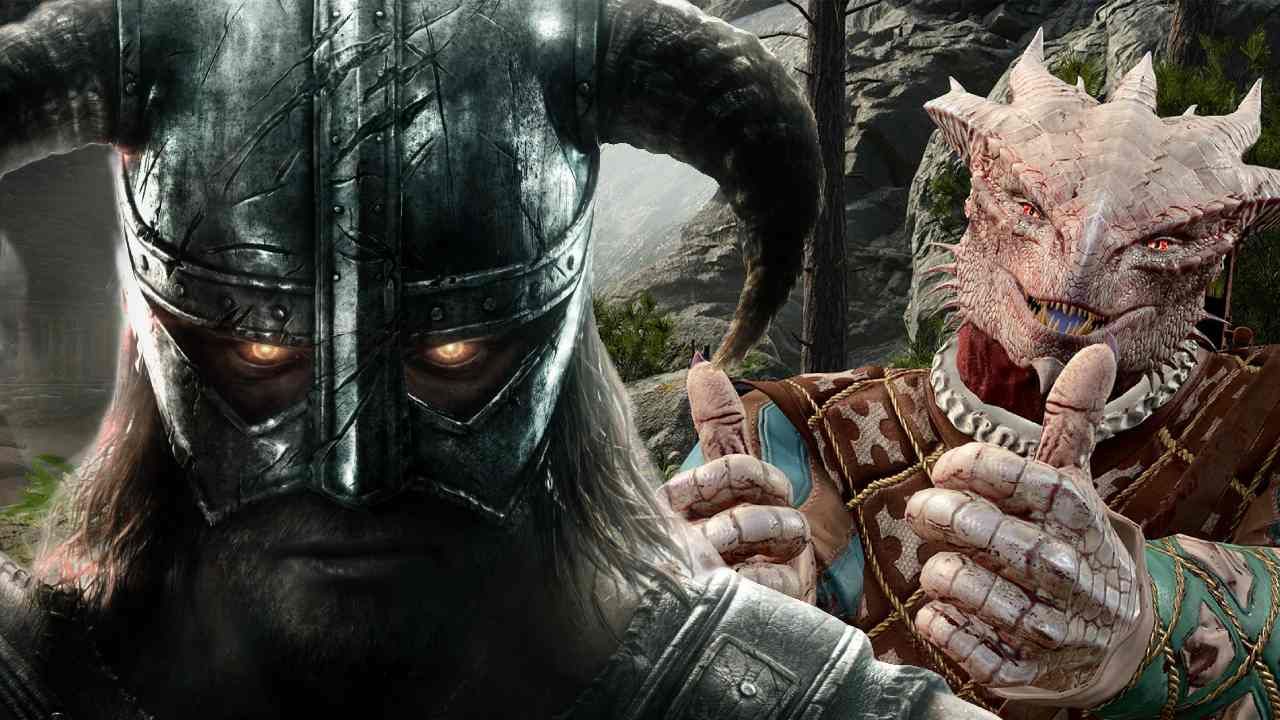
Bruce Nesmith’s Baldur’s Gate 3 comments reopen an old RPG design argument: whether players gain more from hard consequences or from Bethesda-style freedom to see nearly everything in one run.
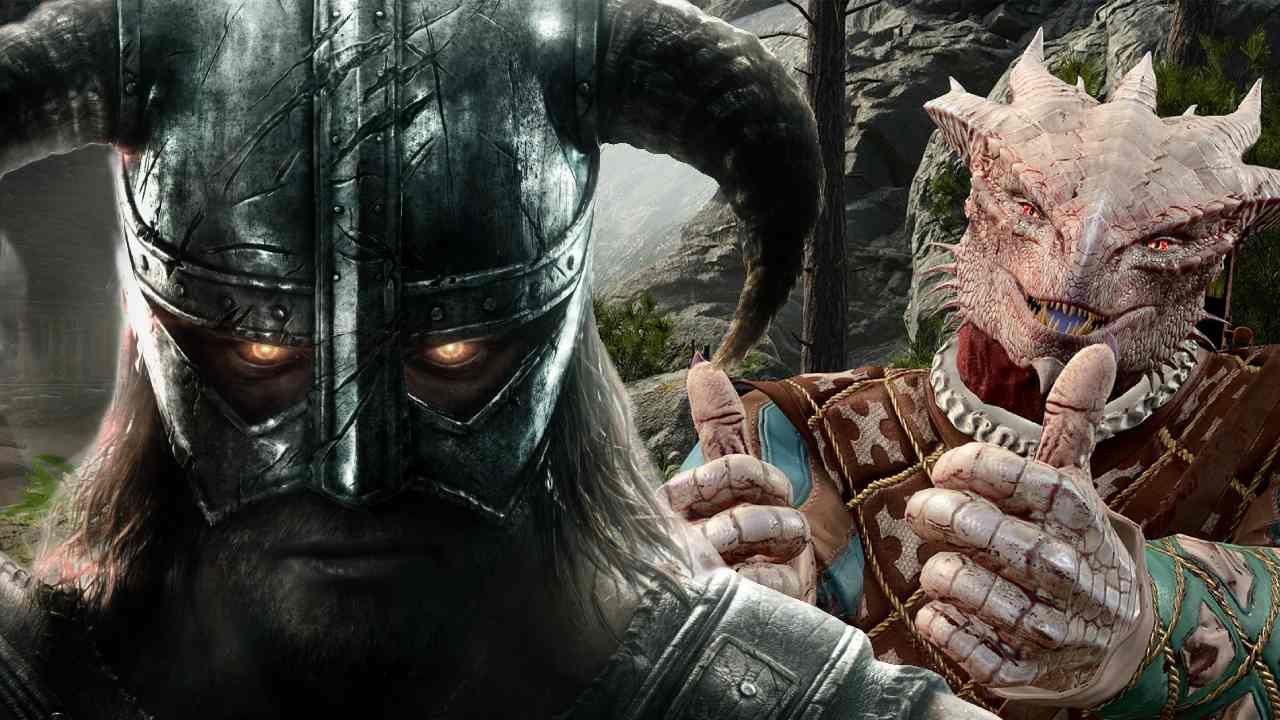
Image: frvr.com
Bruce Nesmith sees value on both sides of the RPG choice divide
Skyrim lead designer Bruce Nesmith says Baldur’s Gate 3 changed his own expectations about how satisfying restricted paths can feel, while still defending Bethesda’s long-running preference for letting players experience most of a world in a single character’s journey.
Speaking to The Examined Game, as reported by Rock Paper Shotgun and VGTimes, the former Bethesda developer said he was “pleasantly surprised” by how much he enjoyed making “consequential decisions that closed off gameplay” in Larian Studios’ Baldur’s Gate 3. Nesmith framed the surprise as a design lesson rather than a repudiation of Skyrim game design. “They were both fun,” he said, referring to Baldur’s Gate 3’s harder branching and Bethesda’s more permissive structure. “They were just fun in different ways.”
That is the useful tension in his comments. The debate around Bethesda RPG choices often gets flattened into a moral argument about whether a role-playing game should punish indecision, protect content access, or force character identity through exclusion. Nesmith’s point, at least as reported, is less absolute: a game can ask the player to live with a closed door, and another can invite the player to keep opening doors, if each approach understands what kind of fantasy it is selling.
Baldur’s Gate 3 makes loss part of the build
The key phrase in Nesmith’s Baldur’s Gate 3 comments is not simply “choice.” It is “closed off gameplay.” According to Rock Paper Shotgun, Nesmith praised Larian for making consequential decisions feel positive even when those decisions meant losing access to other scenes, outcomes, or routes. BestGamesWorld’s report adds that he felt those decisions gained meaning because seeing alternatives would require a different character and a different path.
That is a very specific kind of RPG pleasure. In Baldur’s Gate 3, a player’s build is not only a class sheet, party composition, spell list, or combat role. It is also an accumulated record of accepted consequences. If a route disappears, the character becomes more defined. If an outcome requires a second run, the first run gains contour because it cannot contain everything.
Nesmith credited Larian, according to Rock Paper Shotgun, with redefining “things in a certain way” through its handling of the Dungeons & Dragons universe and the fantasy rules around it. That matters because D&D already trains players to accept adjudication. A tabletop campaign does not usually rewind to show every branch. Baldur’s Gate 3 translates some of that pressure into a videogame structure, where the player can reload but the intended drama comes from accepting that a choice has cost.
Bethesda’s counterargument is access, identity, and momentum
Nesmith did not use Baldur’s Gate 3 as a stick to beat Bethesda’s model. Rock Paper Shotgun reports that he still supports the Bethesda philosophy, especially in post-Morrowind Elder Scrolls games, of allowing players to see the majority of a game’s major content in one playthrough. He described that ungated approach, with exceptions such as Skyrim’s Civil War, as a “very good philosophy.”
The classic Skyrim example is familiar because it is the point of both praise and criticism: one Dragonborn can become a master thief, rise through martial factions, learn an absurd breadth of magic, and still resolve the central dragon crisis. The game rarely insists that a character’s past role should make a later role impossible. For players who treat an RPG as a total-world pilgrimage, that freedom is a gift. It lets a single save file become a long archive of quests, dungeons, guild arcs, houses, gear experiments, and half-remembered detours.
From a systems perspective, that design shifts the source of identity. In Baldur’s Gate 3-style branching, identity is created partly by exclusion. In Skyrim, identity is often created by sequencing and self-restraint. The game may let you join nearly everything, but the player decides whether this particular character would do so, whether a stealth archer ever enrolls in the College of Winterhold, or whether a Companion should dabble in Daedric bargains. Bethesda gives the menu. The role-player supplies the diet.
The split is real, but it is not absolute
The clean contrast between Larian consequence and Bethesda freedom becomes messier under close inspection. BestGamesWorld notes that Bethesda’s own catalog has used mutually opposed or restrictive paths, citing Morrowind guild conflicts and Skyrim examples such as the Civil War, Dawnguard, and the alternate route in which the player can destroy the Dark Brotherhood rather than pursue its faction questline. Rock Paper Shotgun also singles out Skyrim’s Civil War as an exception to the broader ungated philosophy Nesmith supports.
Those examples do not turn Skyrim into Baldur’s Gate 3. They do show that Bethesda’s design has never been pure content access without friction. The difference is emphasis. Skyrim usually treats lockouts as occasional pillars inside a wider structure of availability. Baldur’s Gate 3 more often makes branching consequence part of the expected texture of play.
This distinction is important for readers trying to parse Nesmith’s comments as a signal about future Bethesda games. He is describing a design lesson and a personal reaction to another studio’s RPG, not announcing a new Elder Scrolls direction. BestGamesWorld specifically reports that Nesmith did not say Bethesda is changing its design for a future project, and no specific project was announced through these remarks.
What players gain, and what they give up
The strongest version of the Baldur’s Gate 3 argument is that hard consequences make decisions heavier because they spend content as currency. If a quest path, companion beat, or faction outcome disappears, the player has evidence that the world is responding. That creates replay value with real texture. A second character is not a completion checklist so much as an alternate history.
The cost is equally real. Content that can be missed must still be written, implemented, voiced, tested, and balanced. Players who have limited time may never see large parts of the game. Completionists can feel a constant tension between role-playing honestly and preserving access. A game built around mutually exclusive paths asks the audience to accept that one excellent run may be incomplete by design.
The strongest version of the Bethesda argument is that freedom sustains momentum. You do not have to restart because your warrior became curious about magic 60 hours in. You do not have to check a guide before joining a guild because you fear quietly invalidating an entire quest chain. Skyrim’s structure is generous to wandering, experimentation, and build drift. It supports the player who discovers their character during play instead of defining them at the character creation screen.
The cost is that choices can feel lighter when the world rarely says no. If a character can accumulate every title, allegiance, and expertise, faction identity may become decorative. The player gains breadth, but the fiction can lose pressure. Nesmith’s comments land because he appears to recognize that Baldur’s Gate 3 extracts power from precisely the thing Bethesda often avoids: the willingness to let a player miss something meaningful.
A useful lens for The Elder Scrolls VI, but not evidence of its design
It is tempting to read every comment from a Skyrim lead designer as a clue about The Elder Scrolls VI. The available reporting does not support that leap. Nesmith’s remarks, as covered by Rock Paper Shotgun, BestGamesWorld, and VGTimes, concern his reaction to Baldur’s Gate 3 and his defense of Bethesda’s established RPG philosophy. They do not include a release window, platform plan, feature confirmation, or design promise for Bethesda’s next Elder Scrolls game.
VGTimes adds one piece of relevant historical context: Nesmith said the Skyrim team benefited from continuity with the group that had worked on Oblivion, allowing developers to build on earlier knowledge rather than start from nothing. VGTimes also reports that the team prioritized making sure every location in Skyrim had something interesting to see or do. That context helps explain why Bethesda freedom is not simply a lack of gates. It depends on a world dense enough that wandering remains rewarding even when the quest structure stays permissive.
For players, the practical takeaway is to stop treating the two approaches as a ladder where one is automatically more evolved. If you want a single character who can roam broadly, change builds, and consume a huge amount of authored content without restarting, Skyrim’s design remains powerful. If you want decisions that carve away possibilities and make a campaign feel authored by consequence, Baldur’s Gate 3 choices offer a different satisfaction. Nesmith’s point is that both can work. The harder question for any future RPG is whether it knows which kind of promise it is making before the player invests 100 hours believing it.