
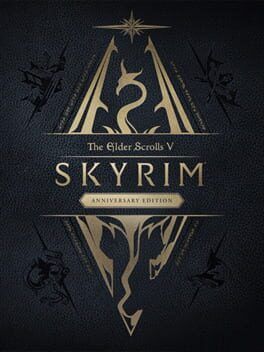
Bethesda’s surprise launch of The Elder Scrolls V: Skyrim Anniversary Edition on Switch 2 brings the 2011 classic into Nintendo’s next‑gen era. We break down performance, loading, and visual upgrades over the original Switch release, and what this quiet upgrade says about the future of legacy RPGs on Nintendo hardware.
Nintendo’s second hybrid has spent its first year turning third‑party ports into a kind of spectator sport again. Cyberpunk 2077, Star Wars Outlaws, and even Elden Ring test builds have all served as public benchmarks for what the new machine can really do. Now Bethesda has quietly tossed one of the most enduring RPGs of the last decade into that mix. The Elder Scrolls V: Skyrim Anniversary Edition has shadow‑dropped on Switch 2, and even if you have played this game across half a dozen platforms already, this port tells an important story about where legacy RPGs fit in Nintendo’s new ecosystem.
A quiet upgrade for an old staple
Skyrim’s original Switch release in 2017 was one of the key “impossible ports” that helped define the first system’s identity. Bethesda squeezed an enormous open world onto a Tegra X1 tablet and got it to run respectably in handheld form. The trade‑offs were easy to see once you docked the hardware, but for a game that once needed a high‑end PC, it felt like a magic trick.
Anniversary Edition arriving on Switch 2 is much lower key. It shows up with little fanfare, bundled with all the Creation Club content, survival mode, fishing, and the rest of the package first assembled for the game’s tenth anniversary. No timed exclusivity, no bespoke Nintendo costumes, just the full modern version of Skyrim landing on a significantly more capable device.
That lower profile fits where Skyrim is in 2025. It is no longer a bleeding‑edge benchmark alongside the likes of Cyberpunk 2077 Ultimate Edition or Star Wars Outlaws, both of which have already proven that Switch 2 can cope with contemporary open worlds. Instead, this is the kind of workhorse RPG that fills out a library, a comfort‑food port that should, in theory, benefit most from the hardware jump.
Performance: From “good enough” to comfortably smooth
On the original Switch, Skyrim targeted 30 frames per second and usually held that line outdoors. Busy towns and heavy alpha effects could still cause dips, and docked play sometimes highlighted how hard the game was working to keep up. It was absolutely playable, but you could feel the hardware straining.
Switch 2 immediately changes that baseline. The Anniversary Edition still targets 60 frames per second in many scenarios, with a focus on stability over raw visual extravagance. In handheld, wandering through Whiterun or trekking across the tundra now feels fundamentally smoother, with combat animations and camera panning benefitting most from the higher ceiling. Heavy weather and dragon fights are where you are most likely to see drops, but these hitches are brief and far less disruptive than on the original hardware.
Docked, Skyrim Anniversary Edition takes further advantage of the extra headroom. Input latency feels snappier, and the game no longer has the slightly sluggish, almost buffered sensation it occasionally carried on the old Switch when your TV resolution amplified every hitch. Considering that Switch 2 is simultaneously hosting much more demanding games with solid results, this gentler target gives Bethesda room to prioritize consistency.
The result is not a radical re‑imagining of Skyrim’s feel, but it is a meaningful quality‑of‑life bump. The game crosses that line from “it runs better than you would expect” into “it simply runs the way you would hope,” which is an important psychological shift for a system that is trying to present itself as a genuine home for modern RPGs rather than a curiosity.
Loading times: The invisible upgrade
If you want to understand how much of a leap Switch 2 offers for older engines, look at loading. On the original Switch, every trip through a door or fast travel hop meant a pause long enough to nudge your phone or glance at social media. Those waits were never catastrophic, but in a game where you can easily bounce between dungeon, town, and wilderness multiple times per session, they added up.
The Anniversary Edition on Switch 2 treats loading almost as an afterthought. Moving from the open world into a small interior is now close to instant, often just a brief splash of the loading screen before you are through. Heavier transitions, like fast travelling across the map or loading into dense cities, still take a moment, but the difference from the first Switch release is easy to feel.
This is exactly the kind of upgrade that tends to go unmentioned in marketing and yet completely changes how an RPG fits into handheld life. Skyrim becomes far more practical as a pick‑up‑and‑play game. When every quest step and dungeon floor swap no longer carries a noticeable time tax, it feels easier to chip away at side quests or jump in for twenty minutes before bed. For a portable that has to compete with phones and tablets for short attention spans, that matters more than another notch of texture resolution.
Visual upgrades over the original Switch release
Skyrim’s Anniversary Edition does not radically rebuild the game’s assets for Switch 2, but the cumulative visual upgrades over the 2017 port are hard to miss once you go back. Resolution is the first change you will notice. In handheld, the original Switch ran with aggressive dynamic resolution scaling, especially in heavier scenes. Image softness was the price you paid for keeping performance acceptable.
On Switch 2, the game simply has more headroom to keep resolution higher and more stable. Edges are cleaner, distant geometry holds together better, and foliage does not dissolve into a fuzzy smear as quickly. The sharper 1080p screen accentuates these differences. Text, inventory icons, and the already minimalist HUD are all crisper, which indirectly makes the game easier to read and play without squinting.
Lighting and shadow behavior also benefit from the new hardware, even without a full technical overhaul. The Anniversary Edition’s more modern code path brings slightly richer volumetric effects and more consistent shadow draw distance compared to the old Switch build. Torches in dark caves, sunrise across the mountains, and the glow of spell effects look closer to the experience you would have seen on a last‑gen home console rather than a heavily compromised handheld version.
Texture quality is still rooted in Skyrim’s 2011 art, and the Anniversary Edition does not pretend otherwise. Stone walls and armor surfaces will not suddenly rival 2025’s big showcase RPGs. What the Switch 2 port does is reduce the gap between what you remember from playing Skyrim on a PlayStation 4 or Xbox One and what you are now seeing in portable form. It becomes nostalgia‑accurate in a way the original Switch version could never fully reach.
How Anniversary Edition compares to other Switch 2 ports
To understand why this quiet Skyrim upgrade matters, you need to place it alongside the more dramatic ports that have defined Switch 2’s first year. Cyberpunk 2077 Ultimate Edition arrived as a tech statement, the sort of port that would have been unthinkable on a Nintendo handheld a generation ago. Star Wars Outlaws and Assassin’s Creed Shadows proved that sprawling, current‑gen open worlds can scale surprisingly well when developers tap into DLSS and tune their ambitions.
Skyrim Anniversary Edition is not trying to compete with those games as a visual spectacle. Instead, it occupies the emerging category of “comfort ports” that the new system is starting to attract. These are legacy RPGs and action games that neither push the hardware to its limit nor simply reissue a straight‑up last‑gen build. They exist in the middle, quietly absorbing new storage speeds and CPU power to fix the small pain points that accumulated on older platforms.
Persona 3 Reload’s uneven performance and Tomb Raider Definitive Edition’s compromised visuals on Switch 2 showed that not every revisited classic finds an elegant new home. Against that backdrop, Skyrim’s Anniversary Edition looks conservative but competent. It is not ambitious in the way Cyberpunk’s port is, yet it sidesteps the obvious pitfalls that can plague mid‑budget reissues.
This is the kind of port that helps define the floor for Switch 2 support. If a 2011 open‑world RPG with years of patch history cannot run smoothly with faster loading and modest visual bumps, that would signal real trouble for the next wave of legacy projects. By landing in a solid place, Skyrim quietly reassures both players and publishers that there is room for older catalog titles to find a second life on Nintendo’s hardware without turning into technical horror stories.
Part of a broader trend in legacy RPGs on Nintendo hardware
Skyrim’s latest appearance is also a continuation of a pattern that really started on the first Switch. That machine became a haven for older RPGs and action adventures that once needed dedicated home consoles. The Witcher 3, Dragon’s Dogma, multiple Final Fantasy remasters, and BioShock collections all found new audiences there, even with obvious graphical concessions.
Switch 2’s extra power and faster storage change the value proposition for that trend. It is no longer just about the novelty of playing an enormous RPG on a handheld at all. Instead, it is about whether you can do so without sacrificing too much of what made the original experience special. Cyberpunk 2077 and Star Wars Outlaws have shown that modern games can come across in surprisingly complete form. Legacy RPGs like Skyrim now have the opportunity to become definitive portable editions rather than curiosity ports.
The way Skyrim Anniversary Edition has been released reinforces this shift. There is no dramatic marketing rollout, just a shadow‑drop that leans on familiarity and the knowledge that Switch 2 players already understand what the hardware can do. The message is simple. If you missed Skyrim before, this is a painless way to catch up. If you already own it elsewhere but want a version you can throw in a bag and still enjoy without technical compromise, this is finally that port.
What this means for future “impossible” RPGs
The Switch 2’s first year has been defined by spectacle ports that answer the question of “can it really run?” Skyrim Anniversary Edition answers a quieter but equally important question. Can this system become the natural place for older RPGs and long‑tail catalog titles to live healthy second lives?
So far, the answer looks positive. By smoothing performance, slashing loading times, and modestly cleaning up visuals, Skyrim on Switch 2 turns a previously compromised handheld version into a genuinely comfortable way to explore Tamriel. It does not make headlines the way a brand‑new open world does, but players who care about having big libraries of role‑playing games on a portable are likely to notice.
As more publishers eye their back catalogs for a Switch 2 encore, Skyrim’s shadow‑drop provides a useful template. You do not need to sell every legacy RPG as a marquee technical achievement. Sometimes it is enough to quietly fix the friction points, respect the original art, and let the new hardware handle the rest. If that approach becomes the norm, Nintendo’s latest hybrid could end up with one of the most robust portable RPG libraries ever assembled, built as much on thoughtful updates to old favorites as on the next wave of headline‑grabbing “impossible” ports.