
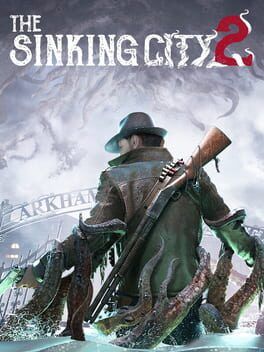

Early The Sinking City 2 length estimates put the campaign between about seven and eight hours, while reviews praise its Arkham atmosphere and survival-horror focus but split on combat polish.
Image: IGDB
Store links: The Sinking City 2 on Steam
The campaign is short, but the estimates are already split
The clearest buying question around The Sinking City 2 is also the one with the messiest answer: how long does it take to beat The Sinking City 2? Gamepur’s launch-window guide says the main story generally takes about seven hours, with a full completionist run landing around 11 hours. A separate guide site, thesinkingcity2.org, gives a slightly longer range, placing a minimal main-story run at roughly eight hours, a typical story-plus-side-investigations run at 10 to 12 hours, and a completionist file at up to about 16 hours.
That is not a tiny discrepancy if you are weighing a survival-horror purchase by hours per dollar, but the two estimates agree on the shape of the game. This is a contained sequel, not a sprawling detective sandbox. Gamepur describes The Sinking City 2 as “relatively linear,” with higher difficulty and optional exploration extending the clock by only a few hours. Thesinkingcity2.org similarly frames the core as dense, saying the game’s side investigations and collectibles add meaningful time without turning it into an open-world time sink.
For practical planning, the safest expectation is this: a focused player can likely finish the campaign in one long evening or over a weekend, while a player who treats every locked safe, optional puzzle, and side case as part of the meal should budget closer to 11 to 16 hours depending on how much they get stuck. The Sinking City 2 length is therefore closer to modern narrative survival horror than to the first game’s broader open-world detective structure.
Completionists should expect friction, not endless sprawl
The completionist picture is less about map size and more about how The Sinking City 2 asks you to move through danger. Gamepur says a 100% run means completing optional puzzles, gathering collectibles, and seeing everything the world has to offer, with an estimated total around 11 hours. Thesinkingcity2.org pushes the upper end higher, saying all cases, safes, and collectibles can take up to about 16 hours, and it specifically identifies eight optional cases as a major part of a fuller run.
The key variable, according to thesinkingcity2.org, is navigation. Its guide says The Sinking City 2 does not place objective markers, which means players who read spaces quickly can move briskly, while others may lose time to environmental interpretation. That detail matters for horror pacing. A corridor that would be a 30-second commute in a marked-objective game becomes a small act of risk assessment when the light is poor, ammunition is thin, and the next clue might be tucked behind a creature you would rather not wake.
Gamepur also notes that difficulty can stretch the runtime. GamersHeroes’ review gives the reason: bullets and healing are limited, enemies often have weak spots, and trying to kill everything can drain your resources. The review says the game’s own tips encourage players to run often. For completionists, that means extra time may come from caution rather than content volume. You may not be clearing a vast checklist, but you may be staring down flooded hallways, deciding whether one collectible is worth two revolver rounds and a bandage.
Reviews frame the sequel as a survival-horror pivot
Early The Sinking City 2 review coverage is unusually consistent on one central point: Frogwares has moved the series away from the larger open-world feel of the original and toward a more managed survival-horror structure. GamersHeroes says the first game felt much larger and more open-world in style, while the sequel is still open in places but “far more managed” and has less downtime on foot. Wccftech is even more direct, saying The Sinking City 2 is not an open-world game and instead moves players between specific explorable locations in a linear progression.
IGN’s review reads that shift through a familiar genre lens, comparing The Sinking City 2 to recent Resident Evil games, especially the 2019 Resident Evil 2 remake, while arguing that its 1920s New England setting gives it a distinct personality. Wccftech hears a different echo, citing inspiration from Silent Hill 2 and describing some locations as sizeable, comparable in feel to something like Brookhaven from that series’ remake context. The overlap between those comparisons tells potential buyers plenty about The Sinking City 2 gameplay: expect locked-off spaces, resource pressure, puzzle gates, returning routes, and rooms built to make you count your shots.
That also explains why the reported runtime lands where it does. A seven-to-12-hour survival-horror campaign can feel lean if it is padded by empty travel, but sharper if each area is built around enemy placement, inventory stress, and environmental storytelling. The early critical tension is whether Frogwares’ more focused design has enough polish to support that pressure all the way through.
Investigation design looks narrower, but potentially stronger
The Sinking City 2 is still being discussed as a game about puzzles, artifacts, and occult investigation, but the sources provided do not frame it as a pure detective sequel in the style of the original. Gamepur describes the game as an adventure-horror title set in a flooded Arkham, built around fighting monsters, solving puzzles, and exploring locations. GamersHeroes’ plot summary follows Calvin Rafferty and Faye Bennet as they pursue strange ancient artifacts, including the Book of Dreaming, before a failed ritual leaves Faye comatose and Calvin searching Arkham for another book tied to another ritual.
The investigative structure, then, appears to be more tightly embedded into survival-horror spaces. Thesinkingcity2.org says side investigations add real hours and calls the optional cases a significant part of a full run, while also noting that unmarked navigation can affect completion time. If that guide’s framing reflects the broader experience, The Sinking City 2 trades the old sense of urban detective wandering for smaller, more pressured casework where reading the environment is part of the hazard.
That trade will divide returning players. If you wanted the sequel to double down on broad open-world clue chasing, Wccftech warns that players attached to the original’s open-world structure may be at least slightly disappointed. If you prefer survival horror with investigation flavor, the same review says the focused and more polished horror approach “will do the trick.” For a buyer, the question is less whether The Sinking City 2 has investigations and more whether you want those investigations squeezed through locked doors, scarce resources, and monster patrols.
Combat is the sharpest fault line in the review roundup
The review split becomes clearer once combat enters the room. GamersHeroes scored The Sinking City 2 at 65% and concluded that even diehard Lovecraftian fans should wait for a few patches. Its main complaint is not that combat is too hard, but that the gunfeel lacks impact. The review says firearms feel lackluster, including an upgraded shotgun that does plenty of damage but does not deliver the expected punch. By contrast, it says melee attacks and head stomps feel solid.
At the same time, GamersHeroes’ criticism sits alongside praise for the survival economy. The review says bullets and healing are very limited, that enemies usually have weak spots, and that poor shot selection burns through ammunition. That is survival horror pressure doing its job, provided the weapons feel responsive enough to make every missed shot feel like your mistake rather than the game’s. This is where players may want to be cautious. A low-ammo horror game with heavy atmosphere can survive imperfect shooting, but weak feedback on firearms can poison the loop if combat encounters become frequent.
IGN’s available review text is warmer, calling the game “lovingly crafted survival horror action” and praising Arkham’s atmosphere, texture work, sound design, and environmental detail. Wccftech also leans positive, calling the sequel a focused horror game with limited inventory and sparse resources. The consensus from these sources is not that combat is universally broken. It is that The Sinking City 2’s combat is designed around avoidance, weak spots, and scarcity, while at least one outlet found the moment-to-moment weapon feel undercooked.
Arkham’s horror pacing is the strongest selling point
The most persuasive praise across early coverage is atmospheric. IGN describes Arkham, Massachusetts in 1929 as damp, decrepit, and densely detailed, saying texture work and sound design combine to create a clammy sense of place. It also notes that cutscenes and facial animation are not always at the same level, but says strong voice acting helps carry those production limitations. For a horror player, that is an important distinction. The fear seems to live more in rooms, soundscapes, and routes through ruined spaces than in cinematic spectacle.
GamersHeroes also finds an advantage in the sequel’s more claustrophobic layout, saying the reduced downtime and managed openness make combat tenser. Wccftech’s description of larger but discrete locations supports that same reading: Arkham is not presented as a huge free-roam city here, but as a set of explorable horror spaces connected by progression rather than long traversal.
The Lovecraftian element appears to be handled through both plot and setting. IGN says the story involves a half-remembered expedition to Lovecraft’s Dreamlands, Calvin’s comatose partner Faye, and appearances or nods tied to the Cthulhu mythos. It also says the narrative remains easy to follow despite engaging with heavier metaphysical ideas. That matters for pacing. Cosmic horror can collapse into lore fog if every room stops to explain itself. Based on IGN’s account, The Sinking City 2 keeps the eldritch stakes readable while letting Arkham’s flooded decay carry much of the dread.
Buy now if you want a compact horror run, wait if polish is your line
For players deciding whether to buy now, the cleanest recommendation is to match your expectations to the reported structure. The Sinking City 2 hours estimate is not that of a massive RPG or an open-world detective game. Gamepur’s seven-hour campaign and 11-hour completionist estimate suggest a compact release. Thesinkingcity2.org’s longer 10-to-12-hour typical run and up-to-16-hour completionist estimate suggest there is more room for side cases and stuck moments, but still within a contained survival-horror frame.
If you are buying for atmosphere, resource tension, Lovecraftian imagery, and focused level design, the early review roundup is encouraging. IGN and Wccftech both frame the sequel as a committed survival-horror pivot with strong environmental craft. If you are buying for weighty combat feedback or technical polish, GamersHeroes’ 65% review and patch-wait advice should give you pause. Its criticism of gun impact is especially relevant because the game’s scarcity model depends on combat feeling fair and readable.
The most practical middle ground is to treat The Sinking City 2 as a weekend horror campaign with optional investigations rather than a long detective epic. Completionists should expect a denser second layer of safes, collectibles, puzzles, and optional cases, but not dozens of extra hours. Players who are sensitive to combat feel may want to watch post-launch patch notes or broader player impressions before committing. Everyone else should go in prepared to run, conserve ammunition, read the rooms carefully, and accept that Arkham’s worst threat may be the temptation to search one more dark corner.