
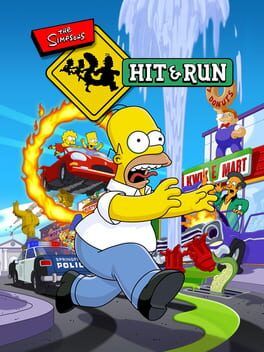
Matt Groening says The Simpsons: Hit & Run may be coming back “in some form,” but Matt Selman’s quick caveat makes this a tease, not a confirmed remaster.
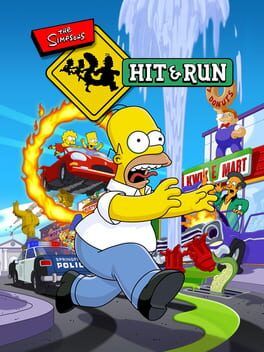
Image: IGDB
Groening’s D23 comment is the news, Selman’s caveat is the warning label
The strongest concrete development around The Simpsons: Hit & Run is one sentence from Simpsons creator Matt Groening at Disney’s D23 event. Asked about another The Simpsons: Hit & Run game, Groening said, according to Empire Magazine as cited by Nintendo Life and IGN, “I think the original game is coming back in some form…” Current Simpsons showrunner Matt Selman immediately followed with “...or not.”
That exchange is enough to put a spark under one of licensed gaming’s longest-running wish-list items, but it is not enough to call The Simpsons Hit and Run return confirmed. No publisher, platform holder, developer, storefront, or official Simpsons channel has announced a remaster, remake, rerelease, sequel, release window, price, or platform list. Nintendo Life explicitly notes that nothing has been officially confirmed or announced, and IGN similarly frames the comment as a possible premature slip rather than an announcement.
That tension is the whole story right now. Groening is the creator of the franchise, so his wording is worth taking seriously. Selman is the current showrunner, and his immediate interruption is equally important because it signals either uncertainty, embargo discipline, or a joke designed to stop the room from treating a stray panel answer like a press release. Fans can be excited, but the safe read is that Groening offered a tease, not a product reveal.
The wording points toward the original game, not a guaranteed sequel
The crucial phrase is “the original game.” Groening did not say a new Simpsons open-world game is in development. He did not say The Simpsons: Hit & Run 2 is happening. He did not name Radical Entertainment, Activision, Disney, EA, Nintendo, PlayStation, Xbox, Steam, or any modern partner. What he said, as reported from the D23 panel, was that the original game is “coming back in some form.”
That wording naturally pushes speculation toward a Simpsons Hit and Run remaster, remake, rerelease, or archival release rather than a brand-new sequel. IGN makes the same distinction, noting that “the original game” suggests players should expect something closer to a remaster or remake than a sequel or reboot, while also warning that nothing concrete has been announced. ComicBook.com lays out a similar range of possibilities, from a simple rerelease to a remake, while cautioning readers to take the tease carefully until it comes through official channels.
For an action-adventure audience, the difference matters. A rerelease would preserve the 2003 structure, mission flow, driving feel, and old open-zone Springfield design with modern availability doing most of the work. A remaster would likely aim to clean up presentation and compatibility while leaving the game’s chase-heavy rhythm intact. A remake would be a much bigger swing, because Hit & Run’s appeal rests on timing, map readability, character swapping, traffic friction, and the fast escalation from gag delivery to vehicle chaos. Rebuilding that badly could flatten the set-piece pacing that made the original work for fans in the first place.
Why Hit & Run still carries weight 23 years later
The Simpsons: Hit & Run originally released in 2003 for GameCube, PlayStation 2, and Xbox, according to Nintendo Life and IGN. It was developed by Radical Entertainment and published by Vivendi Universal Games. Multiple outlets covering Groening’s D23 quote point back to the same core reason fans still ask for it: it translated Springfield into a mission-based, Grand Theft Auto-inspired structure without abandoning the show’s visual identity or comic tone.
DualShockers describes Hit & Run as leaning toward Grand Theft Auto after Radical’s The Simpsons: Road Rage, which followed a gameplay loop similar to Crazy Taxi. IGN calls Hit & Run one of the more memorable licensed games of its era and notes that it gave players a Springfield built around the show’s style, GTA-like play, and Simpsons humor. IGN also cites its own 2003 review score of 8.1/10, where the outlet called it “undeniably the perfect game for Simpsons fans,” while still acknowledging it was not perfect overall.
That legacy is different from simple nostalgia. Hit & Run had a readable action-adventure cadence: drive across familiar districts, pick up a gag-dense objective, hit a chase or delivery timer, then watch Springfield turn into a slapstick obstacle course. The missions were built around recognizable spaces rather than sprawling realism. For modern players used to giant maps, that smaller density may be part of the appeal. A comeback would be judged less on whether it can become a modern open-world blockbuster and more on whether it can keep that snap between joke, route, collision, and consequence.
The business path is the real boss fight
The loudest unanswered question is not whether fans want The Simpsons: Hit & Run back. The source material makes clear that they do. Nintendo Life opens by noting that fans have called for a revival for years, and social reactions cited by IGN and Nintendo Life immediately jumped to hopes for a remake or remaster. ValoSettings also frames the game as the “gold standard” of Simpsons games for many players and notes that fan projects have tried to fill the gap.
The harder question is who could actually bring it back. Nintendo Life says Selman previously described a “corporate octopus” standing in the way. ValoSettings similarly reports that Selman has said a remaster would be tricky because of licensing and corporate complications, while also quoting his March sentiment: “Never say never,” because the team knows people love the game and want it. ComicBook.com adds its own reported understanding that licensing issues have helped keep the game dormant, though that remains an outlet’s explanation rather than an official breakdown of rights.
The original publisher, Vivendi Universal Games, is no longer operating in the same form. ComicBook.com notes that Vivendi Games merged into Activision, and that Radical Entertainment is now an Activision support studio. The Simpsons itself sits under Disney’s corporate umbrella after Disney bought 20th Century Fox in 2019, as DualShockers notes. That does not prove any single rights path, but it explains why a beloved licensed game can be harder to revive than an ordinary first-party back catalog title. Game code, publishing rights, music, likenesses, trademarks, distribution, platform certification, and brand approvals can all become part of the same locked door.
The realistic comeback options, ranked by what Groening actually said
Because the only confirmed evidence is Groening’s “original game” comment and Selman’s “or not,” the most responsible way to think about a The Simpsons Hit and Run comeback is by scope.
The lowest-scope version would be a straight rerelease on a modern storefront or subscription library. ComicBook.com specifically floats possibilities such as a GameCube Nintendo Switch Online release or a PS2 PS Plus Premium release, but those are speculative examples, not announcements. This would fit the phrase “the original game” most literally and would reduce the need to reinterpret the game’s design. The drawback is that platform coverage could be uneven, and a simple archival version may not satisfy players hoping for modern resolution, controls, or quality-of-life updates.
A remaster is the fan-preferred middle lane. Nintendo Life’s comment section excerpt includes readers hoping for a 4K remaster with quality-of-life changes, and IGN notes the community reaction quickly moved in that direction. A remaster could keep Radical’s mission skeleton and Springfield layout while improving display support and access on current hardware. This would also line up with the current industry appetite for sixth-generation nostalgia, a demand ComicBook.com points to when discussing why a return could perform well.
A remake is the most ambitious interpretation. It would give developers room to modernize driving, mission scripting, camera behavior, and environmental density, but it also raises the risk of overcorrecting. Hit & Run’s charm comes from its compact chaos. If a remake stretches Springfield too wide, sands down the physics, or replaces brisk objective design with checklist sprawl, it could lose the tempo that kept the original from feeling like a thin parody of Grand Theft Auto. A sequel or reboot is possible in theory, but Groening’s reported words do not point there as directly.
There is still no release date, platform list, price, or developer
For readers deciding whether to wait, buy an old copy, or believe a viral post, the current answer is simple: wait for an official announcement before making plans around a Simpsons Hit and Run remaster. The sources do not confirm a release date. They do not confirm Nintendo Switch 2, Switch, PlayStation 5, Xbox Series X|S, PC, mobile, or subscription availability. They do not confirm a developer, publisher, upgrade path, physical edition, digital price, frame rate, resolution, restored content, soundtrack status, or whether any original assets are being reused.
The D23 setting makes the tease more interesting because it happened at a Disney fan event rather than in a random interview. Still, D23 panel remarks can sit in the gray zone between planned messaging, offhand enthusiasm, and crowd work. Selman’s fast “or not” is the piece that should keep expectations disciplined. It may mean Groening stepped too close to an unannounced reveal. It may mean the project exists but is not ready. It may mean talks are happening. It may also mean the answer was playful and fans are hearing more certainty than the participants intended.
Until Disney, a game publisher, a platform holder, or a storefront listing makes it official, the only confirmed story is that Matt Groening said the original game is coming back “in some form,” and Matt Selman immediately undercut that certainty. For a game built on sudden turns, crashed sedans, and Springfield’s best kind of disorder, that is a fitting first beat. It is also a reminder to keep both hands on the wheel.