
Planning our coverage of the new Silent Hill Transmission with a focus on Townfall, breaking down what we know about Annapurna and Screen Burn’s approach, what fans should watch for in the reveal, and how it can stand apart from the Silent Hill 2 remake.
Konami is finally ready to pull Silent Hill: Townfall out of the fog. The upcoming Silent Hill Transmission on February 12 is being billed as a major update for the long-quiet project, and it arrives at a time when the series has already been reintroduced through the Silent Hill 2 remake and Silent Hill f. For Townfall, that creates both pressure and opportunity.
This is our plan for covering the stream, built around what we already know about Annapurna and Screen Burn’s take on Silent Hill, the specific things fans should be hunting for in the new reveal, and how the game can carve out its own identity next to Bloober Team’s faithful reimagining of Silent Hill 2.
What Townfall Is Trying To Be
Silent Hill: Townfall is not a mainline numbered sequel. Everything Konami and the developers have said frames it as the opening salvo in a Silent Hill anthology, a series of self-contained horror stories from different creative teams under Annapurna’s co-production umbrella.
Screen Burn (formerly No Code) is the studio behind Stories Untold and Observation, both tightly wound narrative games that mix analog technology, unreliable perspective and psychological horror. Their own studio site describes Townfall as their most ambitious project yet, with a team roughly three times the size of Observation’s. That scale jump matters, because it hints at something larger than a vignette, but still more focused than a sprawling open-world survival horror.
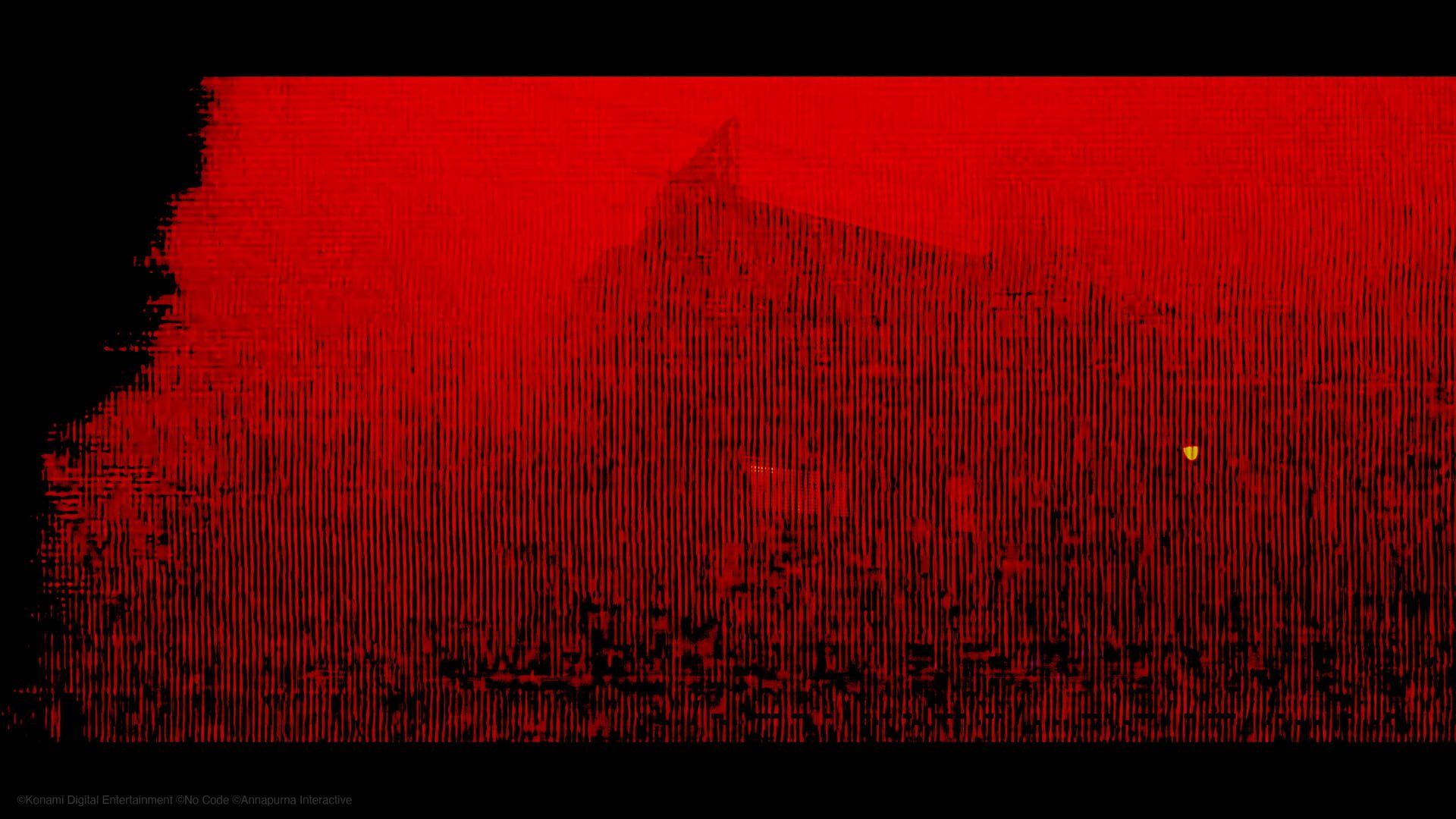
From the very first Townfall teaser back in 2022, the pitch has been consistent. This is Silent Hill told from a different perspective. The footage leaned heavily on distorted CRT imagery, handheld devices and an unseen conversation, suggesting the player might be less of a traditional on-the-ground protagonist and more a distant observer or interlocutor.
For our Transmission coverage, that is the core lens: Townfall as a perspective experiment inside the Silent Hill universe, rather than another third-person tour through familiar streets.
Annapurna + Screen Burn: What Their Track Record Tells Us
To understand what to look for in the new reveal, it helps to read the collaborators.
Annapurna Interactive has built its name on tightly authored, emotionally sharp games. From Outer Wilds to Stray to Neon White, the publisher tends to back projects that use structure and mechanics in service of theme, not the other way around. Their involvement with Townfall has always sounded less like simple funding and more like a creative alignment around Silent Hill as a psychological anthology.
Screen Burn’s history is even more instructive. Stories Untold was a collection of short, interconnected episodes that pulled players through text adventures, microfiche readers and deskbound interfaces. Observation turned a haunted-space-station premise on its head by putting you in the circuits of the station AI, watching humans through cold security cameras rather than embodying one directly.
Across both, a few patterns emerge that are crucial to Townfall:
They favor indirect control and mediated perspective. You rarely just walk around as a person holding a gun. Instead you sit at a console, peer through a monitor, manipulate clunky hardware. That suits Silent Hill’s obsession with memory, media and perception.
They structure stories in chapters and escalating reveals. Both prior games drip-feed context through isolated scenarios that gradually click together into a larger picture. For Townfall, that implies an anthology-like internal structure: separate cases or locations inside one overarching narrative.
They lean into psychological dread over spectacle. Jump scares exist, but the impact usually comes from the dawning realization that you have been misreading what you are seeing. That dovetails neatly with Silent Hill’s tradition of guilt-ridden protagonists and shifting realities.
Our pre-show coverage will foreground this creative DNA as the baseline expectation for Townfall, so any departure in the new footage really stands out.
What We Know About Tone, Structure And Perspective
Although Konami has kept hard details under wraps, the various interviews, site blurbs and teaser breakdowns paint a fairly cohesive picture of Townfall’s intended shape.
Perspective
Multiple reports and developer comments suggest Townfall is at least primarily first person, likely filtered through devices or screens, rather than a pure body-camera viewpoint. The original Transmission teaser implied that the player might be communicating with someone trapped in Silent Hill, watching their ordeal unfold through a portable screen or broadcast.
NotebookCheck and other outlets have pointed to hints of a first-person framing that stands in deliberate contrast to the over-the-shoulder third person of Silent Hill 2 and Silent Hill f. That alone positions Townfall as the series’ experimental branch, something closer to a voyeuristic ghost story than a character action horror experience.
For the new Transmission, our coverage will track anything that clarifies this: HUD elements, how the camera moves, whether we ever see the player character’s body, and how often screens or monitors sit between us and the horror.
Structure
Townfall is rumored to adopt an episodic or chapter-based structure. Given Screen Burn’s history, that probably means a series of discrete scenarios that slowly reveal a coherent throughline rather than a single continuous trek across a map.
There have also been hints that Townfall could be set in a different time period, potentially the 1980s, with analog tech and old CRTs baked into the story itself. Even the studio’s new name, Screen Burn, references the ghostly imprint left on old displays, a strong metaphor for both memories and lingering trauma.
As we watch the new Transmission, we will be looking for explicit confirmation of this structure. Do we see chapter title cards, time jumps, different locations that feel self-contained? Is Konami positioning it as a one-and-done story or a platform for multiple episodes under the Townfall label?
Tone
Townfall’s tone so far leans into quiet dread. The teaser uses static, clipped radio chatter, and strained conversation. No monsters are shown outright, only glimpses of drowning coastlines and distorted imagery.
Compared to the heavier, tragic melodrama of Silent Hill 2, Townfall seems more interested in the unease of watching suffering from a distance. That tension, between observer and participant, has clear thematic potential. Are you complicit if you only watch? Can you misread what you are seeing through a screen? How much of Silent Hill’s reality is shaped by who is looking?
During the broadcast, we will focus on whether the new trailer reinforces this voyeuristic psychological tone or pivots toward more conventional survival horror scares.
What Fans Should Watch For In The New Reveal
With all that context, here are the key pillars that will define our live coverage and post-show breakdown of the Transmission’s Townfall segment.
First, watch how the game establishes its point of view. Does the trailer open with a device booting, a camera feed, a radio conversation? If we get gameplay, do we control someone holding a physical object, or are we flicking between feeds and consoles? Any sequence that shows the player interacting with in-world technology will be crucial for understanding how Townfall plays.
Second, look for signs of how interactive it really is. Screen Burn’s past work often made very constrained physical movement feel tense through puzzle-like interfaces and timed decisions. For Townfall, fans should pay attention to whether the footage shows walking through spaces, combat encounters and inventory management, or whether the focus is on examining objects, decoding signals and choosing dialogue options. That difference will say a lot about whether this is a full survival horror entry or a more contained narrative horror experience.
Third, listen carefully for the setting and timeline. Dialogue snippets about the year, references to technology, clothing styles, even the design of cars and storefronts in background shots can help pin down when Townfall takes place. An older setting, especially around the 80s, would reinforce the analog, screen-obsessed aesthetic and separate it visually from the more contemporary look of the remake.
Fourth, pay attention to how Silent Hill itself is portrayed. Townfall might not even spend most of its runtime in the familiar town proper. Shots of coastal landscapes, smaller settlements or outlying facilities would support the idea that this anthology approaches Silent Hill more as a curse or influence than a single map. We will be frame-by-framing any environmental footage to see if the game revisits iconic locations or forges entirely new ones.
Finally, listen for how Konami frames the project in its own words. If the Transmission explicitly calls Townfall an anthology entry or references future Annapurna collaborations, that sets expectations for scope and continuity. If they position it instead as a full mainline scale story, that shifts the comparison points and raises the bar for mechanical depth.
How Townfall Can Stand Apart From The Silent Hill 2 Remake
Bloober Team’s Silent Hill 2 remake has already reintroduced the series formula to both old fans and newcomers. It leans heavily on faithful reconstruction of environments, over-the-shoulder combat and puzzle exploration, with its main deviations coming from visual updates, pacing tweaks and some reinterpreted scenes.
Townfall does not need to compete directly on that axis. If anything, trying to outdo Silent Hill 2 on nostalgia or combat-focused survival horror would be a mistake. Instead, its best route to distinction lies in three areas.
The first is perspective-driven storytelling. Where Silent Hill 2 puts you in James Sunderland’s shoes and keeps the camera behind him, Townfall can own the experience of being outside the nightmare looking in. You might be a dispatcher, a radio operator, a tech working through mysterious tapes. That framing would allow the game to explore themes of guilt and responsibility from a different angle, asking whether watching tragedy unfold is a form of participation.
The second is structural experimentation. A chapter-based or anthology-like story built from discrete cases, each with their own cast and localized horrors, would give Townfall room to play with format in a way the remake cannot. Imagine one chapter as a static coastal outpost thriller, another as an interrogation framed entirely through taped footage, and a finale where the separate threads collapse into a single revelation about Silent Hill’s reach. That kind of format experimentation is in Screen Burn’s wheelhouse and would instantly differentiate the game.
The third is a distinctive audiovisual language. The remake chases atmospheric fidelity, fog and grime with high-end rendering. Townfall can define itself with stark UI design, glitch aesthetics, and the visual grammar of old broadcast equipment. Hard cuts between camera feeds, burst static and screen burn-in could become the series’ new visual iconography, synonymous with this Annapurna-led branch of Silent Hill.
Our post-Transmission analysis will measure Townfall against these criteria rather than against combat depth or environmental scale, where the remake is built to shine.
Our Coverage Plan For The Transmission
For the live event itself, we will be treating Townfall as the headline act of the show. Ahead of the stream, we will run a primer that recaps the game’s confusing development history, from its 2022 reveal to Screen Burn’s rebranding and the long silence that followed, and lays out the key questions we want the Transmission to answer.
During the broadcast, our live blog will focus on timestamps tied to specific Townfall moments. First-trailer structure, glimpses of UI and perspective, clear shots of environments and any new characters introduced will get immediate callouts. If Konami drops a release window or platforms list, that information will be highlighted with context about where it fits in Silent Hill’s current resurgence.
Once the Transmission ends, we will publish a detailed breakdown of the new Townfall footage. That piece will deconstruct the trailer frame by frame, compare it against previous teasers and developer comments, and evaluate how well it sets Townfall apart from both the Silent Hill 2 remake and Silent Hill f. We will also keep an eye on post-show interviews or blog posts from Konami, Annapurna or Screen Burn for extra details about narrative scope and mechanical systems.
If Konami provides any playable demo timelines or invites for press previews, we will fold those into a follow-up roadmap article that looks at how Townfall’s marketing cadence lines up with its rumored 2026 launch window.
Why Townfall Matters For Silent Hill’s Future
Silent Hill’s revival is not just about remaking a classic, it is about proving the series can support new voices. Townfall is the clearest test case for that ambition. A successful launch would validate the anthology approach with Annapurna and open the door to more experimental projects under the Silent Hill banner.
As the Transmission approaches, the big question is whether Townfall still feels like an intriguing mystery or finally starts to look like a concrete game. By focusing our coverage on its unique perspective, structure and tone, rather than on how closely it mirrors past entries, we will be watching to see if Townfall can become the piece of the Silent Hill revival that pushes the series somewhere genuinely new.