
The first real gameplay blowout for Silent Hill: Townfall confirms a foggy Scottish island setting, a full first‑person structure, and Annapurna’s narrative fingerprints all over its design. Here’s what the latest trailers and previews tell us, and how Townfall is positioning itself next to Silent Hill 2 Remake and Silent Hill f.
Silent Hill is finally leaving America. With the latest gameplay trailer and a round of hands‑off previews, Silent Hill: Townfall has gone from mysterious spin‑off to one of the most intriguing horror projects in Konami’s revival slate. It is still unmistakably Silent Hill, but it is also a very different proposition from Bloober Team’s Silent Hill 2 Remake and NeoBards’ Silent Hill f.
Set in 1996 on a desolate Scottish island, played entirely in first person, and co‑published by Annapurna Interactive, Townfall is building its identity on grounded coastal horror and slow‑burn narrative design rather than nostalgic reconstruction or out‑there historical experimentation. Here is what the new footage and write‑ups actually confirm, and what it suggests about where Townfall fits within the series’ new multitrack future.
A new town at the edge of the world
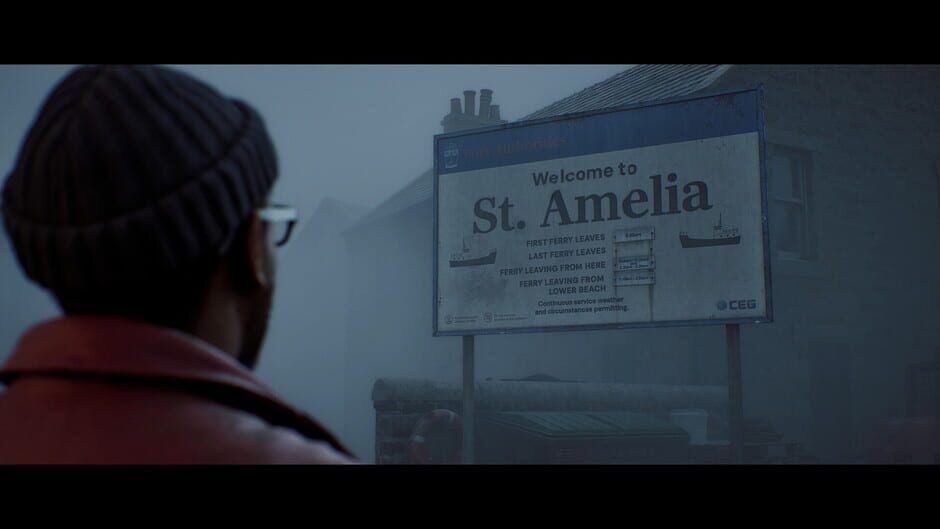
Townfall’s most immediate break from tradition is its setting. Instead of returning to the foggy lakeside of the American Silent Hill, Screen Burn has built a new cursed community on St. Amelia, a fictional Scottish island off the country’s east coast. The latest trailer opens with the kind of imagery that makes this shift impossible to miss: craggy cliffs, wind‑battered fishing boats, low stone walls and narrow streets carved into a seaside village that looks like a place people actually live.
Previews note that this is late‑90s Scotland rather than the series’ usual midwestern Americana. Signs and shopfronts carry British design cues, power lines sag over slate roofs, and the coastline feels as crucial to the vibe as the fog itself. This is not Silent Hill in the legal sense so much as a spiritual offshoot, a place where the same metaphysical rules have taken root in very different soil.
Konami and Screen Burn are positioning St. Amelia as a town with its own history of grief and guilt that happens to intersect with the broader Silent Hill mythology. The fog rolls in over the North Sea instead of Toluca Lake, but it still obscures reality, reshapes streets, and isolates anyone unlucky enough to be caught inside. The decision to replant Silent Hill’s psychological horror in a small Scottish fishing community signals a pivot away from franchise tourism toward something more self‑contained and regionally specific.
Simon Ordell, the outsider who came home
You play as Simon Ordell, a man with unfinished business in St. Amelia. The official descriptions frame his journey as a return to “put things right,” though the new trailer sensibly refuses to say what he did wrong. Instead, it focuses on his fragile state when he arrives.
Simon wakes up connected to an IV bag, wearing an emergency medical bracelet, and carrying a portable CRT television that seems far too heavy and archaic for a casual trip. These details root him in a medical past he cannot escape, suggesting hospitalizations, accidents, or worse. If classic Silent Hill protagonists were defined by denial, Simon feels closer to someone whose body has already betrayed him before the town gets a chance.
In the new gameplay footage we see him shuffle through cramped corridors, hands shaking slightly as he pushes open doors or levels a revolver. His dialogue is sparse and cautious, often sounding like someone who half expects reality to lurch sideways at any moment. Townfall appears to be leaning into an unreliable, physically vulnerable lead whose perspective is shaped by trauma that predates the island’s supernatural influence.
First‑person horror built around the CRTV
The single biggest structural reveal in the new trailer is that Townfall is fully first person. Earlier teasers toyed with abstract imagery and analog screens, but now we see concrete exploration: Simon’s hands fumbling with knobs on the CRTV, his flashlight beam cutting through fog, and quick flashes of combat and stealth.
Screen Burn has said that the entire game was designed around the CRTV device. In practice that means the television is not just a flavor prop but the mechanical spine of exploration and storytelling. Players tune its dials to chase broken signals that bleed into the world, pull in audio from distant events, or overlay distorted images on top of their surroundings.
In one sequence, Simon huddles in a derelict seaside cottage while the CRTV flickers with grainy footage of what looks like the same room, only intact and warmly lit. Previews describe puzzles built around aligning what you see on the CRTV with the physical environment, effectively using the device as a time‑warped lens into the town’s buried past. Sometimes the TV surfaces cryptic messages and phantom broadcasts that echo the radio static of earlier games, but with more agency on the player side.
First person lets Townfall commit fully to this idea. You are always right up against the screen, physically turning knobs and twisting dials. The CRTV becomes an extension of Simon’s body, something you hold up during stealth sections to track distant enemies, or clutch under your arm as you sprint down a pier with fog swallowing the waterline on both sides.
Combat exists, though it is clearly not the focus. A few shots in the trailer show Simon raising a revolver in jittery first‑person aiming, backing away from twisted figures that lurch out of the fog. There are also moments of evasion where he ducks behind fishing nets and crates to avoid patrolling shapes. The emphasis, according to multiple previews, is on desperation rather than empowerment, with ammunition scarce and the CRTV often more useful than the gun.
Annapurna’s fingerprints on the narrative
Townfall is being co‑published by Annapurna Interactive, and you can feel that influence in how Screen Burn talks about the game’s structure. This is still a full‑length survival horror title, not a short art‑house experiment, but its storytelling goals are closer to something like Stories Untold or Observation than a conventional action horror campaign.
The PlayStation Blog explains that Screen Burn wanted to “evolve the unique narrative design” of its past projects. In practice that means narrative is embedded into puzzles and environmental interactions instead of delivered primarily through cutscenes. Solving a puzzle with the CRTV might not just open a locked door; it could also trigger an overlapping audio log or a visual flash of someone else’s memory superimposed on the environment.
Previews repeatedly call out how conversation, exploration, and puzzle solving bleed into one another. Instead of separate modes where you have puzzle rooms and then story scenes, Townfall tries to make every interaction feed back into the mystery of St. Amelia and Simon’s past. Annapurna’s track record with narrative‑driven indies suggests a willingness to let players sit with ambiguity, trust them to connect thematic dots, and avoid over‑explaining its weirdness.
Crucially, Townfall is not framed as a nostalgic retread. Screen Burn is not recreating specific Silent Hill story beats so much as using its vocabulary of guilt, repression, and supernatural mirroring to tell a new, self‑contained tale. Where Silent Hill 2 Remake is tasked with honoring one of the most dissected stories in horror games, Townfall gets to explore what Silent Hill means in a different culture, decade, and emotional register.
How Scottish coastal horror reshapes Silent Hill’s imagery
Relocating Silent Hill’s fog to Scotland does more than swap road signs. It rewrites the textures of fear. Instead of strip malls and American diners, players walk past chipped harborside cafes, fishmongers with boarded‑up windows, and cliffside cemeteries where the sea pounds the rocks just out of sight.
The weather is a character in itself. The campaign is set in 1996, so there are no smartphones or modern conveniences. Power flickers in and out across the town, leaving stretches of St. Amelia lit only by sodium streetlights that smear through the mist. When the fog thickens, it blends almost seamlessly with sea spray, making it hard to tell where land ends and water begins. Shots of Simon stumbling along coastal paths, hearing waves somewhere below but seeing nothing past the guardrail, suggest a more vertical, precarious level design than classic Silent Hill’s relatively flat streets.
There is also a tonal shift in how the town’s history might manifest. Where the original Silent Hill lost its industries and turned into a tourist ghost town, St. Amelia feels exhausted rather than abandoned. Nets hang empty, boats rot at moorings, and rust creeps in on every surface. It is easy to imagine the island’s supernatural horrors latching onto generational poverty, fishing accidents, and lost lives at sea as much as individual sins.
Visually, the monsters glimpsed so far echo this maritime, medical blend. We see shambling figures with elongated limbs that look waterlogged, as if bloated from time beneath the waves, and bandaged faces that tie back to Simon’s hospital history. Their silhouettes are more organic than the geometric sharpness of iconic enemies like Pyramid Head, reinforcing that Townfall is not chasing direct callbacks.
Design expectations: exploration, puzzles, and pacing
Putting all of this together, the new wave of information paints Townfall as a slower, more investigative Silent Hill built on three pillars: environmental exploration, CRTV‑driven puzzles, and narrative choice in how deeply you dig into the town’s secrets.
Levels seem to be large, interconnected chunks of St. Amelia rather than open‑world sprawl. The trailer cuts between interior spaces like hospitals, guesthouses, and boat sheds, and exterior stretches of streets and docks that look explorable but bounded. Fog is used as both a mood piece and an invisible wall, carving paths out of the mist while always suggesting more just out of reach.
Puzzles often revolve around aligning perspectives. One preview mentions tuning the CRTV to access a specific frequency that reveals hidden symbols on an otherwise blank wall, then physically moving Simon so that those symbols line up with environmental features, creating a code. Others hint at using the TV audio as a kind of sonar to navigate blind corridors while monsters roam nearby, rewarding players who are willing to stop and listen rather than run.
Combat and stealth seem to punctuate these sequences rather than dominate them. Encounters are brief but intense, and the first‑person angle combined with tight spaces means you rarely see more than a sliver of your attackers at once. Resource scarcity and Simon’s frailty should keep the tempo closer to classic survival horror, but the structure of events feels more authored than the freeform wandering of older games.
How Townfall differs from Silent Hill 2 Remake
With Konami greenlighting multiple Silent Hill projects at once, every new trailer invites comparison. Silent Hill 2 Remake, built by Bloober Team, is a third‑person reconstruction of a 2001 classic with updated combat, modern visuals, and a relatively faithful rendering of James Sunderland’s story and the original town.
Townfall, by contrast, is almost aggressively uninterested in revisiting that template. Instead of reinterpreting an existing plot, it introduces a new protagonist, a new town, a new time period, and a whole new mechanical focus. It forgoes the over‑the‑shoulder camera and heavy melee combat in favor of an immersive first‑person view, a signature gadget, and stealth segments that play off close‑quarters fear.
Where Silent Hill 2 Remake must constantly navigate fan expectations about specific scenes and endings, Townfall has the freedom to surprise. Its horror leans more on moment‑to‑moment paranoia and narrative experimentation than on reverence for canon moments. You are not here to see how they handled “that scene” this time; you are here to learn what St. Amelia is hiding and how Simon’s past poisoned it.
Even visually, Townfall’s color palette is cooler and more grounded. Silent Hill 2 Remake uses dramatic lighting to reframe familiar locations, whereas Townfall prefers the washed‑out greys and sodium oranges of a coastal town after tourist season. It is a different flavor of melancholy.
How Townfall differs from Silent Hill f
Silent Hill f is the other big wildcard in Konami’s slate. Set in 1960s Japan and styled with florid body horror, it refracts Silent Hill’s psychological motifs through folklore, social pressure, and a different cultural context. Townfall and f almost act as mirror experiments: both relocate Silent Hill outside the familiar American town, but they look in very different directions.
Silent Hill f is historical and surreal, stretching the series toward extravagant visual symbolism with invasive flowers and dreamlike imagery. Townfall is comparatively grounded and contemporary, tethered to a real‑world style of village and an era many players still remember. Its horrors seem born from damp concrete, medical equipment, and the relentlessness of the sea rather than ornate fantasy.
Mechanically, early information on Silent Hill f suggests a more traditional third‑person structure with an emphasis on set‑piece sequences. Townfall stays intimate, keeping you trapped behind Simon’s eyes and asking you to piece together the story yourself with the help of the CRTV. If f is aiming for operatic tragedy, Townfall looks more like a slow implosion in a town that has been dying quietly for years.
Together, they sketch a future where “Silent Hill” describes a shared language of guilt and otherworldly reflection rather than a single place or format. Townfall’s job is to prove that this language can support a full‑length, first‑person, narrative‑driven horror game without losing what makes Silent Hill feel like Silent Hill.
What to expect at launch
With Silent Hill: Townfall targeting a 2026 release on PlayStation 5 and PC, the new gameplay reveal is less a final pitch and more a mission statement. The message is clear: this is not a nostalgia piece, and it is not a side‑story tossed off between bigger projects. It is a full, self‑contained psychological horror game that wants to make you scared of fog, sea cliffs, and static‑blasted TV screens all over again.
Expect a slow, uncomfortable pace that prioritizes exploration and story over constant action. Expect puzzles that ask you to think about how you are looking at the world, not just which key fits which door. Expect a protagonist whose body and mind are already fragile before the island gets involved. And most of all, expect a version of Silent Hill that has traded midwestern highways for crumbling piers without losing its obsession with the ghosts we carry with us.