
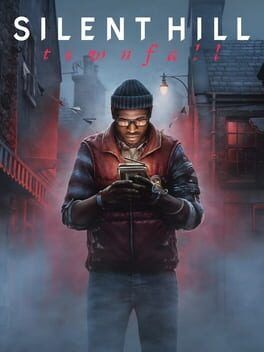

Konami’s next Silent Hill finally has a date. Here is how the September 24 release reveal, Townfall’s analog-horror aesthetic, and its Scottish island mystery fit into the publisher’s wider Silent Hill revival plan.
Sony’s latest State of Play finally put a date on one of Konami’s most intriguing horror experiments. Silent Hill: Townfall, developed by Screen Burn and published under the Annapurna Interactive and Konami partnership, arrives on September 24, 2026 for PS5 and PC. After years of vague teasers and tone-piece trailers, this latest showing finally tied Townfall’s vibes to something concrete: a firm date, a sharper look at its analog-horror identity, and a clearer sense of its place in the broader Silent Hill revival.
The September 24 reveal: from cryptic teaser to concrete launch
Townfall’s State of Play trailer doubles as a mission statement. The footage is still fragmented and strange, but there is a stronger spine to it now. Konami confirms that the game is a full-length, self-contained Silent Hill entry, and caps the trailer with the September 24 date that various previews and guides had already been circling.
The new trailer leans into first-person exploration of the Scottish town of St. Amelia, cutting between washed-out coastal exteriors and claustrophobic interiors that pulse with red light. We see more of protagonist Simon moving through cramped corridors, checking a handheld device, and slipping between reality and a blood-slick Otherworld. This is threaded with quick flashes of a new stalker creature and panicked dialogue that hints at Simon’s fractured memory.
Sony’s blog breakdown stresses that Townfall is designed around narrative-driven puzzles rather than traditional key-and-door gating. You are not just solving abstract riddles to open the next room; you are cracking personal codes, reassembling memories, and using the same tools Simon relies on in the fiction. The release date reveal is framed around this pitch, suggesting that Townfall is less a combat-heavy horror game and more a tense, psychological spiral that uses puzzle-solving as its main emotional lever.
PS5-specific details also came into focus during the announcement. DualSense triggers are used to give weapons a weighty, reluctant feel, while haptic feedback is tuned to environmental unease, like a faint thrum that intensifies as an unseen creature approaches. Motion control is even brought in for interacting with the in-game CRTV, turning the controller to fine-tune signals and drag faint images into clarity. Tying these details to a date makes Townfall feel like a tangible product, not just an atmospheric concept.
An analog-horror Silent Hill
If earlier teasers hinted at analog horror, this latest showcase confirms that Townfall is built around it. Rather than leaning on photorealism and jump scares, the game’s identity comes from old screens, distorted signals, and the feeling that you are watching a recording that was never meant to be found.
The CRTV device is the clearest expression of this. It sits somewhere between a portable television and a cursed field recorder, and it becomes a core tool for Simon and the player. You use it to pick up unsettling broadcasts, examine corrupted footage, and literally tune into the town’s buried history. That fits squarely in the analog-horror lineage of projects like Local 58 and Channel 7 style YouTube series, where horror arrives through signal loss, VHS decay, and untrustworthy broadcasts.
Townfall’s aesthetic backs this up. St. Amelia’s environments are filmed with a grainy, low-saturation eye, then slashed with sharp red lighting that evokes warning LEDs and broken recording indicators. Even when the game cuts to more traditional first-person segments, the UI and transitions feel like channel switches or tape glitches. It is less about sudden shocks and more about the creeping dread that your perspective is limited, and that something vital is always happening just outside the frame.
That approach is an interesting fit for Silent Hill. Classic entries have always played with unreliable reality and characters whose perception cannot be trusted. Analog horror gives Screen Burn a modern, formal way to express that same idea, turning every camera cut and audio pop into part of the storytelling toolkit.
Story setup: a stranger in St. Amelia
Konami is still guarding story specifics, but the latest round of previews outlines the basic setup. Silent Hill: Townfall is set in Scotland in 1996, far from the familiar streets of the original town but clearly connected to its supernatural logic. Players control Simon, a man who finds himself in the remote coastal settlement of St. Amelia with little sense of why he is there or what he is running from.
The PlayStation blog and Eurogamer’s coverage both point to Zoe, a nurse at a local clinic, as the second key figure. She appears to be the one who calls Simon back to the island, yet her own dialogue suggests she questions that decision and may not be a straightforward ally. In typical Silent Hill fashion, their relationship seems bound up with shared guilt, half-remembered trauma, and the town’s capacity to twist personal history into physical spaces.
St. Amelia is presented as a place suspended between life and abandonment. There are hints of tourism buried under hostile weather and creeping rot, with the CRTV picking up ghostly local broadcasts that do not quite line up with what Simon sees in front of him. As he digs into the town’s past and his own, the Otherworld bleeds in, turning familiar hallways into meat-lined tunnels and twisting everyday objects into ritualistic symbols.
The game balances this with light combat and stealth. The new trailer shows a looming creature stalking Simon, sometimes approached slowly and sometimes confronted head-on. Screen Burn positions these segments as spikes of tension rather than the main focus. The real spine of Townfall is digging into conversations, environmental clues, and those signal-based puzzles that reveal who Simon was before St. Amelia and why this town feels like a personal sentence.
Where Townfall fits in Konami’s Silent Hill revival
Townfall is not arriving alone. Konami has been clear that it wants a multi-pronged Silent Hill comeback, with different teams handling different tones and formats. Within that strategy, Townfall serves as the experimental, auteur-driven piece that sits alongside the more traditional and blockbuster projects.
At one end of the spectrum there is the Silent Hill 2 remake, built to reintroduce the series’ most famous story with modern production values. Elsewhere, Konami has greenlit projects that branch away from the classic template and push into new territory. Townfall occupies that latter space. By handing the keys to Screen Burn and partnering with Annapurna, Konami is signaling trust in a studio known for narrative ambition rather than raw spectacle.
The September 24 date also reinforces the idea of Silent Hill as an ongoing label rather than a once-in-a-decade event. Between remakes, spin-offs, and new entries like Townfall, Konami appears intent on keeping something Silent Hill-related in the conversation year after year. In that lineup, Townfall’s analog-horror focus gives the brand room to breathe. It can appeal to horror fans who might not have nostalgia for PS2-era fog but are deeply into current internet horror trends and experimental narrative design.
For longtime fans, the game’s structure offers a different kind of reassurance. Even if Townfall swaps American suburbs for a Scottish coast and film grain for VHS static, it still circles the familiar series obsessions: guilt, repression, towns that mirror inner lives, and monsters that feel like accusations made flesh. By wrapping all that in analog horror rather than straight psychological thriller visuals, Konami and Screen Burn are betting that Silent Hill can evolve without losing its core identity.
With a firm date on the calendar, Silent Hill: Townfall has shifted from curiosity to centerpiece in Konami’s revival schedule. If the full game delivers on the promise of this reveal, it could show that Silent Hill’s future lies not just in returning to past glories, but in tuning into stranger, grainier frequencies as well.