
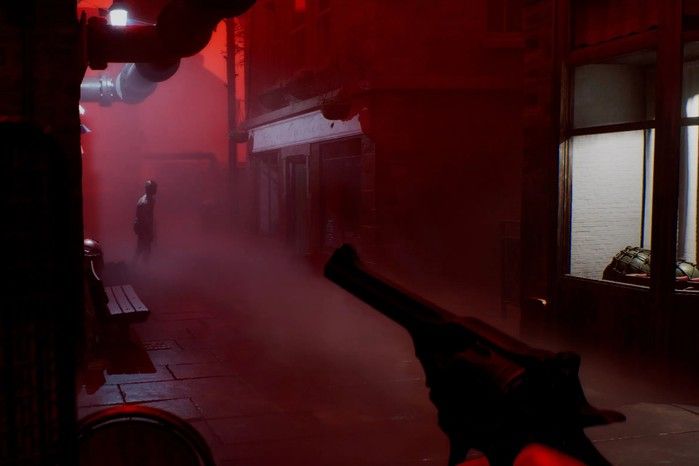

Konami has detailed how Silent Hill Townfall uses PS5 3D audio, ray tracing, DualSense haptics, adaptive triggers, and motion controls ahead of its late September launch.
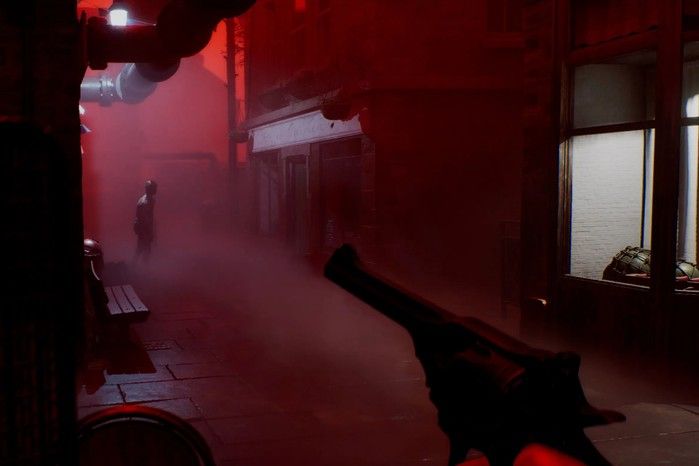
Image: radiotimes.com
Konami’s PS5 pitch is horror you can feel in your hands
Konami has detailed how Silent Hill: Townfall will use PS5 hardware ahead of launch, and the clearest new information is that the DualSense controller is being treated as part of the horror design rather than a simple input device. In a PlayStation Blog post attributed to Silent Hill series producer Motoi Okamoto, Konami says developer Screen Burn has built Townfall around PS5 3D audio, ray-traced lighting, haptic feedback, adaptive triggers, and motion controls.
That is a meaningful reveal because Silent Hill: Townfall is also changing the series’ physical relationship with the player. According to the PlayStation Blog, this is the first full-length Silent Hill game presented in first person. The camera shift puts less space between the player and whatever is moving in the fog, and Okamoto frames the PS5 feature set around that narrower field of view. When sight is limited, sound, vibration, trigger resistance, and small hand movements become part of the pressure.
The immediate tension is launch clarity. The supplied PlayStation Blog headline says Silent Hill: Townfall is out September 24, and GamingBolt, Gagadget, and VGTimes also cite September 24, 2026. Techtroduce, however, reported that the PlayStation Blog post currently listed September 25 while Konami’s official Townfall materials continued to show September 24. Based on the sources provided, September 24 is the date supported by most listings and reports, but there is a documented one-day discrepancy horror fans should verify on their regional PlayStation Store or PC storefront before planning around unlock time.
DualSense features push combat, footsteps, and the CRTV into the nerves
The DualSense breakdown is the most practical part of Konami’s update. Okamoto says every weapon swing, trigger pull, and heavy footstep will use the controller’s haptic feedback. In a horror game built around uncertainty rather than constant spectacle, that kind of tactile detail can matter. A distant thud in the audio mix is one thing. A heavy step felt through the controller while the player is holding a narrow line of sight is a different kind of warning.
Adaptive triggers are also confirmed for combat. Konami has not supplied a full control chart in the provided material, but the stated intent is that pulling a trigger during fights will carry physical feedback through the DualSense. For a survival-horror audience, that raises useful questions that are still unanswered: whether trigger resistance changes by weapon, whether it communicates low resources or stress, and whether players can tune or disable it. None of the provided sources confirm accessibility or controller customization options.
The more unusual detail is motion control support. Okamoto says Townfall uses the DualSense’s built-in motion controls for specific mechanics, including fine-tuning the CRTV and aiming guns. That could be the feature that divides players. Gyro aiming can add precision and unease, especially when a first-person horror game asks for small corrections under pressure, but forced motion input can be uncomfortable for some players. The sources confirm motion controls exist; they do not confirm whether those controls are optional.
3D audio replaces certainty with direction, distance, and doubt
Silent Hill has always relied on sound to make players imagine danger before they see it, and Townfall appears to make that idea central to its first-person design. The PlayStation Blog says the limited scope of vision in first person turns sound into a crucial element, with 3D audio used to recreate nearby sounds convincingly. Okamoto credits audio director Byron Bullock and composer Pilotpriest with building the environments, background audio, music, and creature sounds into a nightmarish soundscape.
The important mechanical change is the CRTV. According to Konami’s PlayStation Blog post, Simon holds this device in one hand to scout roaming monsters, find puzzle clues, and explore St. Amelia. GamingBolt notes that this replaces the series’ iconic radio. That matters because the warning system is no longer framed as a passive crackle in your pocket. It is an object in hand, connected to looking, tuning, and interpreting space.
For players using headphones or a 3D audio setup on PS5, Townfall’s pitch is clear: the fear is meant to come from direction and proximity. A monster does not need to be on screen to occupy the room. Konami’s description suggests the game wants players listening for what the camera cannot show, then deciding whether to raise a weapon, check the CRTV, or keep moving through the fog.
Ray-traced fog, flashlight beams, and the Otherworld carry the visual burden
Konami is also tying Silent Hill: Townfall PS5 atmosphere to ray-traced lighting. GamingBolt reports that Okamoto described ray tracing as integral to the game’s creepy atmosphere, and the PlayStation Blog material emphasizes a believable St. Amelia layered with period detail. According to GamingBolt’s account of Okamoto’s comments, ray tracing is used for soft ambient lighting in foggy outdoor areas, the flashlight during indoor exploration, flashing alarm lights, and the transition from blue-grey fog into the franchise’s Otherworld.
Those details fit Silent Hill’s strongest visual language. Fog is useful because it hides. A flashlight is useful because it reveals too little. Alarm lights and sudden environmental shifts are useful because they make the familiar unsafe. The PS5 feature breakdown suggests Screen Burn is leaning on lighting changes to control how quickly the player understands a space, especially when the first-person camera already restricts awareness.
Performance is the open technical question. VGTimes reports that the standard PS5 version will offer Quality Mode at 30 FPS and Performance Mode at 60 FPS, with PS5 Pro using Sony’s PSSR upscaler. That information is not included in the supplied PlayStation Blog text, so it should be treated as a report from VGTimes rather than a first-party specification in the material available here. Konami’s confirmed PS5 feature pitch centers on immersion systems, not a full performance breakdown.
St. Amelia’s 1996 setting gives the hardware features a reason to exist
Townfall is set in 1996 on St. Amelia, a Scottish town where protagonist Simon Ordell washes ashore with the instruction to “put things right,” according to the PlayStation Blog. GamingBolt also reports the 1996 setting and Simon’s arrival on the shores of St. Amelia. Gagadget describes St. Amelia as a small island off the coast of Scotland, while VGTimes calls it an isolated Scottish island and remote fishing village. The exact wording varies by outlet, but the consistent picture is a cold, fog-bound Scottish setting away from the familiar streets of Silent Hill itself.
The period setting is not cosmetic in Konami’s framing. GamingBolt cites writer Jon McKellan explaining that Screen Burn’s history with archaic technology and old computers made the 1990s feel like the right time for horror. He said the team could bring analog technology into Townfall in a period where that kind of tech feels right for Silent Hill without becoming too modern.
That is where the CRTV, motion controls, puzzles, and audio design meet. Konami says Screen Burn is known for narrative-driven puzzles, and Townfall will reveal story fragments through puzzles rather than cinematics alone. The PlayStation Blog also describes the story as socially conscious, dealing with the individual and the corporate as well as the individual and society. The available material does not spell out the plot resolution, enemy roster, or resource economy, but it does show a design direction: old tech as a tool, a threat detector, a puzzle interface, and a way to make the player handle uncertainty directly.
The release picture is mostly clear, with one date wrinkle to watch
For launch planning, the strongest supported date across the provided sources is September 24, 2026. The PlayStation Blog headline says Townfall is out September 24. GamingBolt says the September 24 release date is close. Gagadget says the game arrives September 24, and VGTimes says it is slated to launch September 24 for PS5 and PC via Steam and the Epic Games Store.
The wrinkle is Techtroduce’s report that the PlayStation Blog post listed September 25 while Konami’s official Townfall materials continued to show September 24. Because that conflict appears inside the source set, it should not be ignored. If you are pre-loading, booking time off, or choosing between PS5 and PC, check the live storefront in your region. A one-day difference can come from regional rollout, page metadata, or a listing correction, but the provided sources do not confirm the cause.
Platforms are clearer. GamingBolt says Silent Hill: Townfall is being developed for PC and PS5. VGTimes specifies PS5 and PC via Steam and the Epic Games Store. Gagadget says PC players launch the same day on Steam and Epic Games Store. The sources provided do not include a price, PC system requirements, physical edition details, or a confirmed upgrade path. They also do not confirm whether PC will support the same DualSense haptics, adaptive triggers, or gyro features when using a DualSense controller.
Horror fans should expect a different kind of Silent Hill pressure
The most important change at launch is perspective. Konami calls Townfall the first full-length Silent Hill in first person, and everything else in the PS5 feature breakdown serves that decision. The camera is closer. The CRTV is in hand. The sound field matters because peripheral vision is gone. Haptics and trigger resistance are meant to make movement and combat feel physically present.
Okamoto says Townfall’s horror is less focused on jump scares and gore and more focused on tension and escalating uncertainty. That does not guarantee restraint in every scene, but it does set expectations. This sounds like a Silent Hill entry built around the slow tightening of a room, the wrong sound behind a wall, the hesitation before checking a device, and the pressure of aiming when your own hands are part of the interface.
If you are choosing a launch platform, PS5 currently has the clearest feature case because Konami has described specific DualSense, 3D audio, and ray-tracing integrations for that version. If you are sensitive to motion controls, waiting for control-option details or reviews is sensible. If performance mode is your priority, treat the reported 30 FPS and 60 FPS modes from VGTimes as promising but still worth verifying through official materials or launch coverage. Silent Hill: Townfall has a strong PS5 horror pitch on paper; the unanswered questions are how flexible those features are, how stable the technical modes are, and whether the game’s analog dread holds up when players finally step into St. Amelia.