
Silent Hill Townfall director Jon McKellan says Konami kept its parallel Silent Hill teams in the dark to prevent creative overlap. The result points to a revival managed by tone, setting, and oversight rather than shared-lore planning.
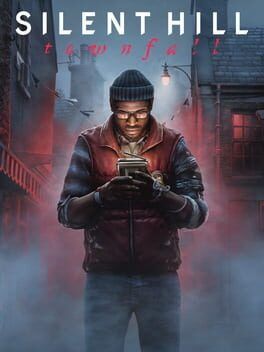
Image: IGDB
Store links: Silent Hill: Townfall on Steam
Konami’s Silent Hill revival was built behind closed doors inside closed doors
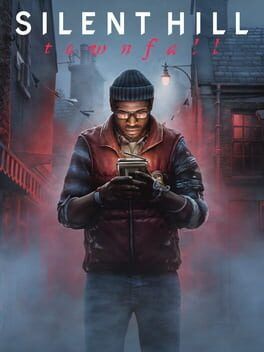
Silent Hill Townfall director Jon McKellan says Konami deliberately kept the teams working on its modern Silent Hill projects from seeing one another’s work, creating a strange production setup for a franchise already built on isolation. Speaking at MCM London Comic Con, as reported by VGC, McKellan said his Screen Burn team “found out about a lot of those projects when everyone else did,” when Konami announced them publicly.
That is the strongest confirmed development in this latest round of Silent Hill development news: according to a named director on one of the projects, Konami’s separation of its partner studios was intentional. McKellan said series producer Motoi Okamoto wanted the projects to avoid influencing each other and avoid too much compromise. Konami’s internal role, as McKellan described it, was to monitor all the games and step in if one team moved too close to another team’s idea.
The tension is obvious. Silent Hill is a series where atmosphere, symbolism, enemy design, and sound can collapse into imitation very quickly. A foggy street, a grieving monster, a radio shriek, a rusted corridor, a guilt-shaped threat: those pieces can feel like Silent Hill or like a studio copying Silent Hill. Konami’s reported answer was compartmentalization. Each team could walk into the dark with its own flashlight, while Okamoto’s side watched the map from above.
This was oversight, not a shared-universe writers’ room
McKellan’s comments, quoted by VGC and repeated by outlets including eXputer, PSU, and One More Game, describe a controlled but not heavily prescriptive process. He said Okamoto and his team would review work across the Silent Hill slate. If they saw something too close to another project, they would tell a team to course-correct, but not necessarily explain which other game had created the conflict.
That distinction matters. McKellan did not describe a crossover plan, a locked franchise bible, or a Marvel-style phase structure. In fact, he explicitly pushed against that comparison, saying the Townfall team did not feel like it had to “play to some bigger plan” or “know your slot and stay within that.” His account is closer to editorial quarantine: keep the rooms separate, let each room become strange in its own way, then intervene only when two nightmares start wearing the same face.
The clearest example McKellan gave involved visual or enemy design. He said Konami flagged one case where something the Townfall team was doing was “maybe a little too close” to another project and advised a pivot. He also said it was not massively similar. For horror development, that kind of call is not trivial. Enemy design is often where theme becomes flesh. If two Silent Hill games arrive with similar symbolic creatures, fans are likely to assume lore connection, shared trauma logic, or intentional mirroring, even if the overlap was accidental.
Townfall’s team stayed in the dark, but McKellan says it helped
The arrangement might sound suffocating from the outside, especially for a licensed horror series with passionate custodians. McKellan described it differently. According to VGC, he said the team was kept in the dark “in a good way,” because it allowed many developers who were already Silent Hill fans to remain excited about other entries rather than seeing every secret from behind the curtain.
He also said the Townfall team saw Silent Hill f only a couple of months before it came out. By his account, the difference between Silent Hill f and Silent Hill Townfall was so large in experience and setting that there was no real risk of overlap. That is the most useful lens for fans: Konami appears to have been protecting contrast between entries rather than forcing lore alignment between them.
eXputer reports that Silent Hill Townfall launched on September 24 for PS5 and PC, with Screen Burn, formerly known as No Code, developing and Konami and Annapurna Interactive co-publishing. That history matters for anyone searching for the No Code Silent Hill project. The studio’s earlier identity carried expectations around compact, systems-aware psychological horror, while the Silent Hill name carries decades of pressure around symbolism, audio dread, and survival vulnerability. McKellan’s account suggests Konami gave Screen Burn space to follow its own instincts, with a quiet hand ready to redirect if another Silent Hill game was already hunting similar ground.
Konami’s strategy fits a series that has rarely stayed in one shape
The idea of separate Silent Hill identities is not new, even if this production method is unusually explicit. Spilled notes that Silent Hill 2 followed a new protagonist and a self-contained story in 2001, Silent Hill 3 returned to the first game’s plot in 2003, and Silent Hill 4: The Room moved into another premise and setting in 2004. The series has long shifted between direct continuation, spiritual echo, and strange detour.
After the early Team Silent era, Spilled also points to Konami handing entries to outside studios including Climax Studios, Double Helix Games, and Vatra Games. The modern revival followed a long period of uncertainty after P.T. appeared in 2014 and Silent Hills was canceled in 2015. According to multiple provided sources, Konami’s 2022 Silent Hill Transmission announced several projects in the revival wave, including Silent Hill 2 remake, Silent Hill f, Silent Hill Townfall, and Silent Hill: Ascension.
That history changes how McKellan’s comments land. Konami was not managing one sequel in a straight line. It was managing a brand with several studios, several audiences, and several definitions of what Silent Hill should feel like. In that environment, secrecy becomes a production tool. It reduces the chance that teams unconsciously borrow the same motifs, but it also asks each studio to trust Konami’s central judgment without seeing the full field themselves.
Fans should watch tone before chasing lore overlap
For players, the practical takeaway is not to treat every resemblance between Konami Silent Hill games as a hidden continuity clue. McKellan’s account points in the opposite direction. Konami reportedly wanted less creative crossover, not more. If a future Silent Hill game echoes another entry, the first question should be whether the resemblance serves tone, theme, combat pressure, sound design, or enemy identity, rather than whether it confirms a shared plot.
That is especially important in horror, where recurring sensations can be mistaken for recurring canon. A slow enemy can communicate dread, resource pressure, or helplessness. A distorted human form can point toward grief, shame, institutional cruelty, or personal guilt. A radio cue or oppressive audio bed can be mechanical warning, psychological intrusion, or both. Those tools can belong to the Silent Hill language without proving that two projects were designed to interlock.
The reported process also explains why fans may see wide differences across the revival. One More Game frames Konami’s approach as a way to preserve unique creative identities, while eXputer reports McKellan saying Okamoto wanted to stop projects from influencing each other. If that philosophy continues, the safest expectation is variety: different settings, different pacing, different kinds of threat, and different emotional temperatures. Lore may still matter inside each game, but tone is likely to be the cleaner signal of intent.
What is confirmed, and what remains foggy
The confirmed core comes from McKellan’s public panel comments as reported by VGC: the Townfall team was not shown much of what other Silent Hill teams were making, Konami wanted to prevent influence between projects, and Okamoto’s team reviewed work across the slate to flag possible overlap. McKellan also said this did not feel restrictive to him and that the team had significant creative freedom.
What remains less clear is the full scope of the policy. The provided reports do not establish exactly which Silent Hill teams were separated at every stage, how long the separation lasted across all projects, or whether every studio had the same level of information. Spilled highlights that ambiguity, noting it is unclear whether teams were unaware that other games existed or whether they simply did not see their stories and designs. McKellan’s quote that his team learned about “a lot” of projects when everyone else did leaves room for nuance.
There are also practical gaps. The provided sources identify PS5 and PC for Townfall through eXputer and GamingBolt tagging, but they do not provide price, PC requirements, performance details, or upgrade information. Readers deciding whether to play now or wait should look for platform-specific coverage on those points rather than infer them from this production story.
Still, the production story is revealing. Silent Hill studios kept secret from one another sounds like a paranoid horror premise, but in McKellan’s telling it was a guardrail. Konami appears to be managing the revived franchise by protecting each project’s silhouette in the fog. For Silent Hill fans, that means the next familiar shape in the distance may be less about crossover and more about whether the game knows exactly what kind of fear it wants to leave breathing behind you.