
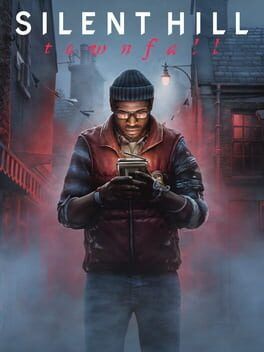

New Silent Hill Townfall preview details point to a first-person survival horror game built around stealth, a handheld CRTV, ambiguous reality, and a Scottish town with its own sickness.
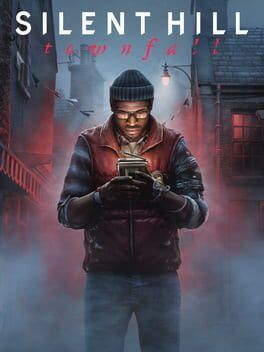
Image: IGDB
Store links: Silent Hill: Townfall on Steam
Townfall’s biggest shift is how little it wants you to fight
The strongest new detail from the latest Silent Hill Townfall preview cycle is practical rather than cosmetic: survival in Screen Burn Interactive’s first-person horror game appears to depend as much on sneaking and hiding as on combat. PlayStation Blog contributor Phil Hornshaw, who says he played about four hours from the start of the game, describes a frightening, foggy town where stealth is central to staying alive. IGN’s hands-off preview similarly says combat exists, but frames it as dangerous and better treated as a last resort when Simon is caught by St. Amelia’s transformed inhabitants.
That puts Silent Hill: Townfall in a different lane from the series’ two most recent big revival beats. Bloober Team’s Silent Hill 2 remake modernized a classic third-person combat model, while Silent Hill f pushed its own original story with a heavier emphasis on direct confrontation, a point Eurogamer references when noting that Silent Hill f’s combat concerns were later addressed by an update adding an easier casual option. Townfall, based on these previews, seems less interested in giving players mastery over monsters and more interested in making every crossing of a street feel like a risk assessment.
IGN draws a specific lineage here, noting that Townfall director Jon McKellan previously worked on Alien: Isolation. The comparison is useful because it points to the kind of pressure the game appears to be chasing: slow movement, enemy awareness, watching patterns, and making a mistake feel expensive. IGN reports that Simon has only a small selection of melee weapons in the footage it saw, including a wooden plank wrapped in barbed wire. That does not make Townfall combat-free, but it suggests combat may be a punishment state rather than the main verb.
For horror players, that distinction matters in the moment-to-moment texture. A Silent Hill game with scarce, ugly melee tools can still be about survival pressure. A Silent Hill game that asks you to watch a patrol through a wall, decide when to move, and then live with the sound of something nearby breathing in the fog is applying that pressure from another angle.
St. Amelia gives Silent Hill a new geography and a different sickness
The new Silent Hill game does not appear to return to Silent Hill, Maine. Multiple previews place Townfall in St. Amelia, a fictional port town in Scotland. IGN notes the setting connects to developer Screen Burn Interactive’s home country, while Polygon identifies the studio as Glasgow-based. Game Rant says the game takes place in 1990s Scotland, and IGN reports the story is set in 1996.
That relocation is not a minor backdrop swap. Recent Silent Hill has already shown Konami’s willingness to let outside teams stretch the series geographically: Silent Hill f moved the franchise to Japan, while Townfall now trades American roadside dread for a coastal Scottish village. Polygon’s hands-on describes shuttered shops, abandoned homes, for-sale signs, docks, boats, a central square, protest signs, and a monument reading “The Heart of St. Amelia.” PlayStation Blog describes Simon arriving after responding to a letter asking him to return to St. Amelia, though his actual arrival is deliberately unstable: one moment he seems to be approaching by boat, and the next he bursts out of the water and drags himself ashore.
The previews agree that St. Amelia is not merely empty. It feels socially and historically wounded. Game Rant mentions clues suggesting tragedies connected to corporate interests and poor leadership. Polygon cites protest material in the town square, including a sign reading “CEG Widows.” PlayStation Blog says the town seems connected to some kind of medical outbreak, with Zoe’s history and Simon’s unknown connection to her woven into that larger disaster.
The practical effect is that Townfall’s mystery seems to come from civic rot as much as personal guilt. Classic Silent Hill often turns a character’s buried damage into architecture. Townfall appears to keep that psychological blur but lets a whole town’s public failures leak through the fog. St. Amelia has empty apartments, a clinic, a pharmacy, a hotel converted into what Polygon describes as an impromptu hospital or quarantine facility, and an underground red-lit space tied to the Otherworld. The town’s horror is personal, but the preview details suggest it is also institutional.
Simon’s story starts with familiar shapes, then refuses to clarify them
Screen Burn appears to know exactly how recognizable its opening setup is. Eurogamer reports that writer and director Jon McKellan laughed about the premise beginning with a man with foggy memory entering a foggy town in search of a woman, saying, “So far, so Silent Hill.” He also told Eurogamer the team is leaning into familiar Silent Hill expectations while planning to “massively subvert” them.
The hands-on details support that tension. PlayStation Blog names the protagonist as Simon and says he returns to St. Amelia after receiving a letter, then hears phantom signs of a protest or riot in an apparently abandoned town square. A ringing pay phone directs him toward a woman named Zoe. Polygon gives the protagonist’s full name as Simon Ordell and adds unsettling physical context: he has a hospital bracelet on one wrist and an IV bag full of dark, viscous fluid on his shoulder, feeding into a port on his hand. Game Rant also notes the IV bag tethered to Simon’s hand as one of the first disturbing details after he climbs onto the abandoned docks.
The woman Simon is pushed to find is not presented as a simple equivalent to Silent Hill 2’s Mary, at least in the previewed material. PlayStation Blog says Simon does not know who Zoe is, even though her story is linked to the town and to him. Investigating Zoe’s apartment reveals she was a nurse, which leads Simon to the clinic where she worked. From there, the puzzle trail turns into biography. Her ID badge, a prescription she ordered at the wrong dosage, and a medical bag containing a broken stethoscope become objects tied to what she saw as failures.
This is where Townfall’s structure starts to look especially interesting. The previews describe a mystery that uses Silent Hill’s familiar emotional grammar, guilt, illness, absence, corrupted spaces, but refuses to give the player a clean premise upfront. Game Rant says Townfall begins more ambiguously than many earlier Silent Hill titles, because Simon is looking for a woman while the nature of their relationship and her fate remain unclear. That ambiguity can become empty obfuscation in lesser horror. Here, the concrete objects shown in the preview suggest Screen Burn is trying to ground confusion in evidence the player can handle, tune, weigh, and misread.
The CRTV turns puzzles, navigation, and enemy tracking into the same nervous habit
Townfall’s signature object is a handheld CRT television, repeatedly described in previews as central to play. PlayStation Blog calls it the game’s most important item and says tuning signals on it provides puzzle hints. Polygon reports that Simon obtains the portable CRT in a hotel room in St. Amelia, after an early Otherworld sequence, and says it serves a function comparable to the radio in earlier Silent Hill games. IGN calls the device a CRTV, a handheld radio with a screen that visualizes incoming signals.
The interesting part is that the CRTV does not appear limited to one genre function. According to PlayStation Blog, its signals are tied directly to St. Amelia’s and Zoe’s pasts, making puzzle solutions a delivery system for story. The clinic puzzle described by PlayStation Blog asks the player to place three objects on scales in Zoe’s office, each object connected to something she considered a failure. The device’s signals point the player toward that buried context rather than simply handing over a door code.
IGN expands the device’s role into navigation and stealth. In the demo it saw, the CRTV could help figure out where to go, find puzzle solutions, and track enemy movement through walls. IGN emphasizes that it does not operate as a simple scan button. The player has to aim it and pay attention to the small screen, with IGN comparing the effect to an ultrasound. In one example, the demonstrator followed an enemy patrol around the corner of a building, then timed a dash to progress safely.
That design choice fits Screen Burn’s background. The studio, formerly known as No Code, is associated in the supplied previews with Observation and Stories Untold, games that leaned into interfaces, screens, and unreliable systems. Townfall seems to import that tactile relationship with devices into Silent Hill. For a player, the CRTV may become both comfort and liability: you need it to understand the space, but using it demands attention, direction, and time. In a stealth-led horror game, looking down at a screen can be as frightening as looking up at a monster.
Townfall’s scare design leans on uncertainty before impact
The Silent Hill Townfall hands-on reports are full of sharp images, but the scariest pattern is how often the game appears to destabilize cause and effect before it shows the threat. PlayStation Blog says Simon hears shouting and sees flashes suggesting a protest or riot, then finds the town square empty. After he answers a pay phone and hears a cryptic voice telling him to find Zoe, he is suddenly transported to an underground red-lit structure identified by the preview as part of Silent Hill’s Otherworld.
Polygon’s account of the same opening emphasizes disorientation. Its previewer says that even with notes, the opening sequence felt hard to remember in order. Simon moves from harbor to town square, answers a phone, sees something Polygon deliberately declines to spoil, and then finds himself in an underground bunker lit by misty red light. Groans and screams echo in the tunnels before a shambling figure with a rectangular wedge through its head sprints toward the elevator as the player waits for the doors to close.
That sequence says a lot about Townfall’s scare construction. It is not only about the monster’s shape, although the described enemy image is blunt and ugly. It is about displacement, sound arriving before understanding, and the elevator becoming a tiny countdown chamber. The player has to process a sudden rule change while the game keeps moving. The horror is less “solve the room, then face the creature” and closer to being dragged between states of reality while trying to preserve enough composure to act.
Eurogamer also points to recurring motifs and environmental questions from its preview: the number 204, a ringing phone, an organ-donation box, boats with children’s names, and posters and flyers implying St. Amelia was frozen at a specific moment of crisis. Those details are not confirmed explanations, and they should be treated as observed clues rather than solved lore. Still, they show how Townfall seems to seed dread through repetition. In good Silent Hill design, the player begins to fear a number, a tone, or a room before they know why. Townfall’s previews suggest Screen Burn is aiming for that slow contamination of attention.
How it compares to the current Silent Hill revival
Konami’s revival of Silent Hill has been unusually varied, and the Townfall previews make that strategy clearer. IGN frames the current period as Konami letting external studios take their own shot at the series, citing Bloober Team’s Silent Hill 2 remake and NeoBards’ Silent Hill f as recent examples. Polygon notes that Silent Hill 2’s 2024 remake received broad critical praise and five nominations at The Game Awards, while Silent Hill f sold more than one million copies in its first day and earned three TGA nominations. Those are Polygon’s figures, and they explain the pressure around Townfall: the franchise no longer needs to prove it can come back, but each new entry has to justify its specific shape.
Townfall’s answer, based on the available preview material, is to be smaller, stranger, and more systems-focused than a straightforward prestige revival. It is first-person. It is set in a fictional Scottish port town rather than the franchise’s traditional American locus. It builds around a handheld CRTV instead of a conventional map-and-weapon loop. It treats combat as something to avoid when possible. It also comes from Screen Burn Interactive, formerly No Code, a studio whose reputation in these sources is tied to tense narrative games rather than blockbuster action.
That makes Townfall the riskiest kind of franchise entry: recognizable enough to invite Silent Hill comparisons, but experimental enough to disappoint anyone expecting another Silent Hill 2 remake or a direct sequel to Silent Hill f. McKellan’s comment to Eurogamer about leveraging familiarity and subverting expectations should be read as a warning as much as a promise. The opening has fog, a lost man, a woman to find, medical imagery, and the Otherworld. The structure underneath those symbols may be closer to a stealth thriller with investigative puzzle logic than to the combat rhythms some modern horror players expect.
For readers searching Silent Hill PS5 news, the supplied material confirms that PlayStation Blog published a hands-on report and links to a PlayStation game page for Silent Hill: Townfall. The excerpts provided here do not list full platform availability, price, editions, performance modes, or upgrade paths. Polygon says the game is set to return this fall, and Eurogamer references an official release date trailer from State of Play 2026, but the supplied text does not include the actual date. Until Konami, Annapurna Interactive, or the relevant storefronts publish those purchasing details in the material at hand, the safest guidance is to treat Townfall as a promising but still partly unpriced, partly unspecified release from a buyer’s perspective.
The preview takeaway: wait for how stealth holds across a full run
The most encouraging thing about this Silent Hill Townfall preview wave is that the reported mechanics and story structure appear to be pulling in the same direction. The CRTV is a puzzle device, a lore instrument, and a stealth tool. St. Amelia is a navigable town, a record of public failure, and a psychological trap. Simon’s confusion is not presented only through cutscenes, but through broken geography, unstable signals, and objects that turn personal history into environmental tasks.
The open question is whether that pressure can last. Polygon reports spending three hours with the game, PlayStation Blog about four, Eurogamer roughly four or five with a jump to another area, and Game Rant about three. Those are substantial previews, but they still represent controlled early and mid-game slices. Stealth horror lives or dies on repetition. If enemy tracking through the CRTV remains tense, if hiding stays readable without becoming mechanical, and if combat stays desperate rather than clumsy, Townfall could carve out a distinct identity within the revived series. If those systems flatten, its atmosphere may have to carry too much weight.
A ResetEra thread collecting preview details claims the main game runs 10 to 14 hours, that completion time varies depending on sneaking or facing horrors directly, and that the game has five endings, including two secret New Game Plus endings. Because that information is presented in the supplied material as forum-collected key points rather than an official Konami, Annapurna, Screen Burn, storefront, or direct outlet excerpt, it should be treated cautiously here. It is useful as a signal of what fans are discussing, not as a confirmed purchasing promise.
For now, the confirmed preview picture is strong enough on its own. Silent Hill: Townfall appears to be a first-person survival horror game about listening to static, reading a sick town through its leftovers, and surviving by refusing fights you might technically be able to start. After Silent Hill 2 remake and Silent Hill f reintroduced the series to a wide audience in different ways, Townfall’s value may come from being less reassuring. It looks like the kind of horror game that hands you a screen, asks you to trust it, then makes you wonder what else can see the signal.