
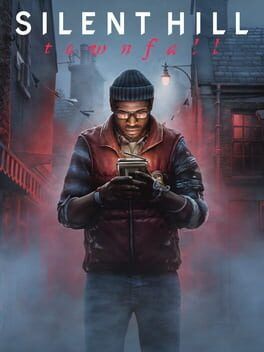

Screen Burn, formerly No Code, is building Silent Hill: Townfall around a handheld CRTV that uses real analogue distortion, first-person vulnerability, and 1990s tech familiarity against players.
Image: IGDB
Store links: Silent Hill: Townfall on Steam
Screen Burn is making the CRTV feel broken because the footage was broken for real
The strongest new detail around Silent Hill: Townfall is also the clearest statement of intent: Screen Burn Interactive used actual old televisions, pocket TVs, damaged cables, and magnets to create the CRTV distortion players will see in the game. Writer and director Jon McKellan told Eurogamer the team would run gameplay footage and cutscenes through old hardware, interfere with the signal physically, then bring that footage back into the game.
That gives the Silent Hill Townfall CRTV a different role from a simple retro visual filter. According to McKellan, the goal was for the device to be authentic in substance as well as appearance. The team is not merely placing scanlines over a clean image and calling it period detail. It is building a survival tool out of degraded media, then asking players to trust it when the fog closes in.
That tension sits at the center of Townfall’s pitch. Silent Hill has long used unreliable perception as a horror engine, but this entry is pushing that uncertainty through a piece of familiar household technology. The old screen is comforting until it becomes the only thing between Simon Ordell and whatever is moving nearby. In a survival horror game, that is a sharp tradeoff: the tool that helps you read danger also teaches you that the signal itself can be suspect.
The old radio has become a handheld screen
Eurogamer reports that Townfall’s CRTV takes over a role associated with Silent Hill’s iconic radio, which has traditionally warned players about nearby enemies before they can see them. In Townfall, the device still serves that enemy-detection function, but its job has expanded. Eurogamer says the CRTV provides directional clues and works as a puzzle-solving tool, while Polygon reports that it also shows environmental clues and images of the past tied to Simon’s missing memories.
That shift matters for how players will handle fear moment to moment. A warning radio can be heard while the player keeps looking ahead. A handheld screen asks for attention. If the device is showing a clue, a signal, or a memory fragment, the player is already making a dangerous choice about where to look and what to ignore. Polygon’s preview framing makes that practical risk clear: because Townfall is in first person, players who are not reading their surroundings carefully can be ambushed by surreal monsters while searching for clues.
The game’s fiction reinforces the mechanic. Wikipedia’s current summary lists Silent Hill: Townfall as a survival horror game set in 1996 in the fictional Scottish town of St. Amelia, following Simon Ordell after he wakes in a place he appears to have no connection to. IGN’s preview adds that Simon is an American who washes ashore in a Scottish town, has an IV hooked to his hand, and is guided through vague, desperate voicelines from Zoe Ellis over the CRTV. Those are preview-reported details rather than a full plot explanation, but they show how the gadget links navigation, memory, and dread instead of sitting in the corner as a status indicator.
Nostalgia is the bait, distrust is the design
The clearest explanation of Screen Burn’s nostalgia strategy came through PlayStation Blog’s interview with Silent Hill series producer Motoi Okamoto and McKellan. Asked about retro technology and environments, McKellan said older analogue gadgets mean a lot to the team and carry familiarity for players because many people have touched or experienced them. He then said the developers deliberately designed moments that play against those nostalgic feelings.
McKellan’s reasoning, as quoted by PlayStation Blog and highlighted by Rock Paper Shotgun, is that analogue technology can now feel unstable, unreliable, or difficult to trust completely. Screen Burn wanted players to rely on the CRTV to survive while feeling uneasy about relying on it too much. That is the key expectation check for anyone approaching Silent Hill Townfall nostalgia as a return to old comforts. The 1990s setting and CRT imagery are being used as pressure, not reassurance.
Rock Paper Shotgun’s response to that idea raises a useful caveat rather than a contradiction. The outlet’s writer noted that players with real affection for CRT displays, or with lived experience using that era’s hardware, may not react to the device the same way as players who see analogue tech as strange, obsolete, or inherently untrustworthy. That is interpretation from the outlet, not a confirmed design problem. Still, it points to one of Townfall’s more interesting risks: a horror prop built from nostalgia may unsettle one generation while feeling oddly safe to another.
No Code’s identity is still visible under the Screen Burn name
Fans searching for Silent Hill Townfall No Code should know the studio is now called Screen Burn Interactive. Wikipedia’s summary says the project began development in 2022 at Scottish studio No Code, and that the developer rebranded as Screen Burn Interactive in July 2025. The same listing says the name refers to the ghost of an image burned into an old CRT screen and to the way a game can be burned into memory.
That rebrand fits Townfall’s obsession with screens, signal decay, and haunted playback. It also connects the new Silent Hill horror game to the studio’s earlier reputation. PlayStation Blog quotes Okamoto saying he had played Screen Burn’s previous titles, Stories Untold and Observation, and felt confident leaving the project in the studio’s hands after Annapurna Interactive introduced the team to Konami. IGN also points to the studio’s history with Observation and notes McKellan’s lineage with Alien: Isolation, including work on that game and its DLC.
Those references should be treated as context, not proof of how Townfall will play in full. The supplied previews describe hands-on sessions, but they do not amount to a final review. What they do support is a clearer reading of Screen Burn’s priorities: narrative puzzles, controlled vulnerability, environmental attention, and horror created through interfaces. Townfall’s CRTV is a natural extension of that skill set, especially for a team already known for making screens and systems feel hostile.
First person is tied to the CRTV, stealth, and survival pressure
Townfall’s first-person camera is not an incidental modernization. PlayStation Blog describes it as the first full-length Silent Hill game to adopt first person, while noting that Silent Hill: The Short Message also used first person as a smaller standalone experience. Okamoto told PlayStation Blog the overlap with The Short Message was coincidental because the projects had different developers and timelines, with no direct technical exchange.
Polygon’s roundtable interview gets closer to the design reason. McKellan said Screen Burn came into the project with first person in mind because that was the team’s experience from previous games. He also said the CRTV would not have worked properly in third person without feeling like non-diegetic UI, such as a mini-map. In other words, the camera choice protects the fiction. The player sees the gadget because Simon sees the gadget, and that keeps the survival information inside the world rather than pinned cleanly to the screen.
That choice also affects combat expectations. Polygon quotes McKellan saying Townfall is focused on stealth, evasion, and tension, and that removing an avatar between the player and the terror makes the experience more personal. Wikipedia’s gameplay summary says Simon can use melee weapons such as planks and pipes to defend himself, but can also use stealth to hide from enemies. IGN’s preview similarly describes combat as a last-ditch option, with stealth taking priority. For players hoping for classic Silent Hill resource stress, the currently reported shape is less about counting bullets and more about managing attention, hiding places, proximity, and the risk of consulting the CRTV at the wrong time.
The Scottish setting is part of the horror grammar, not scenery
PlayStation Blog’s interview frames the Scottish setting as another deliberate departure. McKellan said Scotland was chosen because it is where the team grew up and because depicting a familiar environment helped Screen Burn build a persuasive world. He also noted Scotland’s fogginess as a natural fit for Silent Hill. Okamoto added that Silent Hill’s collaborations with studios around the world allow different regional cultures and perspectives to feed new horror experiences.
The currently listed premise places Townfall in St. Amelia, a fictional Scottish town, in 1996. Wikipedia says Simon repeatedly wakes in the water near the docks and must uncover fragments of the past to understand his connection to the town. IGN describes the setting as reflecting seaside towns in Scotland, with a close-knit community apparently damaged by disease and mutation. Those preview details suggest a different kind of isolation than the American small-town dread many players associate with the older games: colder ports, local history, empty streets, and fog that belongs to the landscape before Silent Hill bends it into something worse.
For atmosphere, that gives the CRTV a stronger job. A handheld screen in a fogbound port is a weak little lighthouse. It can point, warn, and whisper, but it can also pull the player’s eyes away from a doorway or corner. Silent Hill Townfall No Code veterans may expect interface horror from this team. Silent Hill traditionalists may be watching for whether St. Amelia can carry the same psychological weight as the series’ most remembered spaces. The sources support both expectations, but the final answer depends on the full game.
Release date, platforms, and the questions still unanswered
Silent Hill: Townfall is currently scheduled for September 24, 2026. Eurogamer reports that date for PC and PS5, and Wikipedia’s current listing also gives PlayStation 5 and Windows for the same date. PlayStation Blog’s interview says it launches September 24 on PlayStation 5. Within the provided source material, there is no confirmed Xbox version, Nintendo version, price, PC system requirement list, or performance target.
That platform gap is worth stating plainly because the game’s horror depends heavily on visual clarity, distortion, and input feel. A CRTV built from analogue artifacts could be oppressive in the right way, but it could also become tiring if readability, brightness settings, or motion handling are not tuned well. None of the supplied sources provide final performance analysis, accessibility options, or a full settings breakdown, so buyers sensitive to first-person motion, heavy filters, flicker, or stealth stress should wait for review coverage closer to launch.
For now, the confirmed picture is specific enough to set expectations. Silent Hill: Townfall is a first-person survival horror entry from Screen Burn Interactive, formerly No Code, co-published by Konami and Annapurna Interactive, built around a handheld CRTV that replaces and expands the series’ enemy-warning tradition. Its nostalgia is intentional, but the developers are not presenting old technology as a safe shrine to the past. They are asking players to hold the past in their hands, follow its damaged signal, and wonder whether trusting it is the next mistake.