
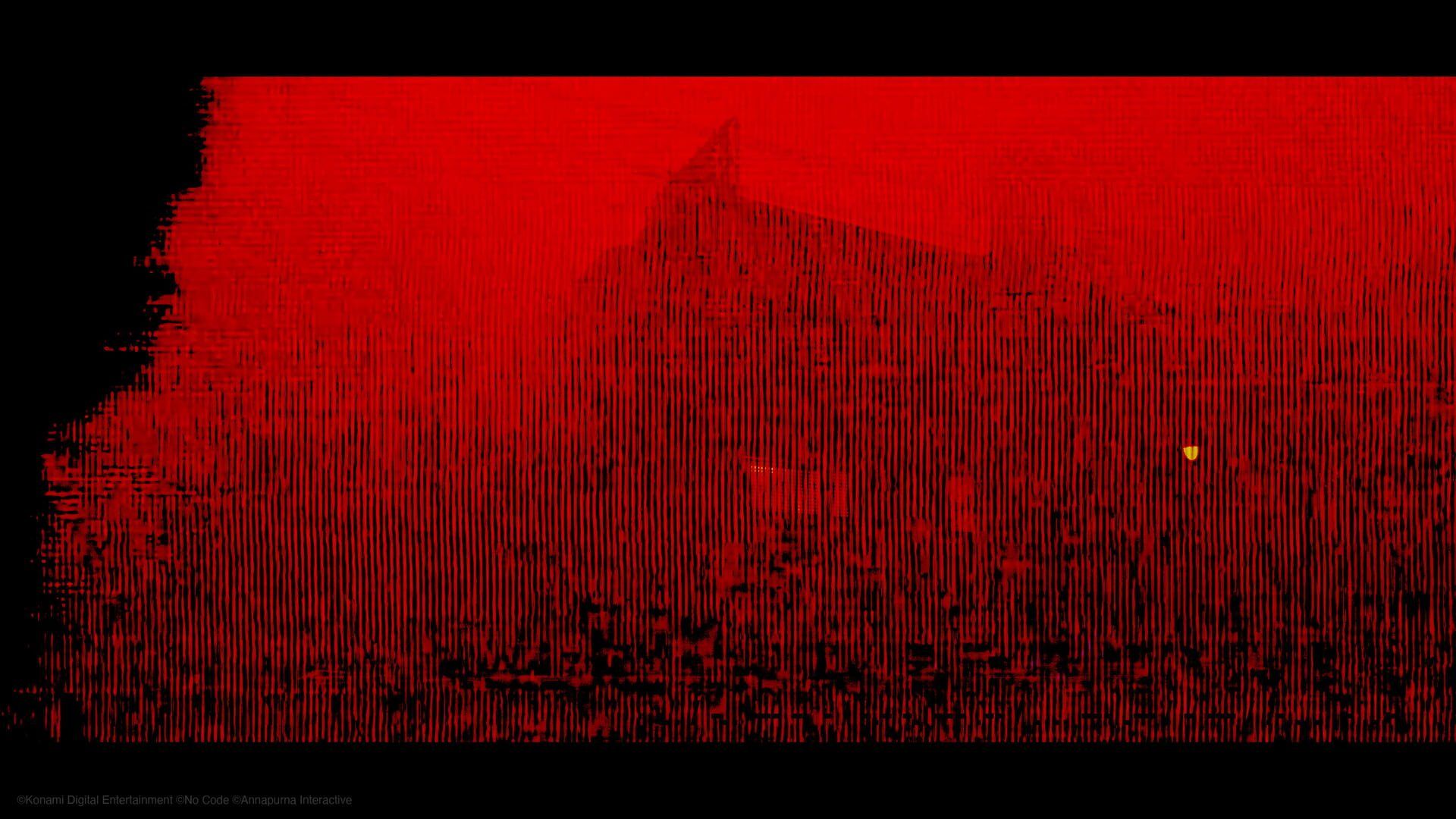

Konami’s next Silent Hill project is quietly lining up for 2026, but Townfall is not Silent Hill 2 or Silent Hill f. Here’s what its anthology-style structure likely looks like, how it fits into Konami’s one-game-a-year plan, and what fans should realistically expect from this experimental spin-off.
Konami’s modern Silent Hill revival now has a shape. Silent Hill 2 remake arrived in 2024, Silent Hill f followed in 2025, and all signs point to Silent Hill: Townfall being the 2026 pillar of the series. Thanks to recent comments from series producer Motoi Okamoto and ongoing reporting, fans finally have a loose window and a sense of what Townfall actually is: an anthology-flavored spin-off designed to bring more experimental voices into the fog.
Townfall is not trying to be the next Silent Hill 2, and it is not the same kind of full-fat, lore-heavy entry Silent Hill f is shaping up to be. Instead, it is positioned as the series’ strange side corridor, where smaller, more focused nightmares can live.
A 2026 window in Konami’s new “one game a year” plan
In a New Year interview with Japanese outlet 4Gamer, translated by Gematsu and echoed by Western reporting, Okamoto laid out a simple cadence: after Silent Hill 2 in October 2024 and Silent Hill f in September 2025, the goal is to keep Silent Hill “on track” with roughly one title per year. PlayStation LifeStyle now pegs Townfall as the likely 2026 release in that pipeline.
Okamoto was careful to temper expectations, stressing that the yearly rhythm is an ambition rather than a hard promise. Development schedules slip, and Townfall has been conspicuously quiet since its October 2022 reveal during the Silent Hill Transmission showcase. Still, when you line up the public information, a 2026 window makes sense. The major 2024 and 2025 releases fill the early years of Konami’s roadmap, and Townfall is the remaining announced project waiting for its turn.
On top of that, multiple outlets have floated more specific rumor windows, including early 2026 and even March in some reports. None of that is confirmed, but it reinforces the picture painted by Okamoto’s comments. Fans should expect Townfall to occupy the 2026 slot unless Konami reshuffles its lineup.
Just as important as the date is the implication behind it. Townfall is not a rushed side project; it is part of an orchestrated relaunch strategy that treats Silent Hill as an ongoing platform rather than a series that only awakens once a decade.
What is actually known about Townfall right now
Concrete information on Townfall remains deliberately sparse, which is why the upcoming info blowout Konami has been teasing for 2025 feels so significant. Even so, a few pillars are fairly clear.
The game is being developed by Screen Burn, the new name for No Code, the studio behind Stories Untold and Observation. Those games leaned hard into slow-burn tension, analog technology, and a sense of uncooperative interfaces turning against the player. Handing Silent Hill to this team all but guarantees a focus on psychological and formal experimentation rather than combat-heavy action.
Annapurna Interactive is co-producing alongside Konami, which is itself a signal. Annapurna’s catalog tends to spotlight strongly authored, sometimes unconventional experiences rather than giant, systems-heavy blockbusters. Townfall being part of that tradition suggests a tighter scope, more emphasis on narrative framing, and a willingness to play with structure.
From the reveal trailer and subsequent reporting, Townfall is framed as a smaller, self-contained spin-off, with a modern presentation built on Unreal Engine 5. It will be firmly horror, but likely closer in spirit to No Code’s prior work and boutique anthology horror like Channel Zero or Inside No. 9 than to big, interconnected myth arcs.
The anthology angle explained
The most intriguing part of Townfall’s pitch is the anthology angle. Early leaks and later follow-up reports have consistently described the project as a launchpad for a broader series. Rather than being a one-off oddity, Townfall is meant to function as season one of a continuing anthology under the Silent Hill: Townfall banner.
Different sources have framed this in slightly different ways, but the throughline is consistent: Townfall is a framework, not just a single 12-hour story. It is a way for Konami to invite different creative voices into the town without asking them to carry the weight of a numbered sequel.
This likely means discrete stories that share some connective tissue, whether that is a recurring location, a common narrator, overlapping objects, or a meta-mystery that spans multiple episodes. It is less about continuous character arcs and more about riffing on Silent Hill’s central ideas of guilt, repression, and personal hell from multiple angles.
It is important to note what is not confirmed. Konami has not formally detailed whether Townfall’s anthology is episodic within a single game, a series of separately released chapters, or a longer-term label used for several games. Rumors point toward a more serialized, season-based structure that could grow over time, but until Konami’s promised information drop arrives, this remains speculative.
For players, “anthology” should be read as “expect variety and experiments rather than one grand, canon-defining epic.” Townfall’s job is to keep Silent Hill weird and flexible.
How Townfall differs from Silent Hill f
Konami’s own release strategy implicitly sets up a division of labor between its big tentpole projects and its experimental satellites.
Silent Hill f appears to be the next major core entry. Set in 1960s rural Japan and written by Ryukishi07 of Higurashi fame, it leans into historical horror, grotesque body transformation, and an elaborate narrative mythology. It is the kind of project designed to define an era of Silent Hill, just as Silent Hill 2 once did.
Townfall, by contrast, is deliberately smaller in scope and more modular. Where f is about a single, sweeping narrative that expands the series’ canon, Townfall’s anthology structure is about collecting and curating smaller nightmares. If Silent Hill f is the prestige novel, Townfall is the series of unsettling short stories you read in-between.
Players should not expect Townfall to be the place where every dangling lore question gets answered. It is unlikely to spend time explaining the metaphysics of the town or retconning events from past games. Instead, it is better viewed as a prism. Each story bent through Townfall can refract the familiar Silent Hill atmosphere into something new, whether that is domestic horror, found footage, technology gone wrong, or minimalist character studies.
That does not mean Townfall will be disconnected from the broader franchise. Tiny references, shared motifs, or recurring visual language are almost a given. But its role is to supplement and expand the emotional and thematic palette of Silent Hill rather than to serve as the backbone of the canon.
What fans should realistically expect from Townfall
With the long radio silence starting to break and a 2026 window shaping up, speculation is inevitable. It is worth grounding that excitement in a few realistic expectations.
First, Townfall is almost certainly going to be more intimate and experimental than bombastic. No Code’s track record suggests limited environments, heavy reliance on atmosphere and sound design, and creative use of interfaces and perspective. Expect something closer to Stories Untold’s vignette-style horror and Observation’s haunting surveillance viewpoint than a traditional third-person survival horror romp.
Second, the anthology structure will probably prioritize breadth of ideas over sheer runtime. That might mean several shorter episodes, each with their own hook and tone, rather than a single, sprawling campaign. Instead of one big puzzle box like Silent Hill 2’s foggy town, expect multiple smaller boxes that each play with different horror subgenres or mechanical twists.
Third, Townfall’s role in the wider franchise is to keep Silent Hill in the cultural conversation during the years when the massive mainline projects are not shipping. Even if Konami hits its one-game-a-year target, not every entry will be a multi-year, blockbuster production like Silent Hill 2 remake. Townfall represents an alternative path, one where new teams and smaller budgets can still contribute powerful, tightly focused experiences.
Finally, players should go in expecting some rough edges. Anthologies by design are uneven; not every story hits with the same force. The trade-off is that when an experiment lands, it can feel fresher and stranger than something that has been sanded down by committee.
The imminent information blowout
Konami has already hinted, via Okamoto’s comments and follow-up coverage, at more concrete information on both Silent Hill f and Townfall arriving across 2025. Given the series’ recent pattern, another Silent Hill Transmission around Halloween would be an obvious stage for a Townfall re-reveal, complete with gameplay, structure details, and a firmer release window.
Fans should expect the next proper Townfall showing to answer a few key questions. How, exactly, does the anthology work in practice? Is Townfall delivered in self-contained episodes inside a single launcher, or as a single game that just happens to be divided into chapters? How deep is the interaction model are we talking traditional exploration and combat, or something closer to narrative adventure and environmental puzzles?
Those answers will decide not just how Townfall fits into the 2026 calendar, but also whether Konami’s anthology ambitions can carry multiple years of releases.
Townfall’s place in the future of Silent Hill
What makes Townfall exciting is not just its rumored 2026 date. It is the larger experiment it represents. By carving out space for smaller, anthology-style projects under the Silent Hill umbrella, Konami is acknowledging that horror thrives on variety and surprise, not just on the repetition of familiar monsters and locations.
Silent Hill 2 remake reassured fans that the classics can be treated with care. Silent Hill f is tasked with proving that new, large-scale stories can still push the series forward. Silent Hill: Townfall looks set to become the strange, shifting gap between them, a place where the town’s fog can roll over unfamiliar streets and the rules can bend.
If Konami follows through on its yearly plan, Townfall will be the experiment that tests whether Silent Hill can sustain itself as a living horror platform, one that invites new creators to take risks within its haunted borders. For longtime fans, that might be the scariest and most exciting prospect of all.