
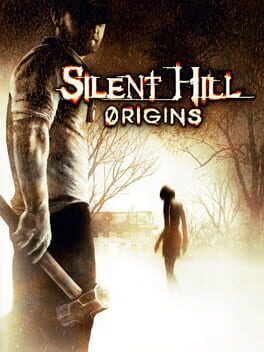

Konami producer Motoi Okamoto says the Silent Hill revival will continue with second and third waves, but only one future project is officially announced so far.
Image: IGDB
Store links: Silent Hill 2 on Steam
Konami is looking beyond the current Silent Hill revival
Silent Hill producer Motoi Okamoto says Konami is already considering “second and third waves” of Silent Hill projects after the publisher’s recent run of releases, according to comments given to Famitsu and reported by Eurogamer, IGN, and PlayStation Universe. The concrete part is encouraging for horror fans: Okamoto said Konami is “currently looking at a number of projects.” The tension is that he also said the company cannot share specifics yet, which leaves the next stretch of fog thick with unanswered questions.
Okamoto framed the current revival as a completed first wave, saying, “All three titles we initially announced were able to be released successfully, so we’re relieved.” He added that the titles had received high praise and that Konami was satisfied with the results. Eurogamer, IGN, and PSU all identify that first wave around Silent Hill 2 Remake, Silent Hill f, and Silent Hill: Townfall, the three major game releases that reestablished the series after years of uncertainty.
That is the news hook, but the useful reading is narrower than “many new Silent Hill games are confirmed.” Konami has confirmed continued planning and one known future remake. It has not announced the names, studios, release windows, platforms, prices, or gameplay direction for the second and third waves. For anyone searching for Silent Hill new games, the safest answer is this: the series is active again, Konami is publicly talking about multiple possible projects, and the next slate has not been formally revealed.
Okamoto’s comments explain why one remake was never the full plan
Okamoto’s Famitsu comments are notable because they describe the internal stakes of bringing Silent Hill back. As reported by Eurogamer and IGN, he said it took time to convince Konami executives and stressed that “one remake is not enough.” He explained that, as producer, he could not let the revival end with a single release, because if there were only one game, people might think development was going to be cancelled again.
That line lands because Silent Hill has already trained its audience to expect long silences. IGN specifically points back to the failed Silent Hills project associated with Hideo Kojima as part of the franchise’s painful drought. In that context, a single polished remake could have felt like a museum piece: valuable, welcome, but isolated. Okamoto’s comments suggest Konami wanted the revival to feel like a pipeline rather than a one-off apology.
The first wave also gave Konami different test cases. Silent Hill 2 Remake carried the weight of revisiting one of the series’ most revered entries. Silent Hill f moved the series into a different setting and style. Silent Hill: Townfall, according to IGN, placed protagonist Simon Ordell in a 1990s Scotland setting. That spread matters because Okamoto has previously said, via Eurogamer, that the key is to “cherish” a strong psychological horror narrative while allowing gameplay to change. He said that as long as the narrative core remains intact, Konami feels it can be “more liberal and experimental” with gameplay.
For survival horror, that is both promising and risky. Silent Hill can survive changes in camera, combat, exploration, and structure if the pressure stays personal and the dread feels authored. It can also lose its grip if experimentation weakens the resource tension, enemy design, soundscape, or pacing that make the town’s horror feel inescapable. Okamoto’s comments point to a franchise strategy built around variety, not a single mechanical template.
Only one future Silent Hill game is officially named
The confirmed future project is Bloober Team’s remake of the original Silent Hill. Eurogamer reports that Konami announced the Silent Hill 1 remake in June 2025, with Bloober Team returning after developing Silent Hill 2 Remake. IGN and PSU also identify that remake as the known project in the pipeline.
That is where the confirmed list ends. Konami has not announced a release date for the Silent Hill 1 remake in the provided source material. It has not detailed platforms, editions, pricing, PC requirements, performance targets, or whether the game will follow the same design philosophy as Bloober’s Silent Hill 2 Remake. Some coverage discusses expectations around a possible 2027 window, and PSU connects that hope to Okamoto’s earlier comments about annual releases, but the sources here do not show Konami confirming a date.
Rumored follow-ups should be treated as rumors. Gagadget notes that talk of a Silent Hill 3 remake has not been confirmed by Konami, and Okamoto did not mention it in the Famitsu comments. The same applies to speculation about a brand-new Bloober-developed Silent Hill beyond the original remake. A publisher saying it is looking at “a number of projects” is a meaningful signal, but it is not the same as announcing a game.
For players deciding whether to wait, preorder, or budget around the franchise, the practical guidance is simple: wait for named projects. The Silent Hill 1 remake is real, but still undated in the cited reporting. The second and third waves are planned territory, not a release calendar.
The first wave was broad, and even the definition is a little messy
There is a small but important wrinkle in the way the first wave is being discussed. Okamoto’s quote refers to “all three titles we initially announced,” and multiple outlets identify those three as Silent Hill 2 Remake, Silent Hill f, and Silent Hill: Townfall. Eurogamer also notes that Konami’s 2022 Silent Hill revival announcement included Silent Hill 2 Remake, Silent Hill f, Silent Hill: Townfall, Silent Hill Ascension, and the Return to Silent Hill movie, with Silent Hill: The Short Message shadowdropped later.
That means readers should not treat “first wave” as a perfectly clean label for every Silent Hill-branded project revealed in that period. In the reporting around Okamoto’s new comments, the phrase is being used mainly for the three major game releases that now appear to be out. Ascension and the film sit around the revival, but Okamoto’s “three titles” wording, as quoted by Eurogamer, IGN, and PSU, appears tied to the mainline game push that gave Konami confidence to keep going.
That distinction matters because the future could follow the same mixed approach. New Silent Hill projects may not all look alike. Some could be remakes. Some could be original entries. Some could come from different studios and settings. The first wave already moved between a major remake, an original Japanese-set entry in Silent Hill f, and Townfall’s Scottish horror. Konami’s public comments leave room for that spread to continue, but they do not confirm the makeup of the next slate.
Townfall shows the promise and the problem of experimentation
Silent Hill: Townfall is central to the timing of these comments because it is the most recent release in the revival wave. Eurogamer says Townfall is out now and awarded it four out of five stars, calling it “often phenomenal,” “reverent to its roots,” “rich with ideas,” and “properly unnerving.” IGN gave Townfall an 8/10 and described it as a welcome “shot in the arm” for the long-running series.
At the same time, Townfall has already become a useful warning sign for future Silent Hill design. DualShockers reported that some fans criticized Patch 1.4.0, launched October 8, because it weakened one of the game’s most lethal enemies, The Weight, by removing its ability to one-shot kill, and made a difficult puzzle easier. According to DualShockers, some X users argued the patch “watered down” the survival horror friction, while others said The Weight’s behavior and pacing problems made the changes justified.
That debate cuts to the nerve of modern horror development. Survival pressure depends on friction: limited safety, oppressive audio, enemy presence that interrupts comfort, puzzles that make the player sit with dread instead of sprinting through it. But friction can cross into tedium if an enemy camps too long, a puzzle stalls momentum, or failure feels arbitrary rather than earned. DualShockers’ account of the response shows that Townfall’s atmosphere may have landed strongly while its difficulty tuning still divided players.
Konami’s future Silent Hill plans will have to live in that tension. If the second wave leans experimental, fans will expect fresh forms of fear without losing the series’ suffocating psychological identity. If it leans on remakes, fans will expect reverence without embalming the older games. Either path demands careful resource pressure, enemy logic, audio direction, and pacing. Silent Hill’s fog can hide a lot, but it cannot hide weak tuning for long.
Platforms, timing, and release cadence remain unanswered
The biggest practical gaps are still platforms and timing. Gagadget reports that Townfall launched on PS5 and PC, but the provided sources do not establish platforms for the future second and third wave projects. Konami has not said whether upcoming games will come to Xbox, remain console-limited, or follow different release strategies by project.
The same caution applies to cadence. Brit Brief reports that Konami is aiming to launch a new Silent Hill entry every year, and PSU references Okamoto’s previous comments about hoping for annual releases. Those reports suggest an ambition for regular output, but the current Famitsu comments quoted across outlets stop short of dating the next games. Okamoto said Konami must think about second and third waves and is looking at projects, not that a specific game is locked for a specific month.
There is also no pricing information in the source material for the future projects. No editions have been announced. No upgrade paths have been described. No PC requirements or console performance modes are listed. For now, wishlist behavior is safer than preorder behavior because there is nothing newly named to buy.
For readers tracking Konami Silent Hill future plans, the next reliable milestone will be an official reveal from Konami, a store page, a dated trailer, or a platform holder listing. Until then, any claim about a Silent Hill second wave lineup should be read carefully: is it a quote from Konami, a report based on Famitsu, a rumor, or speculation built from the franchise’s current momentum?
The fog is lifting, but the map is still blank
Konami’s message is stronger than a vague reassurance and weaker than a slate announcement. Okamoto has publicly said the publisher is thinking about second and third waves and looking at multiple projects. He has also made clear that Silent Hill cannot be allowed to fade again after one remake. That is the most concrete signal yet that the revival is being treated as an ongoing franchise plan.
The confirmed future, however, is still limited. Bloober Team’s Silent Hill 1 remake is officially in development, according to Konami announcements reported by Eurogamer, IGN, and PSU. Beyond that, Silent Hill Townfall follow-ups, Silent Hill 3 remake talk, new mainline entries, platforms, release dates, and pricing are all unannounced in the provided material.
That is a healthy place for expectations to settle. Silent Hill is active. Konami is planning ahead. The first wave gave the publisher enough confidence to keep walking into the dark. But until the second wave has names, studios, dates, and machines attached, the next new Silent Hill projects remain shapes behind the static.