
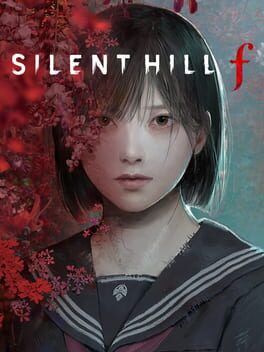

Producer Motoi Okamoto says Silent Hill f scenario writers pressured each other to read 100 to 200 books a year, revealing how Konami approached literary horror, Ryukishi07's voice, and the series' revival.
Image: IGDB
Store links: Silent Hill f on Steam
Konami’s horror mandate started on the page
Silent Hill producer Motoi Okamoto says the Silent Hill f writers “put pressure on each other” to read “100 to 200 books a year” during development, according to Automaton’s translation of GameWatch’s report from CEDEC 2026, with Eurogamer also reporting the remarks. That is the concrete reveal, and it immediately raises the real creative tension around Silent Hill f: Konami did not treat its new mainline horror entry as a matter of monster design and fog density alone. It treated reading as production work.
Okamoto’s point, as reported from the CEDEC lecture, was aimed at narrative-led game development. He argued that a producer commissioning a writer should read the majority of that writer’s body of work first. He described that as “basic respect,” but also as a practical way to understand a writer’s strengths, weaknesses, style, and quirks. For Silent Hill f, that meant the scenario team was expected to understand Ryukishi07, the writer Konami brought in for the game’s story.
This is a rare window into Silent Hill f development because it shows the studio talking about horror writing as a discipline with homework, taste, and editorial responsibility. The number is striking, but the more useful detail is the reason behind it. Okamoto was not describing a casual book club. He was describing an attempt to build enough literary input inside the team that the game could survive contact with a writer whose voice was already strongly associated with psychological horror.
Ryukishi07 was chosen for a voice Konami wanted to understand
According to Automaton’s report, Okamoto said Konami selected Ryukishi07 for several reasons: his experience writing horror, the perceived compatibility of his past work with Silent Hill, and Okamoto’s own admiration for him. Ryukishi07 is best known for the When They Cry visual novel series, a background that matters because visual novels depend heavily on voice, pacing, unreliable perception, character fixation, and the slow tightening of dread.
The reading requirement makes sense in that context. If a development team hires a writer with a recognizable rhythm, it cannot simply drop that writer’s scenario into a production pipeline and hope the tone survives localization, quest implementation, cinematics, combat pacing, and level design. A Silent Hill f story shaped by Ryukishi07’s instincts would need producers and scenario staff who could recognize when a scene sounded like him, when it had drifted into imitation, and when it needed game-specific pressure.
That distinction is important for Silent Hill f horror writing. Literary influence does not automatically make a horror game sharper. It can also make a game self-serious, over-explained, or sluggish if the team confuses references with tension. Okamoto’s comments suggest Konami saw reading as a way to manage those risks. The reported goal was not only to absorb books, but to learn how a writer’s best and weaker tendencies appear across a body of work. For a series built on dread, repression, and symbolic violence, that kind of editorial awareness is production armor.
A 1960s Japan setting puts extra weight on tone and texture
Eurogamer describes Silent Hill f as leaving an impression with its strong cast of characters, 1960s Japan setting, and dense atmosphere. That setting changes the kind of horror burden the writing team carries. Earlier Silent Hill entries are often remembered through an American small-town nightmare lens, but Silent Hill f moves the series into a rural Japanese context. Eurogamer also notes that Gero City in Japan’s Gifu Prefecture inspired the game’s rural village, and that actors Takeshi Masago and Tamami Hiraoka, who played Hinako’s father and mother, were later made tourism ambassadors for Gero City.
Those reported details do not tell us which books the writers read, and they do not confirm a specific folklore bibliography. They do, however, explain why a reading-heavy process would be useful. A horror story set in 1960s rural Japan has to communicate dread through customs, family roles, social pressure, landscape, silence, and the things a character is allowed or forbidden to say. Folkloric horror works best when it feels embedded in place rather than pasted over it.
For players, that matters at the level of moment-to-moment fear. A shrine path, a family home, a school corridor, or a village road can feel threatening before anything attacks if the writing and environmental context have trained you to read the space as socially and spiritually charged. Silent Hill f’s literary ambitions, as signaled by Okamoto’s remarks, point toward a game where tone is meant to accumulate like damp air: through implication, repetition, discomfort, and the slow sense that ordinary structures have turned hostile.
Psychological horror depends on control, not volume
The Silent Hill f story conversation should not begin and end with how many books the team read. Horror players know that research can be invisible if the final game cannot pace a scare, preserve uncertainty, or give the player enough vulnerability to feel trapped. Still, Okamoto’s comments help explain what kind of psychological storytelling Konami appears to have valued: familiarity with a writer’s patterns, enough internal literacy to discuss them, and enough pressure among scenario staff to keep feeding the work with outside material.
That approach fits the series’ core survival-horror problem. Silent Hill is at its strongest when the player is not simply managing health items and enemies, but also managing interpretation. What did that line mean? Why does that room feel wrong? Is the threat physical, social, supernatural, internal, or all of those at once? A writer such as Ryukishi07 brings an established reputation for stories where character psychology and horror escalation are tightly bound. Okamoto’s reported insistence on reading the majority of a commissioned writer’s work suggests Konami wanted the team to engage that structure rather than treat it as flavor text.
From a practical survival-horror lens, that can affect more than cutscenes. Strong scenario direction can influence when the game withholds resources, when an enemy encounter feels like punishment or ritual, when audio should crowd the player, and when quiet is more dangerous than noise. The sources provided do not detail Silent Hill f’s systems or performance, so there is no basis here for a technical buyer’s guide. What can be said is that the reported development philosophy places narrative tone close to the center of the design conversation.
The reading push also reflects a rebuilt Silent Hill team
Okamoto’s comments landed inside a broader CEDEC 2026 discussion about reviving Silent Hill. Eurogamer reports that Okamoto said, when the revival was greenlit, about half of Konami’s development team were in their 20s and the prior development team had been almost entirely replaced, including original developers now known by fans as Team Silent. Inven Global’s CEDEC report similarly describes the current Silent Hill team as a new-generation structure, saying over half of the current members are in their 20s and that veterans who worked on past entries exist within Konami but are not part of the current team.
There is a small wording difference between the reports: Eurogamer says “about half,” while Inven Global says “over half.” The larger picture is consistent. Konami is presenting modern Silent Hill as a revival led by a substantially new internal group, working with external partners such as NeoBards, Bloober Team, Annapurna, and No Code, according to Inven Global’s account of the lecture.
That matters because Silent Hill f had to carry legacy without relying on the old team’s muscle memory. A reading mandate can be read as one tool for building a shared horror language inside a younger, rebuilt group. It gives new staff a way to discuss dread, character appeal, narrative structure, and authorial intent without pretending that nostalgia alone can produce a new Silent Hill. Okamoto also told the CEDEC audience, as reported by Eurogamer, that he wanted the revival to feel like a serious attempt to bring back the series rather than a cautious remake used to test popularity. That is why, he said, he wanted to announce a new game at the same time as the remake.
Konami is trying to make Silent Hill adaptable again
The reported reading requirement sits alongside another thread from the CEDEC coverage: Silent Hill is being treated as a franchise that must change shape. Automaton notes Okamoto has expressed a desire to keep experimenting with both story and gameplay in future Silent Hill entries. Inven Global’s report says Konami discussed global development processes, younger staff perspectives, and communication with overseas studios as part of the series’ revival strategy.
That does not mean every future entry will follow Silent Hill f’s model, and Automaton specifically frames Okamoto’s wider view as experimentation rather than formula. For readers tracking the franchise, the useful takeaway is narrower and firmer: Silent Hill f’s literary horror push appears to have been a deliberate production choice, tied to Ryukishi07’s involvement and Konami’s effort to rebuild the series with new internal leadership.
If you are deciding whether Silent Hill f is your kind of horror, this development detail is a strong signal about its priorities. Expect the conversation around the game to focus heavily on story, character interpretation, atmosphere, and the way setting presses on the player’s mind. Do not expect the book count by itself to guarantee fear. In horror, research only becomes frightening when it is converted into pressure: a door you hesitate to open, a sound you cannot place, a family scene that feels colder than any monster, and a village that seems to have read you before you read it.