
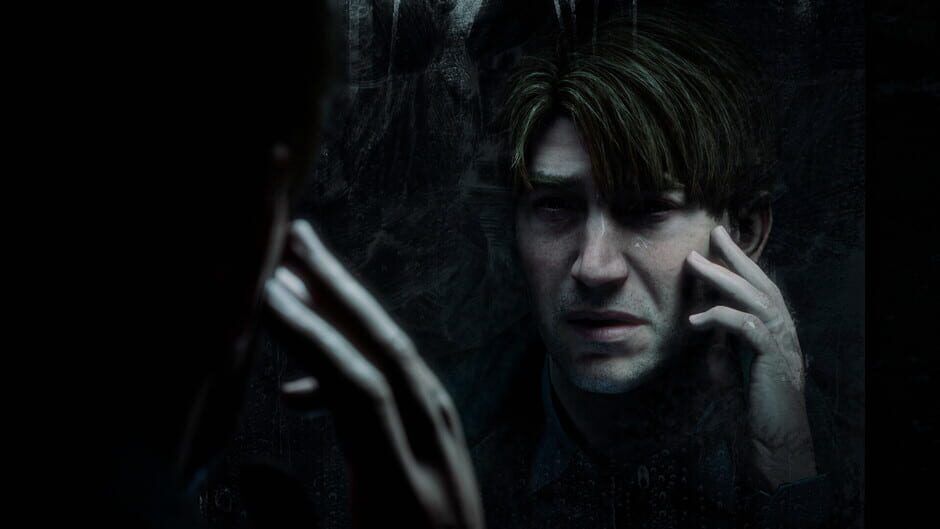
Silent Hill was written off as a dead series. Silent Hill 2 Remake crossing 6 million players and Silent Hill f topping 2 million shipments prove Konami has rebuilt trust in survival horror’s most fragile brand. Here is how they did it.
Konami spent most of the 2010s treating Silent Hill like a haunted relic. After Silent Hill: Downpour in 2012 and the painful cancellation of Hideo Kojima’s Silent Hills project, the series went quiet. Spin‑offs, pachinko machines, and mobile experiments eroded good will. For a long stretch, Silent Hill was either a punchline or a “what could have been” story.
Now Silent Hill 2 Remake has surpassed 6 million players and Silent Hill f has shipped over 2 million copies. Konami is openly talking about future projects like Silent Hill: Townfall and a remake of the original PS1 Silent Hill, while bundles and discounts suggest the company finally sees the franchise as a pillar again, not a burden.
This is not just a case of “nostalgia sells.” These numbers represent something more important for Konami: a hard‑won restoration of trust in a franchise that many believed had been mishandled beyond repair.
From Dormant Horror Icon to Risky Bet
To understand why Silent Hill’s revival matters, it helps to remember where things were before the current wave.
Across the Xbox 360 and PS3 era, Silent Hill drifted from its identity. Core Team Silent veterans had long since left, and Western‑developed sequels struggled to capture the thick atmosphere and psychological focus that defined the classics. Downpour and Shattered Memories had their defenders, but the series’ reputation became inconsistent. The Kojima‑led Silent Hills, teased through the legendary P.T., looked like a miraculous reset, only for the project to collapse along with Kojima’s wider break from Konami.
The result was a perception that Konami did not know what to do with Silent Hill. Years of inactivity turned that frustration into resignation. Every new rumor about a revival came with the same cynical read: even if Konami brought Silent Hill back, could it be trusted to get it right?
That is the context Silent Hill 2 Remake and Silent Hill f walked into.
Choosing the Right Anchor: Why Silent Hill 2 Was the First Big Test
If you are trying to convince lapsed fans that you finally respect Silent Hill again, there are few riskier moves than remaking Silent Hill 2. The 2001 original is not just a fan favorite. It is widely regarded as one of the best horror games ever made and a landmark in narrative‑driven psychological horror. Any misstep would be magnified.
Konami’s decision to use Silent Hill 2 as the spearhead for the revival sent a specific message. The company was willing to put its most sacred entry in the spotlight. That is both a show of confidence and a commitment test. If Konami cut corners or misunderstood the tone, the community would know immediately.
The choice of developer added another layer of tension. Bloober Team came in with a track record for atmospheric horror, but also a reputation for divisive storytelling and uneven mechanics. Fans worried that the subtlety of Silent Hill 2 would be replaced with jump scares and exposition.
Yet the final product reviewed strongly, with outlets like Push Square awarding it a 9 out of 10 and broader critical sentiment landing in the high 80s. Whatever debates remain about changes, the consensus is that this remake treated the material with care.
Konami’s gamble paid off. The publisher proved it could curate a modern version of Silent Hill’s most beloved chapter without completely losing its soul.
6 Million Players: What That Number Really Means
Konami reports that Silent Hill 2 Remake has reached more than 6 million players, a figure that includes both direct sales and those who accessed the game through PlayStation Plus Extra. Before it ever hit the subscription service, the remake had already sold more than 2.5 million copies and accounted for roughly a quarter of the lifetime sales of the entire Silent Hill franchise.
That is a staggering metric. It suggests two important things about Silent Hill’s revival.
First, the core fanbase showed up in force. If pre‑PS Plus sales alone represent such a large portion of the franchise’s historic total, that means many players who had drifted away since the PS2 era were willing to return and pay full price. That willingness only appears when trust has at least partially been restored through marketing, messaging, and early impressions.
Second, the extended reach through PS Plus Extra turns Silent Hill 2 Remake into a discovery engine for a new audience. Many of the 6 million players are likely younger fans who never touched the original and are now forming their first connection with the brand. For a series that was dormant for so long, that exposure is crucial. It transforms Silent Hill from a cult memory into a living IP in the subscription era.
Konami supporting this awareness with promotional bundles, including a temporary 40 percent discount on a PS5 digital pack containing Silent Hill 2 Remake and Silent Hill f, shows a publisher that is thinking about lifetime engagement, not just launch week numbers.
Silent Hill f: The Experimental Counterweight That Had to Work
Silent Hill 2 Remake is the safe play. Silent Hill f is the statement of intent.
Where the remake relies on a known classic, f pushes into new territory with fresh characters, a different setting, and a more modern horror sensibility. It is the part of the revival that asks fans to see Silent Hill as a growing universe rather than a museum of PS2 nostalgia.
With over 2 million copies shipped since its September 2025 launch, Silent Hill f has cleared the most important hurdle. It did not flop. The game attracted enough players to justify Konami’s multi‑track strategy and earned a respectable 7 out of 10 from reviewers like Push Square.
Critically, that 7 out of 10 has a very different value in context. Coming after years of silence and low expectations, a solid new entry that experiments without embarrassing the brand is a net positive. It shows that Konami can commission new voices in the franchise and land somewhere between “interesting” and “genuinely good,” instead of the uneven experiments that characterized some past Western sequels.
Silent Hill f proves Silent Hill’s identity can stretch without snapping. That matters for long term health more than any one remake does.
Rebuilding Confidence Through Partnerships and Curation
Konami’s approach to this revival has been less about internal reinvention and more about smart curation. Rather than attempt to rebuild a new in house “Team Silent,” the company is functioning as a label that oversees and funds projects from independent and external partners.
Bloober Team handling Silent Hill 2 Remake, another studio taking on Silent Hill f, and still other partners attached to Townfall and the future Silent Hill 1 remake show Konami acting more like a platform holder or film producer. It provides budget, IP oversight, and marketing, while specialized developers bring their own design philosophies.
This carries real risk. Different studios can lead to tonal inconsistency. But in this case, variety has become a selling point. Longtime fans can choose the grounded psychological horror of Silent Hill 2 Remake, while those curious about new directions can gravitate toward f’s distinct atmosphere and structure.
By spacing these projects, announcing a pipeline, and anchoring everything around renewed quality control, Konami signals that Silent Hill is not being revived for a one off cash grab. It is a managed portfolio. Players can trust that Silent Hill will be present in the release calendar for years, which in turn makes investing in the games feel safer.
Leveraging Modern Platforms Without Diluting the Brand
One of Konami’s smartest moves has been embracing modern distribution and business models without treating Silent Hill like a live service grind.
Silent Hill 2 Remake’s presence on PlayStation Plus Extra after a period of full price sales gave the game a long tail without undermining its early value. Those who wanted it at launch could buy in, while late adopters or curious newcomers could try it with their subscription months later. That balance is delicate. Time the subscription debut too early and you frustrate buyers. Wait too long and momentum fades. Konami seems to have nailed a window that preserved goodwill while dramatically boosting reach.
Stacking this with temporary discounts on bundles that include both Silent Hill 2 Remake and Silent Hill f turns momentary milestones into marketing beats. Instead of quietly posting a press release about sales updates, Konami turns each milestone into a promotion that drives additional engagement. That loop used to be common for big AAA publishers, but for a company that had largely stepped away from console gaming, it represents a return to form.
At the same time, Silent Hill has avoided the fate of many returning brands that immediately pivot into ongoing monetization schemes. There is no Silent Hill battle pass or cosmetic shop dominating the conversation. The series remains rooted in focused, single player horror experiences. That alignment between fan expectations and actual product design is a key part of why the revival is being welcomed instead of resented.
The Importance of Critical Reception in Repairing a Reputation
For a dormant franchise, review scores and word of mouth matter even more than usual. Fans do not just evaluate the games. They are silently judging whether the IP holder understands what made the series special in the first place.
Silent Hill 2 Remake earning high marks across enthusiast press sends a powerful message that Konami did not just dust off a classic for an easy cash in. Critics highlighted improved combat, effective use of modern visual tech, and careful updates to iconic scenes. Even where purists disagree with certain changes, the discourse is about interpretation rather than incompetence.
Silent Hill f’s slightly more modest reception plays a different role. It shows that Konami is willing to greenlight projects that may challenge expectations or experiment structurally, without insisting that every Silent Hill game be a universal home run. That risk tolerance signals a healthier creative environment than the risk averse, sequel‑by‑committee approach that hurt the series before.
Crucially, there has not been a disastrous new entry to reignite fears that Konami is mishandling the franchise. Avoiding a single catastrophic misstep is often as important as scoring a few big wins.
Setting Up the Future: Townfall, Silent Hill 1 Remake, and Beyond
The current wave of milestones does not exist in a vacuum. With Townfall on the horizon and a remake of the original Silent Hill confirmed, Konami is clearly treating the recent success as a foundation rather than an end goal.
Townfall, a more mysterious and presumably smaller scale project, has the potential to recapture some of the experimental spirit that made the early games so fascinating. If it lands well, it can fill the niche of compact, unsettling horror that lives between the bigger, marquee remakes.
The Silent Hill 1 remake, meanwhile, is arguably an even bigger challenge than Silent Hill 2. The original game’s rough edges and clunky controls are buried under intense nostalgia. Modernizing that experience while preserving its oppressive tone will require political levels of care in design decisions. Konami’s willingness to tackle it suggests confidence built off the response to Silent Hill 2 Remake.
The key test will be whether Konami can keep quality consistent across these projects. If Townfall or the first game’s remake stumble too hard, some of the rebuilt goodwill will evaporate. But the publisher has at least earned the benefit of the doubt, which was unthinkable a decade ago.
What Other Publishers Can Learn from Silent Hill’s Comeback
Konami’s rehabilitation of Silent Hill offers a template for other companies sitting on neglected or mishandled IP.
First, lead with respect. Choosing Silent Hill 2 as the spearhead, and treating it seriously, showed fans that Konami understood which part of its legacy mattered most. The company did not start with a mobile spin off or a multiplayer experiment. It started with a carefully crafted revisit of a classic.
Second, mix nostalgia with novelty. Silent Hill f delivered a new story and setting instead of endlessly retreading the same scenarios. That balance between reverence and reinvention is what makes the revival feel like a living timeline, not a museum tour.
Third, use modern distribution smartly. Time on subscription services and well positioned discounts amplified reach without destroying early sales or making loyal fans feel burned. Silent Hill 2 Remake’s 6 million players are the direct result of a strategy that understands how players actually encounter games in 2026.
Finally, avoid over monetizing the comeback. Players are far more willing to support a revived series when it presents itself as a set of complete, focused experiences instead of platforms for microtransactions. Silent Hill’s renewed image as a premium, story driven horror franchise is part of why its comeback feels satisfying instead of cynical.
From Cautionary Tale to Case Study
A decade ago, Silent Hill was used as an example of how to squander a beloved series. Today, its metrics tell a different story. Silent Hill 2 Remake standing at over 6 million players and Silent Hill f crossing 2 million shipments mark a turning point where fans and critics alike acknowledge that Konami has done more than just reopen a vault.
Through careful curation, strategic partnerships, and a renewed respect for what made Silent Hill distinct, Konami has transformed a fragile, dormant IP into a credible pillar of its modern portfolio. The town of Silent Hill feels alive again, not because of nostalgia alone, but because the publisher behind it finally seems willing to listen.