
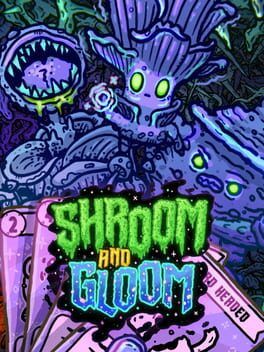

Team Lazerbeam and Devolver Digital have set Shroom and Gloom for Steam Early Access on September 10, positioning its two-deck dungeon crawling roguelike as one to watch for Slay the Spire and indie deck-builder fans.
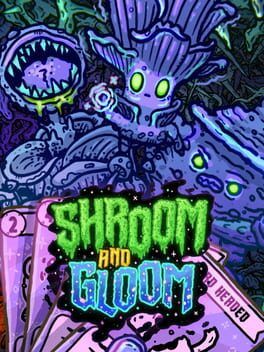
Image: IGDB
Store links: Shroom and Gloom on Steam
Shroom and Gloom has a September 10 Steam Early Access date
Shroom and Gloom now has a firm launch date: Team Lazerbeam and Devolver Digital announced that the first-person dungeon crawling deck builder will enter Steam Early Access on September 10, 2026. The announcement, distributed through Games Press and republished by Saving Content, confirms PC via Steam as the launch destination and points players to the current Steam page, where a demo is available.
That date is the concrete news, but the interesting tension is the format. Shroom and Gloom is being sold as a “double deckbuilder,” with one deck used for exploration and another for combat. In a genre where many players immediately compare new runs, relic economies, and upgrade decisions to Slay the Spire, Team Lazerbeam’s pitch is less about copying the familiar map-node structure and more about splitting dungeon interaction into two card systems. If that division holds up across Early Access, it could give the game a clearer strategic identity than many indie deck builders that compete mainly on theme or card count.
The confirmed release is Early Access, not a finished 1.0 launch. Devolver Digital’s announcement says players can experience the game on PC on September 10 or try the Steam demo now. The supplied sources do not include a price, exact launch hour, console plans, system requirements, Steam Deck verification status, or a final roadmap for how long Early Access will last.
The hook is two decks, not one larger hand of cards
According to Devolver Digital’s announcement, Shroom and Gloom uses hundreds of cards across two distinct decks. The Explore deck is described as the toolset for revealing, searching, breaking, unlocking, igniting, feeding, and fixing while moving deeper through hand-drawn dungeons. The Combat deck is used to hack, slash, roast, and eat fungal enemies blocking the route into the underground realm called The Gloom.
That split matters for strategy players because it suggests the game is separating two kinds of pressure that many roguelike deck builders often compress into a single combat loop: how you survive encounters and how you manipulate the run around them. In practical terms, the appeal will depend on whether the Explore deck creates meaningful routing and resource choices, rather than serving as a thematic wrapper between fights. Devolver’s feature list points to interaction verbs that sound like dungeon utilities, but the sources do not yet spell out how often those cards appear, whether exploration cards share upgrade resources with combat cards, or how failed exploration decisions punish a run.
For Slay the Spire players, the potential draw is familiar but not identical. The confirmed features emphasize synergy, card modification, and long-term scaling, all of which are central reasons roguelike deck-builder communities keep returning to a run-based game. Shroom and Gloom’s variation is that it asks players to think in two lanes at once: the combat engine that kills enemies and the exploration engine that opens, alters, or feeds the dungeon around them.
Infinite card upgrading is the balance question to watch
The most ambitious claim in the announcement is that attacks are “infinitely upgradeable.” Devolver also says players can grow and modify cards, transforming low-level starting cards into powerful attacks or rare cards into “game-breaking superweapons.” GamingOnLinux’s coverage repeats the same core feature set and describes the game as letting players “grow cards into massive abominations” while fighting toward The Gloom.
As a strategy proposition, that is both the headline and the risk. Infinite upgrade language is exciting because it promises run expression far beyond the usual one-and-done card enhancement. It also raises immediate balance questions. If every attack can scale without a hard ceiling, then the game needs strong counterweights elsewhere: enemy pacing, upgrade costs, opportunity costs, deck consistency pressure, or escalating dungeon threats. The sources confirm “deep meta progression,” scores of enemies, and hundreds of cards, but they do not explain the economy behind upgrades or whether meta progression affects power between runs.
That distinction will shape Early Access reception. A deck builder can feel generous in the first hour and unstable by the tenth if scaling overwhelms enemy design. Conversely, if the upgrade economy is tight, the “infinitely upgradeable” promise could become a strategic puzzle about when to double down on a starter card, when to invest in rare cards, and when to keep a deck lean. Team Lazerbeam’s Early Access period gives the developers room to tune that economy in public, assuming the studio uses player data and feedback to adjust card strength, enemy durability, and reward pacing.
Eating enemies turns combat wins into recovery choices
The mushroom theme is mechanical, according to the announcement. Devolver says every enemy is edible. Fallen fungal foes can be skewered, seasoned, roasted, eaten to restore health, or thrown into a pot to brew soups with game-changing effects. GamingOnLinux also highlights the loop of fighting and eating enemies, calling the game a mushroom-munching dungeon crawler.
That gives Shroom and Gloom a resource layer that could appeal to roguelike players who enjoy turning combat outcomes into future leverage. Health recovery in deck builders is rarely a neutral reward. If food and soups are powerful, then the timing of consumption, the value of saving ingredients, and the tradeoff between immediate healing and later payoff could become core run decisions. If those choices are too obvious, the system risks becoming flavor text attached to post-fight sustain.
The sources do not define whether different enemy types produce different meals, whether soups persist across rooms, or how food interacts with the two decks. Those are important unanswered questions because they determine whether eating enemies is a build-around system or a recovery valve. Still, the confirmed pitch is coherent: combat does not end when an enemy dies, because the corpse becomes part of the run economy.
A hand-drawn first-person dungeon could help it stand apart on Steam
Team Lazerbeam and Devolver describe Shroom and Gloom as a first-person roguelike set in hand-drawn dungeons with rich 3D spaces. The visual identity is one of the clearest differentiators in the available material. GamingOnLinux’s Liam Squires-Hand wrote that he “adored the demo” and called the style “exceptional,” which is an impression rather than a confirmed design fact, but it signals that the demo has already made an impression with at least some deck-builder watchers.
First-person presentation gives the game a different feel from many card battlers that rely on static lanes, node maps, or side-on enemy compositions. The promise here is tactile dungeon crawling: revealing spaces, unlocking paths, breaking obstacles, and engaging fungal enemies in a surreal environment rather than choosing abstract stops on a route. That could make Shroom and Gloom easier to recommend to players who like deck construction but want more spatial texture between fights.
The risk is readability. Deck builders live or die on clarity: what a card does, what an enemy intends, what resources are being spent, and how a build is scaling. A dense hand-drawn 3D presentation can add atmosphere, but it also has to keep decision information clean. None of the supplied sources discuss interface options, accessibility settings, performance targets, or controller support, so the demo will be the best practical test before September 10 for players sensitive to UI friction.
Steam is confirmed, but several launch details remain open
The confirmed Shroom and Gloom Steam plan is straightforward: Early Access on PC starts September 10, and the demo is available now through the Steam listing cited by Devolver and Saving Content. The announcement came with a new Team Lazerbeam deep dive video on YouTube titled “Shroom and Gloom | Emerging Into Early Access on September 10.”
Beyond that, buyers should be careful about assumptions. The source material does not confirm a console release, a full 1.0 date, launch pricing, discount plans, minimum or recommended specs, cloud save support, controller support, or Steam Deck verification. GamingOnLinux tagged its coverage with Proton, Deck-builder, Dungeon Crawler, Indie Game, Steam, and Upcoming, but the provided text does not establish a native Linux version or official handheld compatibility. For now, the safest reading is PC Steam Early Access with a public demo.
For players coming from Slay the Spire or the wider indie roguelike scene, the sensible move is to try the demo first, then watch how Early Access handles balance. Shroom and Gloom has the right ingredients for a sticky deck-building loop: separate exploration and combat decks, heavy card modification, edible enemies as a recovery economy, and a strong visual identity. The September 10 launch will show whether those pieces create a durable strategy game or an inventive prototype that needs its Early Access runway to find the right shape.