


Shroom and Gloom is now in Steam Early Access. Here is how its combat and exploration decks work, what buyers get today, and why Monster Train fans should keep an eye on it.
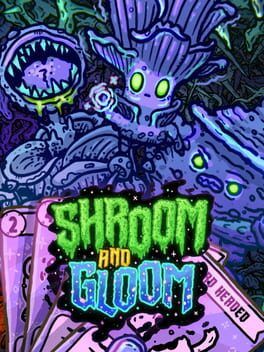
Image: IGDB
Store links: Shroom and Gloom on Steam
Shroom and Gloom has entered Steam Early Access with one big design hook
Shroom and Gloom entered Steam Early Access on September 10, 2026 for PC via Steam, according to NiaMeowDB’s release-date listing, which points readers back to the game’s Steam page for its current status. Rock Paper Shotgun also reported that the fungal roguelike deckbuilder is out in early access, framing its launch around the game’s unusual two-deck structure.
That is the concrete draw here: Shroom and Gloom is a first-person roguelike deckbuilder where dungeon crawling is split between two separate card systems. One deck handles combat. The other handles exploration. In a genre where many indie deckbuilders live or die on whether their card economy produces memorable decisions, Team Lazerbeam’s game is trying to make the walk between fights part of the build, rather than connective tissue before the next enemy.
The early access launch also arrives with some useful context. NiaMeowDB lists Team Lazerbeam as developer and Devolver Digital as publisher, while Gamezebo likewise reported that Team Lazerbeam and Devolver Digital announced the September 10 Steam Early Access date. HappyGamer, meanwhile, reported that Big Fan Games launched the fungal dungeon-crawler on September 10 and promoted a Shroom and Gloom x Monster Train 2 bundle. The source material does not clarify the relationship between those publisher labels, so the safest read is that Devolver is attached to the game in public listings while Big Fan Games is tied to the launch promotion reported by HappyGamer.
How the double deckbuilder actually works
The cleanest way to understand Shroom and Gloom is to stop thinking of it as a single combat deck with dungeon dressing. Rock Paper Shotgun describes two decks with different jobs. The combat deck is the more familiar half, with cards that deal damage, cards that toast enemies so they can be eaten, and stranger effects such as making a gunk pile. The source does not provide full rules text for those cards, but it does make clear that fighting is built around card play rather than conventional first-person action.
The second deck is where Shroom and Gloom starts to separate itself from the crowded Slay the Spire lineage. According to Rock Paper Shotgun, the exploration deck lets players interact with the environment in several ways, including camping out, gaining new cards, and making soup. That implies a run structure where traversal choices and resource moments are card-driven too. If the design lands, every hand outside combat can matter as much as the one you take into a monster encounter.
HappyGamer’s launch write-up adds the broader roguelike frame: players build their card deck as they move through mushroom-covered underground dungeons, with the card pool changing from run to run. HappyGamer characterizes the appeal as finding combinations that can snowball before the dungeon overwhelms you. That reading fits what early access deckbuilder players usually hunt for, but the specific depth of Shroom and Gloom’s synergies will need to be proven by the live build and future updates.
What early access buyers get now on Steam
Based on the supplied sources, Shroom and Gloom early access buyers get the PC Steam version in a playable, still-in-development state. NiaMeowDB lists the status as “Early Access available on Steam,” with the platform specified as PC via Steam. It also says a demo is available on Steam and itch.io, which is useful for anyone who wants to test the tone and basic systems before buying.
The content described at launch includes two explorable paths, according to Rock Paper Shotgun. One is described as a more traditional dungeon-looking route, while the other has a slightly more sci-fi flavor. Rock Paper Shotgun also says there are five characters to choose from, but notes that the Steam page did not explain how those characters differ at the time of its report and that the writer had not played the release build.
That caveat matters. The sources support the existence of two paths and five characters, but they do not provide a full early access content roadmap, expected 1.0 date, launch price, system requirements, Steam Deck status, save compatibility plans, or console plans. HappyGamer says the game is available to grab now and advises checking Steam for exact bundle pricing, since Big Fan Games’ promotional post did not share specific numbers. For buyers, Steam is therefore the practical source for current price, discount eligibility, user reviews, and any launch-week bundle details.
A grubby fungal style gives the mechanics an identity
Shroom and Gloom’s other immediate selling point is its look. Rock Paper Shotgun highlights layered, densely detailed tunnels, thick line art, comic-book-like creatures, and backgrounds with a grimy fungal texture. Gamezebo calls the game psychedelic and identifies it as a first-person double deckbuilder roguelike set for Steam Early Access on September 10, 2026.
That art direction is doing functional work, not only aesthetic work. Deckbuilders can become abstract fast, especially when players spend most of their attention parsing card text, scaling math, and probability. Shroom and Gloom’s disgusting mushroom-world framing gives its verbs some flavor: toasting an enemy, eating it, making soup, and pushing deeper through spore-filled tunnels all sit in the same unpleasant little ecosystem.
For an indie deckbuilder, that cohesion is valuable. The genre is packed with clean grids, fantasy arenas, and readable but familiar UI-first spaces. The reported first-person perspective and environmental deck suggest Shroom and Gloom wants the dungeon itself to be part of the hand you are playing. The sources do not confirm how far that idea stretches in the current early access build, but the concept is strong enough to make the launch worth tracking.
The Monster Train 2 bundle is a smart signal to synergy hunters
HappyGamer reports that Shroom and Gloom launched alongside a bundle deal with Monster Train 2, promoted by Big Fan Games on Bluesky. The quoted post describes the pairing as the “Shroom and Gloom x Monster Train 2 bundle,” pitching both games as card-based chaos built around devastating synergies. HappyGamer notes that the launch post did not provide exact pricing, so anyone interested needs to check Steam for the live bundle price and ownership discount behavior.
The pairing is telling. HappyGamer describes the original Monster Train as a respected deckbuilder about defending a burning pyre while climbing from Hell toward Heaven, with two-faction deck construction and combinations that can spiral out of control. It says Monster Train 2 continues that premise with new mechanics and card sets for players who exhausted the original’s viable builds.
Shroom and Gloom is not reported to use Monster Train’s lane defense structure, faction setup, or train-based escalation. The connection is more about audience and appetite. Monster Train fans tend to value builds that snap into place through layered synergies, then ask whether the run can survive its own absurd momentum. Shroom and Gloom’s dual-deck premise gives that audience a new question to watch: can a deckbuilder make exploration as combo-rich as combat?
The promising signs and the unanswered questions
Shroom and Gloom had visible pre-launch traction before early access. NiaMeowDB’s timeline, citing official Team Lazerbeam Steam dev logs, says the free demo launched on Steam on May 15, 2025, reached 100,000 wishlists and 9 million online video views by September 30, 2025, and achieved an Overwhelmingly Positive Steam demo rating by October 31, 2025. The same listing says the game reached 200,000 wishlists during Steam Next Fest in June 2026, with localization support confirmed, and that the demo surpassed 100,000 downloads on Steam by July 31, 2026.
Those numbers are encouraging, but they are not a verdict on the early access build. Demo excitement can identify a strong hook, a standout art style, and an audience willing to wishlist. It cannot answer whether the full run economy stays sharp after many hours, whether the two-deck structure creates meaningful tension or extra management, or whether five characters and two paths provide enough variety at launch.
That is the central early access question. The game’s best idea is also its biggest balancing challenge. If the exploration deck feeds combat too generously, runs could snowball without friction. If it feels disconnected, the double-deck design could become two smaller games stitched together. If Team Lazerbeam keeps both decks talking to each other through card rewards, camping choices, food, enemy handling, and route identity, Shroom and Gloom could earn the attention it is already getting from deckbuilder players.
Who should buy now, and who should wait
If you are the kind of player who buys early access games for systems-in-progress, Shroom and Gloom has a clear pitch today: a Shroom and Gloom roguelike deckbuilder with two decks, first-person fungal dungeon crawling, two reported paths, five reported characters, and a demo history that generated substantial wishlist and download numbers. Monster Train fans should especially watch it because the launch bundle is aimed directly at players who enjoy synergy-heavy deck construction.
If you need a finished content set, a known roadmap, console availability, verified Steam Deck performance, or a firm sense of how the five characters differ, the provided sources do not answer those questions. The sensible move is to play the demo, read the current Shroom and Gloom Steam page, check recent user reviews, and confirm the live price or bundle discount before buying.
Early access works best when the game already has a compelling shape and the remaining risk is growth. Shroom and Gloom’s shape is easy to see: grimy mushroom dungeons, combat cards in one hand, exploration cards in the other, and the promise that every step forward might be another small deckbuilding decision. Now the early access period has to prove how deep those roots go.