
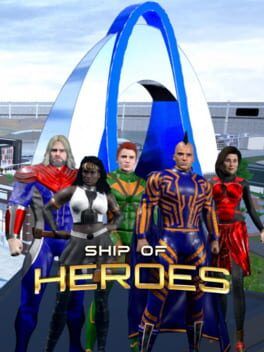
Ship of Heroes is shutting down on September 22 after one year live. Here is what is confirmed, why the superhero MMO is ending, and what smaller live service games can learn from it.
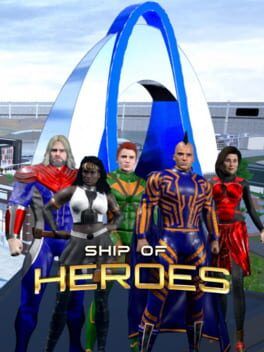
Image: IGDB
Store links: Ship of Heroes on Steam
Ship of Heroes has a hard end date after only one year live
Ship of Heroes will go offline on September 22, 2026, one year after launch, and once the servers shut down the superhero MMORPG will no longer be playable, according to MMOHuts. MassivelyOP also reports that the game will officially sunset on September 22 after a year of live operation.
That is the most important practical point for players: this is not a pause in updates, a maintenance window, or a migration to another platform in the source material provided. The reported plan is a full Ship of Heroes shutdown. MMOHuts says the studio has decided to stop development rather than ship its next planned content update, and the game itself will close when the servers go offline.
For a genre built around persistence, that timing is severe. Ship of Heroes spent nine years between announcement and launch, according to MMOHuts, but its live service life is ending after one year. The gap between a long development runway and a short live lifespan is the central tension in this sunset: the team had content in the pipe, the community had been involved across years of feedback, and yet the studio decided that continuing the service no longer made sense.
The stated reason is team contraction, not a lack of planned content
The clearest reported explanation for the Ship of Heroes sunset is operational. MMOHuts reports that, according to the announcement, the development team shrank after launch, which slowed progress “to a crawl.” The team is therefore stopping development instead of releasing the next content update.
That distinction matters. The reported shutdown is not being framed as a game that simply ran out of ideas. MMOHuts says the next update would have included a user-generated mission tool and 40 new missions, both of which had already gone through closed beta. The tool was designed to let players build missions with in-game assets, while rewards, difficulty, and scaling would be handled like regular missions.
In live-service strategy terms, that is a brutal failure point. A user-generated mission system is the kind of feature that can, in theory, stretch a small team’s output by letting players create repeatable activity. But the reported facts point to the opposite outcome here: even finished or near-finished content was not enough to justify keeping the service open. That reading is an interpretation of the reported announcement, not a disclosed financial statement. The available sources do not provide revenue numbers, player counts, server costs, or staffing totals.
What players should expect on September 22
Based on MMOHuts’ report, Ship of Heroes becomes unplayable after the servers go offline on September 22. The source material does not mention an offline client, private server handoff, character export, account preservation tool, refund program, final event schedule, or post-shutdown museum mode.
That leaves players with a narrow set of safe assumptions. If you want screenshots, video, costume records, housing captures, character names, build notes, or memories from group content, the reliable window is before September 22. If you were waiting for the user-generated mission tool or the 40 missions that had gone through closed beta, MMOHuts reports that the studio will not publish that finished content before closure.
The unanswered questions are significant because MMOs are unusually bad at partial survival. A single-player game can remain playable after a studio moves on. A server-dependent MMO usually cannot unless the developer creates an offline path, transfers operations, licenses community servers, or otherwise preserves access. None of those outcomes is confirmed for Ship of Heroes in the supplied reports.
The shutdown cuts off the game before its next strategic phase
Ship of Heroes launched as a small-team superhero MMO with character creation, scalable missions for groups of up to 10, crafting, trading, an auction house, player housing, raids, and seasonal events, according to MMOHuts. Since launch, the game added Halloween and Christmas content, gadgetry crafting, dance emotes, quality-of-life updates, and bug fixes.
That post-launch record suggests the team was still iterating on systems and event cadence during the game’s first year. The planned user-generated mission tool would have been a different kind of update because it could have shifted part of the content burden from the studio to the community. For a small MMO, that is not a cosmetic change. Content throughput is strategy. If players consume missions faster than a reduced team can make them, retention suffers. If tools let players build missions that behave like regular content, the game has a potential way to multiply activity without multiplying staff.
The reported decision to shut down rather than release that update therefore says something specific about the risk curve. When a live team contracts too far, even features meant to improve production efficiency may arrive too late to change the service’s direction. The sources do not say whether the issue was money, staffing, technology, community size, or some mix of those pressures. What is confirmed is narrower but still telling: the team became smaller after launch, progress slowed dramatically, and the studio chose closure over one more major content release.
Superhero MMO history makes this sunset feel especially sharp
Ship of Heroes existed in a genre shadowed by City of Heroes, the 2004 superhero MMORPG originally created by Cryptic Studios before the IP was acquired by NCSoft, according to Wikipedia. City of Heroes ran for years, received 23 free major updates, and had its last day of service on November 30, 2012, after NCSoft terminated the Paragon Studios development team earlier that year.
Wikipedia also notes that City of Heroes later gained renewed life through private servers after server-capable source code circulated in 2019, and that NCSoft granted Homecoming Servers an official license in January 2024. That history is relevant context, but it should not be treated as a prediction for Ship of Heroes. The supplied Ship of Heroes shutdown reports do not mention source-code release, community licensing, or private-server authorization.
The comparison highlights two different preservation realities. City of Heroes became an unusual case in which a shuttered MMO eventually gained a sanctioned community-operated form. Ship of Heroes, based on the current source material, has only a confirmed shutdown date and no announced continuation path. For players, the lesson is practical rather than nostalgic: unless a developer explicitly provides preservation tools or licensing terms, a server-based MMO can disappear even if its community is invested and its roadmap is unfinished.
Smaller live services are exposed when staffing and cadence break
The Ship of Heroes shutdown fits a broader live-service pattern visible across the market, although the exact reasons differ from game to game. Pure Xbox reported that several Xbox games were scheduled for server closures in August 2026, including NBA 2K Playgrounds 2, WWE 2K Battlegrounds, Warface: Clutch, NHL 22, and NHL 23. That report concerned different games and platforms, but it shows that server sunsets are now a recurring part of the online-game calendar.
Ship of Heroes is a sharper case because it is an MMO built by a small team and because MMO value depends heavily on long-term access. A sports game losing online support years later is damaging for online modes. A superhero MMORPG losing servers after one year removes the whole playable world, according to MMOHuts’ report. That difference raises the stakes for players considering smaller live-service games at launch.
The strategic risk is cadence. A small live team needs enough development capacity to fix bugs, run events, maintain infrastructure, respond to community feedback, and produce new reasons to log in. If staffing drops after launch, every system competes for the same limited attention. New content slows, delayed features lose impact, and the next update can become a cost rather than a lifeline. Ship of Heroes appears to have reached that point, based on the reported explanation that development slowed after the team shrank.
The careful takeaway for players and studios
For players, the immediate guidance is simple: treat September 22 as the final playable date unless the developer announces otherwise. Preserve what you care about before then. Do not assume the closed-beta mission content, the user-generated mission tool, or any offline alternative will appear, because the current reports say the studio will close the game instead of publishing that update.
For studios, Ship of Heroes is a warning about launching a persistent world without a durable live-operations plan for the year after release. A nine-year road to launch does not protect a game if the post-launch team cannot sustain momentum. Community polling, public tests, seasonal events, and quality-of-life patches all help, and MMOHuts reports that Ship of Heroes had years of feedback including more than 220 polls during development. But player trust in an MMO ultimately rests on continuity.
The confirmed story is not that every small MMO is doomed. It is that smaller live-service games operate with less margin for staffing shocks, delayed systems, and slow content cadence. Ship of Heroes had a planned update with 40 missions and a creator tool already through closed beta, according to MMOHuts. It still ends on September 22. That is the hard lesson of this superhero MMO shutdown: in live service, a roadmap only matters if the team can keep the servers, tools, and update pipeline alive long enough for players to reach it.