
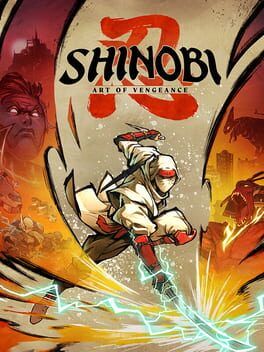

Dr. Eggman, Goro Majima and Death Adder crash into Shinobi: Art of Vengeance alongside a brutal Hardcore Mode, signaling how Sega wants its revived classics to live on after launch.
SEGA has dated Shinobi: Art of Vengeance’s most eye‑catching post‑launch update so far, and it is not subtle about what the company wants from its new wave of legacy revivals.
On April 3, the paid Sega Villains Stage DLC arrives alongside a free Hardcore Mode update on all platforms. Together they form a small but telling snapshot of how SEGA plans to keep Shinobi alive in a crowded action platformer space and how willing it is to lean on the wider SEGA universe to do it.
A rogues’ gallery built from SEGA’s past
The Sega Villains Stage is a crossover on paper, but in practice it looks like a mission statement. Three bosses, each from a different era and audience, are being dropped directly into Shinobi’s 2D slash‑and‑dash framework.
Dr. Eggman is the most obvious icon. He represents the evergreen Sonic brand, which SEGA has been busy re‑centering with Sonic Frontiers, Sonic Superstars and a transmedia push. Translating Eggman from side‑scrolling chase sequences into a deliberate, pattern‑driven Shinobi duel is a way of saying that the Sonic universe can exist outside pure speed. If the fight plays like the trailer suggests, with large mechanical contraptions asking players to study telegraphed attacks, it bridges classic Shinobi boss design with the more toy‑box personality of the Sonic world.
Goro Majima is a completely different signal. He belongs to the era when Yakuza, now Like a Dragon, grew from cult curiosity into a flagship SEGA franchise. Dropping Majima, complete with his unhinged bravado, into a tightly paced action platformer is an acknowledgement that modern SEGA identity is not just blue skies nostalgia but also character‑driven drama and chaos. He is the choice that speaks directly to the current SEGA fanbase, the players who came in through Kamurocho rather than arcades.
Then there is Death Adder, the oldest ghost in the lineup. Golden Axe has been dormant for years compared to Sonic or Like a Dragon, yet SEGA keeps pulling it into crossovers and collections. Adder’s presence reinforces that Shinobi: Art of Vengeance is part of a broader attempt to rescue the company’s arcade action heritage from history‑lesson status. In a sense, the DLC quietly argues that these older fantasy brawlers can still matter if SEGA keeps them visible inside its healthier modern projects.
Seen together, Eggman, Majima and Death Adder sketch out a triangle of SEGA’s legacy: mascot platformers, modern character IP and deep cut arcade history. Shinobi becomes the meeting point where all three can coexist, and that in turn positions the game as a flagship for the whole “New Era SEGA” initiative rather than a one‑off nostalgia trip.
Why this crossover fits Shinobi specifically
The risk with crossover DLC is that it feels like a separate toy box bolted onto the side of the main game. Shinobi: Art of Vengeance is better placed than most to avoid that problem.
Its structure is already built around discrete stages, boss showcases and expressive ninpo abilities. Adding five more levels that spiral toward signature SEGA villains is a natural extension of that formula, not a genre pivot. It also lets Lizardcube and SEGA show how flexible their combat system is. A bulky fantasy warlord like Death Adder wants different spacing and invincibility timings compared to Eggman’s gadget‑heavy arenas or Majima’s darting aggression.
From a player’s perspective this matters because it can refresh a game that many early adopters have already mastered. The base campaign moves at a brisk pace, and its bosses are some of the most memorable anchors in the experience. If the new encounters land, they add three more skill checks that feel worthy of a late‑game replay, not just novelty cameos.
Sega’s legacy strategy in microcosm
Sega has been clear for a while that it wants its classic properties back in circulation, but it cannot afford to relaunch everything at triple‑A scale. Cross‑pollination between revivals is a cheaper, smarter way to keep multiple brands visible at once.
The Sega Villains Stage is a neat example of that philosophy. Instead of spinning up a full Golden Axe reboot or another Eggman‑centric Sonic spin‑off, the company borrows recognisable faces and drops them into a game that already has a strong mechanical core and a positive critical reputation. Shinobi benefits from the extra spotlight, while the villains keep their relevance between bigger releases.
It also quietly teaches newer fans about SEGA’s back catalogue. Players who came to Shinobi via modern indies and stylish 2D action might know Sonic and Majima but have never touched Golden Axe. Meeting Death Adder here, with fresh art and music, is an on‑ramp to older compilations and potential future revivals. That kind of slow, connective tissue between brands is exactly what SEGA needs if it wants its legacy IP to feel like a universe rather than a scattered pile of remasters.
Hardcore Mode and the fight to keep players coming back
Alongside the paid DLC, all Shinobi players receive a free Hardcore Mode update on the same day. It is easy to view this as a bullet point next to the flashy Sega Villains trailer, but Hardcore Mode could quietly be the more important piece of long‑term support.
Art of Vengeance already targets a specific audience: players who enjoy pattern recognition, tight execution and the satisfaction of shaving seconds off a successful run. Those players burn through standard difficulty quickly. Without a reason to revisit stages under stricter rules, many will drift away just as word of mouth could be peaking.
A well‑tuned Hardcore Mode answers that problem. If it bumps damage intake, tightens resource availability and demands more perfect inputs while keeping enemy layouts readable, it effectively turns Shinobi into a score‑chasing, routing‑heavy game for veterans. That fuels speedrunning, no‑hit challenges and community races. In other words, it gives the game a second life on streams and social clips long after the launch window.
Because Hardcore Mode is free, it also avoids splitting the playerbase. Newcomers picking up Shinobi in a sale later this year get the full package by default: the original campaign, its existing boss roster, and a brutal difficulty option waiting down the line once they find their footing. It is a form of post‑launch support that respects skill progression instead of selling it.
Is this a meaningful support beat or a flashy detour?
Measured purely in raw content, the Sega Villains Stage is modest. Five levels, a clutch of bosses, some extra ninpo and outfits and a few new tracks are not the kind of expansion that rewrites a game. Yet in context, this drop feels more meaningful than its bullet list suggests.
For one thing, it arrives while interest in Shinobi is still warm rather than fading. That timing matters. It turns what could have been a nostalgic curiosity into a clear signal that SEGA intends to treat Shinobi like an ongoing asset rather than a one‑and‑done revival experiment.
More importantly, the mix of paid and free content is well judged. Crossover bosses and new stages are easy to sell as fanservice, particularly with a trailer that revels in sharp animation and musical callouts. Hardcore Mode, by contrast, is a systems‑first feature that deepens what is already there. Together they serve both the marketing need to grab attention and the design need to keep high‑skill players engaged.
If SEGA follows this beat with at least one more substantial update, Shinobi could settle into the kind of long tail that turns a solid revival into a minor modern classic. And if the villain lineup here turns out to be a template, it is not hard to imagine future Sega revivals borrowing the same playbook, treating crossovers and challenge modes less like throwaway extras and more like small, carefully timed steps in building a connected SEGA ecosystem.
For now, Shinobi: Art of Vengeance’s Sega Villains DLC and Hardcore Mode look like a smart, confident second act for a series that once felt permanently stuck in the past.