
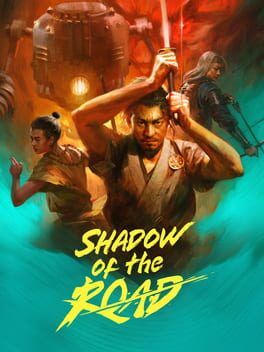

A deep-dive preview of Shadow of the Road’s New Game+ Showcase trailer, exploring its alternate-history Bakumatsu Japan, steampunk-tainted CRPG combat, and why Owlcat & Another Angle’s partnership should be on the radar of Pathfinder and Disco Elysium fans ahead of its 2026 launch.
A New Kind Of Civil War CRPG
Shadow of the Road’s latest appearance at the New Game+ Showcase finally put a date, or at least a year, on one of the more striking new CRPGs in development. Publisher Owlcat Games and developer Another Angle Games confirmed a 2026 launch window on PC, paired with a fresh trailer that doubles down on what makes the project stand out: a dense, choice-heavy role-playing framework set in a violently unstable Bakumatsu Japan where steampunk tech, yokai, and political paranoia grind against each other.
For anyone who has bounced between Owlcat’s Pathfinder epics and the grounded, talky intensity of Disco Elysium, Shadow of the Road is quietly shaping up as a fascinating middle ground. It takes Owlcat’s house style of crunchy systems and consequential storytelling, but channels them into a much nastier, more intimate civil war than the typical fantasy crusade.
Steampunk-Tainted Bakumatsu Japan
Most games set in Japan’s 19th century flirt with romanticized samurai drama. Shadow of the Road takes the same period, fixes it at the tipping point where the Tokugawa shogunate is collapsing, then injects a rotten core of industrialization and off-the-books science into it. The New Game+ trailer leans hard on that tension between rusted tradition and unstable progress.
The conflict between the Tokugawa shogunate and supporters of Emperor Mutsuhito already makes for a volatile backdrop. Here, that struggle is further destabilized by imported or clandestine steampunk constructs, experimental firearms, and armored war engines that are supposed to herald prosperity but instead shove the country toward chaos. Traditionalist samurai, radical reformers, foreign schemers, and desperate peasants are all trying to figure out what these machines mean for their own survival.
It is a setting that immediately differentiates itself from Western medieval fantasy. You still get swords, spears, and shrines, but they sit in the same frame as belching smokestacks, autonomous mechs and jury-rigged prosthetics. Crane-limbed constructs patrol burned-out districts, while yokai and other folkloric horrors stalk the same streets as profiteering engineers. The trailer cuts from close quarters katana duels to wide shots of mechanical artillery roaring over flooded rice fields, selling the idea that every battlefield is a collision between eras.
For fans of Disco Elysium’s shabby, liminal Revachol, there is a similar sense of a nation that has already broken and just has not admitted it yet. The technology is not a cool skin over historical tourism. It is the wedge that is cracking the country open.
A CRPG About Spies, Ronin And A Dangerous Child
The story setup highlighted in the New Game+ Showcase centers on Tokugawa’s spymaster, who assembles an unlikely escort detail for a boy that might decide the war’s future.
Two ronin, Satoru and Akira, are hired to protect this mysterious child whose powers are poorly understood and badly controlled. He is not a simple chosen one, but rather a political and metaphysical liability. Every faction wants to capture, weaponize, or erase him. Traveling with him means stepping into the crosshairs of the shogunate, imperial loyalists, foreign agents and supernatural predators.
The trailer teases a slowly expanding party, each companion coming in with their own stake in the civil war. Former shogunate officers carrying old massacres on their conscience, masked inventors who have personally helped usher in the age of machines, disillusioned onmyoji trying to work out whether these new engines are just another type of spirit, or something more profane. These are not blank archetypes waiting to be slotted into your build, they are people with histories that can grate against each other.
Owlcat’s press materials emphasize that choices can strain or break relationships. Companions will remember whose side you take when ideology splits the party. That should catch the attention of Disco Elysium fans in particular, who value internal and interpersonal conflict as much as body counts. The battlefield might be laid out on a tactical grid, but the more interesting casualties are who you alienate along the way.
Turn-Based Samurai Tactics With CRPG Depth
On paper, Shadow of the Road is a turn-based tactical RPG. In practice, the way it is framed in the new trailer looks closer to a traditional CRPG with isometric combat encounters, thick with modifiers and interlocking systems.
Encounters unfold on isometric maps where sightlines, elevation, and cover matter. Party members have distinct combat roles and skill sets, but their personal agendas and relationships feed directly into how those battles play out. A hot-headed duelist might refuse to hang back for a more cautious plan if pushed too far in previous conversations. A repressed mystic might unlock new yokai-focused abilities only if you help them confront what they have seen on the frontlines.
Visually, there is a sharp contrast between conventional melee and the new war machines. Satoru and Akira slice through ash-choked alleyways while distant artillery cycles up with a delayed mechanical whine. The trailer shows enemies forced into overlapping cones of fire, sweeping spear counters that punish reckless advances, and explosive devices that can reshape cover. It has the slow, deliberate tempo of a tactics game where every tile you step on is a commitment.
Fans of Owlcat’s Pathfinder games will recognize the emphasis on layered character building. Expect to weigh weapon reach, stance changes, and synergistic abilities in a way that feels closer to a tabletop design than a breezy tactics-lite campaign. At the same time, the presentation looks more focused and legible, with a tight party and cleaner interface that may appeal to players who bounced off Owlcat’s more sprawling adaptations.
Choices That Bleed From Dialogue Into Combat
The most interesting bridge between Shadow of the Road and Disco Elysium is not visual style, but how the developers talk about decision-making. Another Angle and Owlcat have been clear that story choices ripple into how combat scenarios are framed.
Who you choose to support in a given city, whether you hand over a piece of critical tech, how you treat the boy at the center of the plot, all of these can nudge the campaign down different tracks. Entire mission setups can shift depending on which faction currently holds sway. An industrial quarter under the shogunate’s thumb might be crawling with armored patrols and ready-made cover from stacked crates. Under imperial influence, the same district might be in active riot, with civilian crowds creating chaotic lines of fire and ethical dilemmas about how much collateral damage you are willing to stomach.
Disco Elysium fans often look for dense conversation trees and morally compromised outcomes. Shadow of the Road appears to offer that, but embedded into a party-based structure. Instead of one detective interrogating the city, you are constantly triangulating between a half-dozen companions, each pressing a different angle on what Japan should become in the wake of the war and its new machines.
This approach also dovetails with the boy’s unstable powers. Treat him harshly, and he might clamp down, withholding abilities that could save the party in critical fights. Nurture his agency, and he might open up paths that frighten even your staunchest allies. The New Game+ material does not spoil the specifics, but it frames him as a volatile system, not a passive objective marker.
Owlcat As Publisher, Another Angle As Specialist
Shadow of the Road also marks one of the first notable showcases for Owlcat’s publishing arm. Best known for developing Pathfinder: Kingmaker and Pathfinder: Wrath of the Righteous, as well as the upcoming Warhammer 40,000: Rogue Trader, Owlcat is now backing external teams that align with its taste for complex, systems-heavy RPGs.
Another Angle Games brings the vision and execution on Shadow of the Road, while Owlcat contributes infrastructure, QA muscle, community reach, and that hard-won sense of what CRPG audiences actually tolerate. The New Game+ trailer leans into that association, foregrounding Owlcat’s logo to signal that fans should expect layered mechanics and robust buildcraft rather than a rules-light tactics romp.
For Pathfinder veterans, this partnership is reason to pay attention. Owlcat’s RPGs are not flawless, but they are ambitious, and they have steadily improved their onboarding and UI work. If those lessons are applied to Shadow of the Road, there is a real chance for a CRPG that hits the satisfying complexity highs without burying new players under obtuse math and unreadable combat logs.
Meanwhile, Another Angle seems free to dig into a specific aesthetic and narrative angle that Owlcat’s own franchises might not accommodate. The result is a Japanese steampunk political thriller that feels distinct from straight fantasy fare, but still bears the fingerprints of the publisher’s design lineage.
Why Pathfinder And Disco Elysium Fans Should Keep An Eye On It
If you love Owlcat’s Pathfinder games, Shadow of the Road offers a more concentrated experience. Instead of a continental crusade, you are navigating a single country’s collapse. The stakes are no smaller the fate of the Empire is very much on the line but the focus is tighter. Every district you pass through carries an immediate sense of history and factional pressure, rather than being another tile on a world map.
You still get party optimization, tactical turn-based fights, and knots of overlapping quests. Only now, your casters are onmyoji and half-legal engineers, your fighters are haunted samurai and outcast ronin, and your clerics might be shrine guardians negotiating with spirits that have very strong opinions about humans bolting engines into sacred ground.
For Disco Elysium players, the hook is how much of the drama seems to live in conversation and ideology rather than loot rarity. The New Game+ trailer foregrounds arguments around campfires, tense negotiations in alleyways choked with steam, and confrontations with political fixers who are as dangerous as any yokai. It is a world that looks eager to interrogate what “progress” means, who pays for it, and whether a broken regime can be reformed or must be burned out of history.
There is also that same willingness to let your path be messy. You are not stepping into a preordained heroic arc. You are a loose collection of compromised people taking care of an even more compromised child in the middle of a civil war made worse by machines nobody fully understands.
Looking Ahead To 2026
With a 2026 launch confirmed and a demo already live on Steam, Shadow of the Road is shifting from intriguing concept to something you can actually poke at. The New Game+ Showcase trailer suggests that Another Angle has a solid handle on its aesthetic and combat identity. The remaining questions are all about scope, reactivity, and whether the writing can balance personal tragedy with the broader political canvas.
For now, though, the pitch is strong. If you want a CRPG that merges Owlcat’s love of crunchy systems with a Disco Elysium style fascination with broken states and fragile people, Shadow of the Road’s steampunk-tainted Bakumatsu Japan might be exactly the kind of road worth following in 2026.