
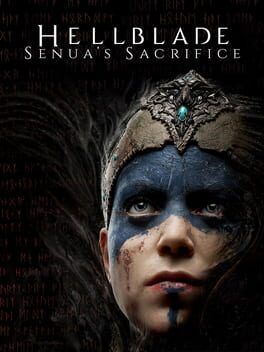

Ninja Theory’s newly announced Senua pivots the Hellblade series from hyper-cinematic corridor to full-blooded action‑adventure, with deeper combat, exploration, and systems while trying to preserve the intimate psychology that defined Senua’s Sacrifice and Senua’s Saga: Hellblade II.
Microsoft and Ninja Theory have been very clear about one thing: Senua is not Hellblade 3. The new action‑adventure revealed at the Xbox Games Showcase 2026 is a continuation of Senua’s story, but it is also a structural reboot of the series that moves decisively away from the tightly scripted, almost filmic approach of the first two games.
Where Hellblade: Senua’s Sacrifice and Senua’s Saga: Hellblade II were about walking a narrow, meticulously authored path, Senua is about handing players a wider set of tools and a world in which to use them. The DNA of the franchise is still there, from the psychological focus to the binaural audio, but Ninja Theory is reshaping that DNA into something that looks much closer to a traditional action‑adventure.
From “cinematic experience” to “out‑and‑out action‑adventure”
Hellblade: Senua’s Sacrifice built its reputation on presentation and subject matter rather than mechanical complexity. Its linear journey through Helheim was sparsely interactive, punctuated by simple environmental puzzles and one‑on‑one duels. Combat felt deliberate, but encounters were limited and heavily staged. The game’s power came from how all those elements framed Senua’s psychosis, not from any systemic depth.
Hellblade II doubled down on that philosophy, leaning even further into cinematic language. Long stretches played more like an interactive film than a game, with heavily choreographed sequences and minimal player agency. Its visual fidelity, sound design, and performance capture were astonishing, but many players came away wishing there were more opportunities to engage with the systems themselves.
Senua is Ninja Theory’s answer to that feedback. Studio head Dom Matthews describes it as an “out‑and‑out action‑adventure” built specifically to offer “more agency and a lot more gameplay.” Internally, the team talks about being additive. They are not throwing away the authored, character‑driven strengths of Hellblade, but layering on the mechanics and structure people expect from a modern premium action‑adventure.
A broader canvas: interconnected world design
The most immediate structural change is how Senua handles space. Instead of the near‑corridor layouts of the first two games, the new project features an interconnected world. This is not being sold as an open world, but as a network of distinct areas woven together with shortcuts, loops, and optional spaces.
That shift matters because it changes how Ninja Theory thinks about pacing and player intent. In Hellblade and Hellblade II, tension and release were almost entirely dictated by the script. Senua walked where the camera wanted her to walk; the player’s job was mostly to keep moving forward. With an interconnected structure, navigation itself becomes a layer of play. Exploration is no longer just admiring scenery between story beats, but a space where players can hunt for secrets, side challenges, and new approaches to combat encounters.
Thematically, that structure also dovetails with Senua’s internal journey. Environments in the series have always reflected Senua’s mind. Now those spaces are less of a straight descent into a single hell and more like a fractured purgatory she can traverse and revisit. Memory, trauma, and choice are represented not just in narrative flashbacks, but in routes taken, paths unlocked, and areas you decide to confront or leave behind.
Combat that finally matches the presentation
Combat was always one of Hellblade’s most striking illusions. Camera work, animation, and sound sold each duel as brutal, yet mechanically the system was relatively barebones. A handful of attack strings, a dodge, a parry, and limited enemy archetypes left little room for experimentation.
In Senua, combat is being promoted from supporting act to core pillar. Ninja Theory is introducing a much deeper move set, a wider range of weapons, and encounters built to let players express themselves moment to moment.
One of the key additions is dual‑wielding. Instead of a single signature blade, Senua can pick up and pair different weapons, each with their own timing and utility. Combined with a dedicated Focus system – special abilities that twist reality based on Senua’s beliefs and state of mind – fights are envisioned as more dynamic problems to solve rather than simple endurance tests.
Positioning and approach are also more flexible. Previews highlight scenarios where players slip into stealth to bypass or isolate targets, grab a heavy weapon from the environment, and then crash back into open combat. Verticality and navigable spaces within arenas mean you are not just circle‑strafing on flat ground, but thinking about where to fight and when to disengage.
Importantly, Ninja Theory says all of this is still choreographed with their usual flair. Their challenge is to stage combat that feels as cinematic as Hellblade’s duels without sacrificing mechanical depth. Senua is the first time the series is attempting to resolve that tension rather than picking one side.
Puzzles and perception elevated from garnish to pillar
The original Hellblade’s puzzles were divisive. Some players loved the way runic pattern‑matching and perspective tricks connected to Senua’s altered perception. Others found the repetition and linear gating frustrating. Hellblade II experimented with a wider variety of environmental illusions, but they still functioned primarily as locks on the critical path.
Senua frames puzzles as a co‑equal pillar alongside combat and exploration. The interconnected world offers more room for multi‑step, location‑spanning problems. Clues can hide in side areas, traversal routes, or optional encounters, rather than always blocking progress at a funnel point.
Mechanically, perception remains central, but not necessarily in the same strict “find the rune in the environment” format. The idea is that Senua’s way of seeing the world informs solutions. Pathways only appear from certain vantage points, threats and allies blur, and memory alters the layout of spaces. Solving a puzzle becomes an expression of how you learn to think as Senua, not just a pattern hunt detached from her condition.
This is one of the most delicate aspects of the shift to a more gameplay‑driven design. The studio has to ensure puzzles feel playful and systemic without turning Senua’s psychosis into a convenient menu of mechanics. Their past work suggests they know that line well, but Senua will test whether they can maintain that sensitivity at a much larger scale.
Preserving the psychological heart amid more systems
If early chatter around Senua frames it as a pivot toward something more like God of War, it is because structurally and mechanically that is where Ninja Theory is headed: a character‑driven action‑adventure with combat depth, exploration, and puzzles. The risk is that in chasing that model, the series could lose what made Senua’s Sacrifice feel so singular.
The team insists that the psychological core is non‑negotiable. Binaural audio still surrounds the player with voices that reflect and distort Senua’s inner life. Collaborations with mental health experts continue, ensuring that hallucinations, delusions, and emotional swings are grounded in lived experience, even as they are exaggerated for dramatic effect.
Narrative focus remains tightly on Senua herself. The new setting, cast, and threats are framed as extensions of her grief, guilt, and search for peace. Even new mechanics like Focus Abilities are justified as manifestations of her beliefs rather than arbitrary superpowers. If Ninja Theory delivers on that framing, Senua could feel less like a genre pivot for its own sake and more like a natural evolution of how the studio expresses her inner world.
A new entry point that still honors the past
Another consequence of the structural reboot is that Senua is being positioned as a standalone entry point. Players are not required to have finished either of the Hellblade games. Story wise, this new journey is set after the events of Senua’s Sacrifice and Hellblade II, but its purgatorial framing and new cast allow it to function as its own arc.
That makes sense given how different the game is from its predecessors. Someone discovering Senua through this more approachable, gameplay‑rich format might never go back to the older titles, but their experience should still make sense. At the same time, returning players are meant to see echoes and consequences of Senua’s previous sacrifices in how she moves through this liminal world.
This dual mandate, to welcome newcomers while rewarding long‑time fans, fits the broader evolution of Ninja Theory itself. The studio that created a self‑funded, digital‑only “independent AAA” experiment in 2017 is now a first‑party pillar in Microsoft’s portfolio. Senua reflects that shift: larger scope, broader systems, and multiplatform reach, but still anchored on a single, deeply human protagonist.
Where the series goes from here
Senua’s announcement does not close the door on more Hellblade‑style experiences. Instead, it suggests Ninja Theory now sees Senua as a flexible canvas. Her story can be told through different structures, from the hyper‑linear descent of the first Hellblade to this broader, more interactive vision of the afterlife.
For the franchise, the move beyond its purely cinematic roots is both a risk and an opportunity. If Ninja Theory can balance their hallmark immersion and psychological authenticity with the demands of a full action‑adventure, Senua could redefine what a “Hellblade game” looks like in the Xbox era. If they cannot, the result might feel like a more conventional character action title wearing Senua’s face.
Either way, this is the boldest reinvention the series has attempted so far. Hellblade proved Ninja Theory could marry production values with taboo subject matter. Hellblade II showed just how far they could push visual and audio fidelity. Senua now has to prove that the studio can deliver all of that while finally letting players take their hands off the rails.