
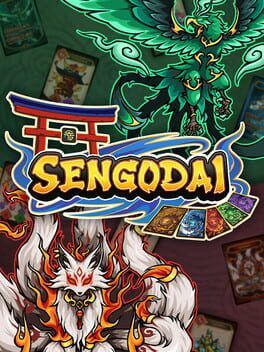

A strategy-focused beginner guide to Sengodai on Android, covering strong early decks, elemental combos, node routing and bosses, plus why its Japanese-mythology spin makes it a great first roguelike deckbuilder on mobile.
Sengodai looks like a cute shrine visit on your phone, but under the soft pixel art is a very real roguelike deckbuilder. Each run you lead an elemental god and a squad of Gokai across branching maps, purifying cursed lands, picking events and merchants, and trying to reach a boss without your deck collapsing under its own weight.
This guide is aimed at new or intermediate mobile players who want practical strategy: how to build strong starter decks, which elemental synergies to lean on, how to read the node map, and how to approach bosses. It keeps spoilers light and focuses on habits that keep paying off run after run.
Understanding Sengodai’s Core Loop on Mobile
Each run follows a clear rhythm. You pick one of the elemental gods, start with a small deck of basic Gokai cards and spells, then move along a node-based map. Battles and events add or evolve cards, merchants sell power spikes or survivability, and you slowly sharpen a simple deck into a focused engine.
Unlike some card battlers that bury you in keywords, Sengodai keeps the language approachable. Elements, buffs and debuffs are cleanly signposted, and your leader god’s ability usually makes it obvious what kind of plan you should be pursuing. That clarity is a big reason it works so well on a phone screen and why it is friendlier than many PC-first roguelike deckbuilders.
Building Strong Starter Decks
Your first priority is not to chase flashy combos but to build a deck that can reliably survive common encounters. Early on, that means doing three things: tightening your card pool, respecting your resource curve and defining a clear primary line of play.
On Android this is even more important, because short play sessions encourage “one more fight” decisions that can go bad quickly if your deck is bloated. When in doubt, refuse mediocre cards, take small consistent upgrades and keep your plan simple.
Keep Your Deck Lean and Focused
New players often grab every interesting Gokai they see. In Sengodai that dilutes your draws and makes it harder to hit the cards that support your leader god’s strength. For your first successful clears, think of your deck in three chunks: a core of damage or scaling cards that define how you win, a set of defensive tools that keep you alive long enough for that core to matter, and a small sprinkling of utility like debuffs or card draw.
If a new card does not strengthen one of those three chunks in a way that fits your element plan, skip it and wait for something cleaner. The game will keep offering you chances to pivot; you do not have to grab every option.
Respect Your Cost Curve
Elemental spells and Gokai cards have different costs and tempo profiles. If you stack your deck with high-impact but expensive plays, the early turns of fights become awkward and you take chip damage that adds up across a run. Try to maintain a healthy mix of low-cost plays that stabilize the board and a smaller number of big hitters that close fights.
A reliable starter structure is to have most of your deck at low or mid cost so you can always do something meaningful on turn one. Then layer one or two heavier cards that you are happy to draw later in the fight once you have set up your element synergies.
Use Evolutions to Consolidate Power
Sengodai’s Gokai evolutions are perfect for mobile players because they compress several small effects into one upgraded card. Whenever you can, use evolution options to merge roles inside a single card. For example, combining modest damage and a small shield into one evolved Gokai is often better than keeping two separate, weaker cards in your deck.
Treat evolutions as a chance to trim. Whenever you evolve a Gokai, check if there is a similar or strictly worse card you can remove at the next opportunity. The aim is a deck where every draw feels either on-plan or at least never dead.
Elemental Synergies: Playing to Each God’s Strength
Each elemental god in Sengodai gently nudges you toward a certain archetype without locking you in. As a mobile newcomer, it is smart to follow those nudges instead of fighting them, because the synergies are clear and forgiving.
Below are broad patterns you can look for with the main elements. Exact card names vary as you unlock more content, but the roles and synergies stay consistent.
Fire: Aggressive Pressure and Burn
Fire-focused decks are built to end fights quickly. Fire Gokai are often about raw damage and applying debuffs that snowball if enemies stay alive too long. Key ideas are stacking repeat damage effects and using cheaper support cards to push that damage through.
A strong beginner Fire plan is to pick a small number of heavy hitters and then fill the rest of your deck with cards that either increase their damage or let you play them more often. Do not turn a Fire deck into a half-hearted control list. Your defense should be just good enough to survive early turns while you burn through enemies in a few big swings.
Fire pairs well with elements that bring soft control. If you have tools that slow enemies, that extra time lets your burning effects tick down their health while you commit fewer cards to each fight.
Water: Control, Defense and Scaling
Water decks reward patience. Their Gokai bring healing, shields and status effects that blunt enemy turns. Rather than racing to end every fight on turn three, a Water-led team gradually outvalues the enemy.
For mobile players who like a safer approach, Water is a great early main element. The key is not to overdo the defensiveness. You still need reliable ways to actually finish fights, which often come in the form of spells that scale in damage based on previous Water plays or debuffs.
Look for lines that loop between protection and payoff. It is fine if your damage cards feel average at first, as long as your defense buys the turns they need to reach full strength.
Earth: Durable Boards and Long Fights
Earth leans into sturdiness. Earth Gokai typically offer higher baseline stats and effects that reward staying in a fight. You are happiest in battles where you can set up a stable formation and gradually grind enemies down.
A good starter Earth deck focuses on a few chunky Gokai that stay on the board and a set of spells that either buff their stats or make it costly for enemies to attack. Evolutions that add passive armor or reactive damage are especially valuable, because they make every enemy action a trade in your favor.
Earth combines well with elements that add card draw or targeted removal. Your inherent tankiness lets you afford a couple of situational cards that solve problem enemies, which is a big help versus late-stage elites and bosses.
Air and Lightning: Tempo, Tricks and Burst
Quick, tricksy elements favor players who like to pivot mid-fight. Air and lightning themed Gokai often manipulate turn order, snipe vulnerable targets or generate resources that let you chain plays.
For your first runs, approach these elements as support packages rather than full identities. Add Air or lightning cards that clearly enhance what your main element is doing instead of trying to juggle multiple win conditions. A single card that resets a key cooldown or draws into your core combo can be more valuable than several flashy but disconnected plays.
As you become more comfortable reading fights on the small screen, you can lean harder into these faster elements and build decks where tempo itself is the win condition.
Approaching Node Routes: Reading the Map Like a Tactician
Every world in Sengodai is structured as a branching path of nodes. For each leg of your journey you will typically choose between regular fights, elite encounters, events, merchants and rest-style spaces. Learning how to read that map is just as important as building the deck itself.
On Android, this map view is quick to check during a commute or short break, so get into the habit of zooming out and planning two or three nodes ahead rather than simply tapping the next glowing icon.
Value Fights and Elites by Your Current Power
Normal fights are your bread and butter. They give you chances at new cards and incremental rewards. Elites, on the other hand, are where serious upgrades and relic-style bonuses often come from, but they punish weak decks harshly.
If your early pickups have given you a clean plan and your health is high, prioritize paths that include at least one elite before the midpoint of the world. The rewards usually justify the risk. If your deck feels clumsy or your health is already chipped, instead steer toward safer fights and events that may offer healing or card removal.
The trick is to avoid back-to-back high-risk nodes unless you know you have both the HP buffer and the right tools for those specific enemy types.
Merchants and Card Removal as Route Anchors
Merchants are the best places to repair a messy run. They let you remove weak cards, buy strong Gokai or spells and sometimes pick up relics that define the rest of your journey. When you see merchant icons on the map, treat them as anchors and ask yourself which path arrives there in the healthiest state.
If your early card rewards have been mediocre, prioritize routes that pass at least one merchant before the final stretch. Go into these visits with a mental shopping list: which two cards are dragging your deck down, which slot you would like to fill with a premium card and whether any relics would supercharge your current synergy.
Events and Risk Management
Events are the wild cards in Sengodai’s mapping. Some are pure upside, others are trade-offs, and a few are basically tests of how much you value your current stability. On your first run or two it is fine to experiment, but as you learn the patterns, treat risky events as tools for runs that are already strong rather than lifelines for weak ones.
If your deck feels fragile, take events that offer clear, low-cost benefits or information. Skip options that demand big chunks of HP or multiple curses just for the chance at a high roll. If your run is already powerful, you can afford to gamble on events that might push it into truly broken territory.
Rest and Recovery Nodes
Rest-style nodes or their equivalents are tempting to tap whenever you are low on health, but upgrading key cards is just as important. A good rule on mobile is to rest when you are at high risk of dying in the next two encounters, and otherwise spend those opportunities upgrading your best scaling or payoff cards.
Remember that upgrades are permanent for the rest of the run. Healing keeps you on life support, but upgrades change the ceiling of what your deck can achieve.
Boss Strategy: Building for Their Patterns, Not Just Their Health Bar
Bosses in Sengodai are the practical exam for your deck. Each elemental god you face as an enemy has its own rhythm. Some ramp up damage quickly, others build toward a huge telegraphed attack or create waves of adds that can overwhelm you if ignored.
Because you cannot easily memorize every pattern on your first mobile sessions, build for flexibility. Focus on three pillars: consistent damage that does not depend on a perfect draw, at least one strong defensive or mitigating tool that can blunt big turns and a way to recover tempo if the boss floods the board.
In practical terms this means not leaning entirely on narrow synergies. It is fine to have a combo that explodes for huge damage, but make sure the individual pieces are still reasonable when drawn out of order. Similarly, do not rely on a single defensive card to save you; try to have multiple layers of protection, such as block, healing or enemy debuffs.
Before stepping onto the boss node, check your remaining path. If there is a merchant or event just before the boss, think of that as your last chance to patch glaring weaknesses like area-of-effect damage or a lack of scaling.
Why Sengodai Works as a First Roguelike Deckbuilder on Mobile
There are many deckbuilders on Android, but Sengodai’s specific blend of Japanese mythology and clear mechanics makes it unusually approachable, especially if this is your first time with the genre.
The Japanese myth theme does more than decorate the cards. Framing your leader as a kami and your team as Gokai gives every run a small narrative hook: you are a guardian spirit, cleansing cursed lands. That context makes status effects and elemental interactions easier to remember, because they align with familiar folk logic like fire purifying corruption or water soothing and shielding.
Visually, the game avoids clutter. The pixel-art shrines, spectral landscapes and yokai-inspired monsters are readable at a glance on a phone screen, so you spend less effort deciphering art and more energy thinking about your next play. The UI is built around touch, with large icons and straightforward tooltips, which lowers the barrier to entry compared to PC ports that cram dense text into small windows.
Structurally, Sengodai also respects mobile time. Runs are short enough to play in a commute or two, node choices are digestible, and there are no ads or grinding microtransaction layers cutting into your focus. That makes it much easier to learn from failure, which is the heart of roguelikes: you die, you see what your deck was missing, you jump into another run with a clearer idea.
For players curious about the genre but intimidated by its reputation, Sengodai’s mix of mythic flavor, readable elements and forgiving early difficulty curve makes it a welcoming doorway. Start with a focused elemental plan, keep your deck lean, route toward merchants and manageable elites, and you will quickly find yourself pulling off runs that feel clever without demanding perfect play.
If you build around those principles, every new Gokai, spell or god you unlock on Android becomes an invitation to try a different style of play, without losing the approachable structure that makes Sengodai stand out.