

With its ‘Super Game’ live-service initiative canceled, Sega is pivoting back to premium, legacy IP. Here is how Crazy Taxi, Jet Set Radio, Golden Axe, and Streets of Rage can thrive in today’s market, and which franchises have the best shot at a real revival.
Sega has quietly made one of its biggest strategic pivots in years. The long-teased “Super Game” initiative, once pitched as a revolutionary, community-driven live-service platform, is officially canceled according to the company’s latest financial report. In its place Sega is redeploying more than 100 developers from struggling free-to-play and mobile projects back into traditional, “full” game development built around its classic IP.
Crucially, that means the publisher’s planned revivals of Crazy Taxi, Jet Set Radio, Golden Axe, Shinobi, and Streets of Rage are still in active development. Rather than serving as pillars of a vague live-service mega-project, these games now sit at the core of Sega’s refocused strategy on premium, recognizable brands.
For players, this is exactly where Sega’s real strength has always been. The question now is not whether these series are coming back, but how they can be reshaped to thrive in a market dominated by open worlds, cross-play, and constant content updates without losing what made them special in the first place.
From “Super Game” To Super Nostalgia
When Sega first talked about Super Game back in 2022, executives framed it as a single, enormous project that would attract more active users than any previous Sega title. It was supposed to be “revolutionary,” built around streamers, long-tail engagement, and a huge online community. The details never really solidified, but the tone was clear: Sega wanted its own tentpole live-service ecosystem.
That vision ran headfirst into reality. Multiple free-to-play efforts, from Sonic live-service experiments to underperforming Angry Birds projects at Rovio, failed to meet expectations. The financials told the story, and the company responded by abandoning Super Game and scaling back its emphasis on live-service design.
The shift is not just about cutting losses. Sega’s report explicitly calls out a renewed focus on “mainstay IP,” which is corporate shorthand for a very simple idea: people care about Sega’s classics. With retrogaming culture surging, collections selling well, and premium revivals like Streets of Rage 4 performing strongly, the company has a clearer path to sustainable success in polished, self-contained releases than in chasing the next forever-game.
That is the context into which the new Crazy Taxi, Jet Set Radio, Golden Axe, and Streets of Rage must now launch.
Crazy Taxi: Chaotic Arcade Energy In An Open-World Era
Crazy Taxi is the most radical of Sega’s announced reboots. Public job listings and interviews have described it as a large-scale, open-world, massively multiplayer driving game built in Unreal Engine. Even with the Super Game banner gone, the DNA of big online ambition is still obvious.
The challenge is turning that ambition into something that respects Crazy Taxi’s identity. The original games were pure arcade adrenaline: short runs, aggressive timers, exaggerated physics, and a focus on spectacle over simulation. Players chased leaderboards and routes, not battle passes.
There is an opportunity here to modernize that formula without drowning it in live-service baggage. A smart reboot could use online features to amplify competition rather than obligation. Large shared hubs full of chaotic taxis weaving through a stylized city, dynamic events where dozens of players race to scoop up VIP fares, and asynchronous leaderboards tied to neighborhoods and routes would keep the energy high without requiring endless grind.
Monetization will define how players perceive it. A premium price with optional cosmetics and seasonal events would fit Sega’s new focus better than a full free-to-play model with heavy progression locks. The ideal version of modern Crazy Taxi feels like a spiritual cousin to Forza Horizon’s festival vibe, but tuned toward short, intense runs that respect the player’s time.
If Sega can nail that balance, Crazy Taxi has real breakout potential. The concept is simple, readable on a stream in seconds, and perfect for quick sessions. In a market that often demands dozens of hours before a game “gets good,” a loud, unapologetically arcade driving game could stand out.
Jet Set Radio: Style, Community, And The TikTok Generation
Jet Set Radio might be Sega’s most culturally valuable card. The Dreamcast original built a cult following on the strength of its cel-shaded art, hip hop and electronic soundtrack, and anti-authoritarian attitude. Today, its look feels more relevant than ever, with social feeds full of graffiti art, skating clips, and dance edits.
Sega has already confirmed that creators from the original game are involved in the new Jet Set Radio, which is crucial for tone. If Crazy Taxi is about moment-to-moment chaos, Jet Set Radio is about vibe. Any modern reboot has to lean hard into expression.
A contemporary Jet Set Radio can do what the original only hinted at. Deeper character customization, a robust graffiti editor with easy sharing tools, and online hubs where players can flex outfits and tags would plug directly into modern social culture. The trick is to frame this as creativity rather than as an item shop catalogue.
Structurally, it makes sense to treat Jet Set Radio as a story-driven, semi-open city game first and a light social platform second. Hand-crafted districts, evolving police presence, and rival crews would give the game a clear narrative arc. Optional co-op tagging runs, trick competitions, and time-limited street events could sit on top as replayable content.
Music will be the make-or-break element. The original soundtrack is legendary, but licensing the exact same tracks at scale is difficult. Sega needs a strong, curated mix that feels as forward-looking now as the original did in 2000, ideally with a blend of returning artists and new voices. A seasonal or rotating radio format could keep the game feeling alive without requiring the typical live-service grind structure.
Jet Set Radio is not as instantly mainstream as Crazy Taxi, but in an era where “style games” like Hi-Fi Rush and Bomb Rush Cyberfunk earn passionate followings, it may have the strongest brand identity in Sega’s slate. If the reboot embraces modern creation tools while staying premium-first, it can become Sega’s flagship expression of culture, not just nostalgia.
Golden Axe: Bringing ‘80s Fantasy Into A Post-Elden Ring World
Golden Axe is the most traditional of Sega’s picks, and on paper the riskiest. The original arcade brawler was a product of its time, built around simple lane-based combat, big enemy crowds, and co-op fantasy mayhem. The genre has evolved dramatically since then, and audiences now expect either deep combat systems or a strong narrative hook.
That is also the opportunity. A modern Golden Axe could bridge the gap between classic belt-scroller design and contemporary action RPGs. Think of a more focused, co-op driven alternative to sprawling open worlds. Tight, linear stages with branching paths, light loot systems, and skill-based character builds could preserve the arcade pacing while acknowledging that players today want depth and replayability.
Visually, Golden Axe is poised to benefit from the current appetite for high fantasy. A grounded but colorful art direction, brutal spell effects, and screen-filling beasts to ride into battle would distinguish it from the darker tone of many modern fantasy games. Cooperative play is essential here, with drop-in online and local support as a baseline.
Sega will need to decide whether Golden Axe skews closer to a premium, replayable campaign or a more live-style “beat them up forever” platform. Given Super Game’s demise and the audience’s clear appetite for contained, high-quality experiences, a substantial campaign with optional challenge towers, boss rushes, and post-launch expansions feels like the smartest path.
If executed well, Golden Axe will not be the biggest seller among Sega’s revivals, but it can carve out a strong niche among fans of co-op action and nostalgic fantasy.
Streets Of Rage: The Blueprint That Already Works
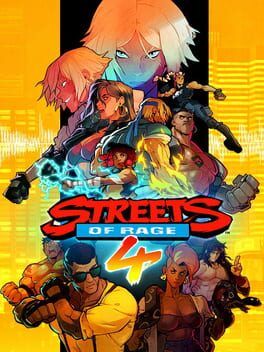
Unlike Golden Axe, Streets of Rage has already proved it can thrive in today’s market. Streets of Rage 4, developed by DotEmu, Lizardcube, and Guard Crush Games, was a textbook example of how to modernize a classic. It kept the side-scrolling beat em up core, layered in expressive combo systems, and wrapped everything in a bold, hand-drawn art style. Critically and commercially, it landed.
That makes Streets of Rage the safest and arguably strongest comeback bet among Sega’s highlighted IP. The brand is fresh, the gameplay loop is understood, and there is a clear appetite for more.
A Sega-led new entry can follow two paths. The first is evolutionary: expand on Streets of Rage 4’s template with more intricate level design, deeper character progression, and broader online infrastructure, including ranked co-op challenges and seasonal score-attack events. The second is more radical: integrate semi-3D movement or hub-based structure while still resolving fights in classic lanes.
Whichever direction Sega chooses, the franchise is almost tailor-made for the current “premium plus” model. A core campaign, robust arcade and boss-rush modes, and a steady trickle of character DLC or challenge packs would keep the game relevant without turning it into a full live-service commitment. Because the beat em up format is inherently session based, players can dip in and out between larger tentpole releases.
Importantly, Streets of Rage shows Sega something broader about its catalog. You do not have to reinvent a classic beyond recognition. Sometimes the winning move is to respect the original structure and invest in modern polish and content density.
Ranking Sega’s Revival Potential
Looking across Sega’s legacy slate, the announced revivals show different strengths in today’s market:
Crazy Taxi has the most mainstream upside. Its premise is instantly readable, and if Sega can position it as a high-energy, session-friendly driving playground with smart online features rather than a grind-heavy service, it could reach a broad audience across console and PC. The risk lies in how much of the inherited live-service DNA survives from its Super Game-era conception.
Jet Set Radio has the strongest cultural and stylistic pull. It is the game most likely to generate social buzz, fan art, and music discourse. With modern creation and sharing tools, it could become Sega’s most beloved revival even if it does not sell the most copies, especially among younger players who value expression over raw content volume.
Streets of Rage has the clearest proven formula. Thanks to Streets of Rage 4, Sega knows exactly what a successful modern entry looks like. A new mainline game can push that blueprint further while leaning into co-op, challenge modes, and high skill ceilings for enthusiasts.
Golden Axe has the steepest hill to climb, but also a real shot at filling a niche. A co-op first fantasy brawler with tight, replayable levels and light progression could appeal to players who love action games but do not have time for 100 hour RPGs.
Together, these four series give Sega a portfolio that hits multiple tastes: arcade chaos, style-forward action, fantasy co-op, and pure brawling.
Sega’s New Old Future
Canceling Super Game is more than cutting a project. It is a recognition that Sega’s competitive edge does not lie in copying the biggest live-service hits but in embracing what only Sega can do. That advantage is a deep bench of beloved, highly readable arcade and console IP that translate well into focused, premium experiences.
Modern markets still reward live-service hits, but they are brutal to chase. The middle tier is where many publishers now see opportunity: games that are big enough to feel substantial, priced up front, and supported with thoughtful updates instead of endless seasons. Sega’s pivot toward classic IP fits squarely into that space.
If the new Crazy Taxi, Jet Set Radio, Golden Axe, and Streets of Rage arrive as confident, self-contained games that respect players’ time and the spirit of their originals, Sega’s future might look a lot like its past in the best possible way. Not as a hardware maker or a service platform, but as the company that understands how to turn simple, striking ideas into games people remember for decades.