
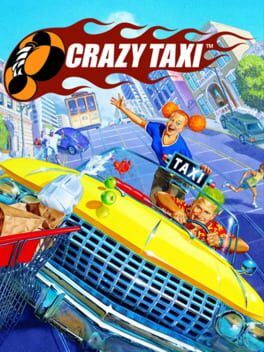

After seven silent years, Crazy Taxi’s social accounts have roared back to life. Here’s what that nostalgic tease signals for Sega’s reboot and its new era of classic arcade revivals.
If you were there in the late 90s and early 2000s, you can probably still hear it. The Offspring blaring over crunchy speakers. The shout of “Let’s make some crazy money!” as the attract mode looped in the local arcade. The way your heart rate spiked the moment the countdown started and the city opened up in front of you.
For a certain generation of players, Crazy Taxi is not just a game. It is the smell of cigarette smoke in a dim arcade, the weight of a Dreamcast controller, and a time when score-chasing made you forget entire afternoons. Which is why a five second teaser on social media has hit harder than a full trailer for many modern blockbusters.
After seven years of silence, the official Crazy Taxi X account flickered back to life this week. No gameplay. No logo. Just the iconic yellow cab roof light slowly powering on. It might be the smallest tease Sega could possibly have given, but for fans of its arcade heritage, that tiny animation feels like a siren.
A tiny teaser loaded with history
According to reports from Video Games Chronicle, Push Square and Wolf’s Gaming Blog, this is the first post on the Crazy Taxi social account since 2019. The message is simple, almost cryptic, but the imagery could not be more direct. The camera lingers on the taxi light that anyone who has ever sprinted through Crazy Taxi’s traffic-clogged streets will instantly recognize. The city around it is indistinct, but the vibe is unmistakable.
There is an unspoken promise in that shot. The light is off, then it turns on. For a series that has been dormant in terms of new mainline entries since Crazy Taxi 3: High Roller more than twenty years ago, that feels like Sega saying not just that a game is coming, but that a whole idea of arcade play is about to wake up again.
This is not the first we have heard of a new Crazy Taxi. Sega formally announced a revival at The Game Awards 2023, framing it as part of a broader return to its classic IP. Since then the company has confirmed that development is being handled by Sega Sapporo Studio, a relatively new team founded in 2021. Early recruitment materials and a 2024 developer video, highlighted by multiple outlets, suggested an ambitious direction: a large scale, open world online take on Crazy Taxi’s pick up and drop off formula, with original director Kenji Kanno advising.
Yet for all that big picture talk, the first thing Sega chose to put in front of players again was not a massive multiplayer city or a slick CG trailer. It was the taxi light.
Nostalgia as the front door, not the whole house
The way Sega has chosen to reawaken Crazy Taxi’s social presence says a lot about how it is trying to thread the needle between old and new. Crazy Taxi is a game built on immediacy. Drop in, grab a fare, floor it, improvise a route, squeeze between buses by a pixel, drift into the destination, and do it again. No exposition, no preamble, just pure feedback.
The teaser hits the same notes. No text beyond a short caption. No explanation of mechanics or modes. Just a visual trigger that short-circuits straight to memory. It is calculated, but it is also smart. Before Sega sells anyone on an open world, on cross platform online infrastructure, or on whatever monetization model this new project might use, it has to sell the feeling that Crazy Taxi still is Crazy Taxi.
That is where the social revival becomes more than a marketing beat. For the past decade Sega’s relationship with its own arcade legacy has been uneven. We have seen reissues on digital storefronts, the Sega Ages line, occasional compilations, but also long stretches where foundational names like Jet Set Radio, Golden Axe and Crazy Taxi felt more like nostalgic merch brands than living game series.
Flipping the Crazy Taxi account back on is an admission that the emotional connection still matters. The company is not just promoting “a new Sega driving game.” It is speaking directly to the people who remember the original cabinet’s distinctive yellow, the way the Dreamcast port became the third best selling title in the US, and the specific rhythm of weaving through a city that was really a high score puzzle disguised as a traffic jam.
What this signals for the reboot itself
Of course, nostalgia is only the opening act. Behind the cozy glow of that taxi light lies a more complicated design challenge. Recent recruitment videos and past reporting have described the new Crazy Taxi as a multiplayer, open world experience, at one point even pitched internally as part of Sega’s now cancelled “Super Game” initiative. More recent corporate communication has stepped back from that branding, but not from the ambition.
The new Sega strategy, laid out in financial briefings and echoed in coverage from outlets like Eurogamer and Push Square, is to take classic IP and scale it up for a modern audience. The aim is not just to remake an arcade game at a higher resolution, but to turn it into something that can live for years.
For Crazy Taxi, that likely means a city designed to be shared. Multiple drivers vying for fares, dynamic traffic patterns tuned for emergent chaos, and systems that support long term progression instead of just three minute bursts. Context from older recruitment material mentioned a “theme park like” city, a phrase that fits naturally with what Crazy Taxi has always been. The original games were essentially roller coasters built out of asphalt and intersections.
What the social teaser clarifies is Sega’s realization that it cannot simply chase scale and forget character. Crazy Taxi without the attitude, without the instant readability of a bright yellow cab and the buzz of a ticking timer, would be just another car game. The emphasis on the taxi light in the first piece of marketing suggests a conscious attempt to reassure fans who may have been wary when they heard words like “online” and “open world.”
In other words, Sega is hinting that no matter how large the new city becomes, it still starts with you, a taxi, and a ticking clock.
A new phase in Sega’s arcade revival playbook
Crazy Taxi is not returning alone. In the last couple of years Sega has outlined a broader roadmap of legacy revivals that includes Jet Set Radio, Golden Axe, Streets of Rage and Virtua Fighter. Some are re-imaginings, some sit closer to remakes, but together they form a strategy that looks very different from the piecemeal retro collections of the past.
The pattern that is emerging is one of selective elevation. Sega is treating certain arcade born series as pillars that can anchor major releases over the next few years. Corporate filings cited by Push Square have mentioned plans to launch several “mainstay IP” titles between now and March 2027, and those lists explicitly include Crazy Taxi alongside its peers.
Viewed in that light, the reactivation of Crazy Taxi’s social channels is also a test case. How do you reintroduce a property that has not had a truly new entry in over two decades to a landscape dominated by live service juggernauts and open world epics, without alienating the people who kept the memory alive?
So far, Sega’s approach has leaned into personality. Jet Set Radio’s comeback messaging has focused on style, street art and music. Golden Axe has been framed as a return to heavy metal fantasy brawling. In each case, social media teases have emphasized tone and identity more than systems. Crazy Taxi’s little roof sign fits perfectly into that trend.
It is a reminder that these series originally thrived because they were immediately legible and distinct. You did not need a tutorial to understand what Crazy Taxi wanted from you. The screen screamed it in your face: get in, drive fast, cause chaos, deliver the passenger. Reviving that clarity of purpose is as important as any new feature set.
The tension between arcade purity and modern expectations
At the same time, the modern market will not support a one mode, one city, single player only release at the scale Sega is now aiming for. Players expect content breadth, replay structures that stretch beyond simple score chasing, and some form of online integration. The question, then, is not whether Crazy Taxi will change, but how.
The open world multiplayer rumors point toward a structure where dozens of players share the same map, possibly competing to scoop up AI passengers or even player controlled fares. Daily challenges, rotating events, and cosmetic customization feel almost inevitable elements of a game trying to live as a platform.
The risk is dilution. Crazy Taxi works because every second counts and the space is designed around escalating close calls. That is harder to preserve in a sprawling environment where chaos comes from other players as much as from the level design. Sega Sapporo Studio has to find a way to keep each run as tight and readable as the framed streets of the original.
The social tease, though, is a subtle statement that the team understands the heart of the series. By choosing not to open with a vast skyline or a large cast of player avatars, it instead centers the tool you use to interact with that world. The taxi is the instrument, the timer is the metronome. Everything else, no matter how modern, should orbit around that core.
Why this moment hits so hard for Dreamcast kids
Part of the reason this five second clip has caused such a stir is timing. Many of the people who pumped coins into Crazy Taxi cabinets are now in their 30s and 40s, with the disposable income and nostalgia appetite that every publisher chases. Sega has spent years carefully, sometimes clumsily, learning how to talk to that audience. It has found success with Sonic, both through games and transmedia, but its broader arcade legacy has often felt underused.
Crazy Taxi offers something slightly different from platforming mascots or narrative franchises. It encapsulates a particular arcade ethos: games built to be learned in seconds and mastered over a lifetime, that reward aggression, risk and flow rather than grinding or checklists. Bringing that spirit into 2026 without sanding off all the weird edges is an opportunity to stand apart from other open world racers.
For those who grew up timing their jumps off freeway ramps and memorizing the exact moment to cut across an intersection, seeing that taxi light flip back on is a hint that Sega has not forgotten them. It recognizes that these games are not just back catalogue entries to be bundled and discounted. They are touchstones with emotional charge.
That is why a silent social feed suddenly pulsing with life matters. It is a signal that the company is ready to talk to that community again, not just at them.
Where Crazy Taxi fits in Sega’s future
Looking across Sega’s announced roadmap, you can start to see Crazy Taxi’s role. Jet Set Radio can carry the banner for style first, culture heavy gaming. Golden Axe and Streets of Rage cater to the resurgent appetite for co op brawlers and action. Virtua Fighter brings competitive depth and e-sports potential. Crazy Taxi, if Sega plays it right, becomes the flagship for score driven, session based chaos.
That portfolio is not accidental. Sega is rebuilding a stable of distinct flavors rather than a row of similar open world action titles. It is a bet that variety, fueled by decades of arcade design DNA, can still cut through if those older ideas are wrapped in modern infrastructure.
In that context, bringing Crazy Taxi’s social channels back from the dead and leading with a single, nostalgic image is both a marketing move and a mission statement. It says: we remember what made this special. We want you to remember it too. And when we finally show you the new game, we want you to judge it not just as another online racer, but as a continuation of the thing you loved.
Until Sega actually shows footage, that roof light is all we have. But for now it is enough to spark a thousand memories of squealing tires and impossible shortcuts. The streets are still empty, the fares are still waiting, and the countdown has not started yet. Somewhere inside Sega Sapporo Studio, though, the meter is running.