
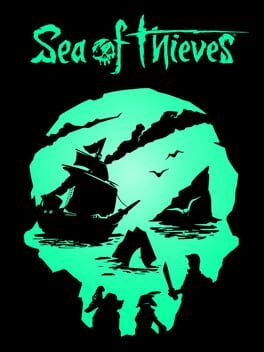
Microsoft is turning Sea of Thieves into a live‑action film. Here is what that adaptation signals about the game’s enduring popularity, Xbox’s transmedia push, and what long‑time pirates will expect from a big screen voyage.
Microsoft and Rare are finally doing what always felt inevitable: turning Sea of Thieves into a live‑action feature film. The project, revealed via Entertainment Weekly and confirmed by Microsoft, is being produced by Destin Daniel Cretton, best known for Marvel’s Shang‑Chi and the Legend of the Ten Rings and the upcoming Spider‑Man: Brand New Day. It is one of more than a dozen game adaptations Xbox currently has in development.
For a seven‑year‑old pirate sandbox that launched as a curiosity and quietly grew into a pillar of the Xbox ecosystem, that move says a lot. A Sea of Thieves movie is not just a piece of brand synergy. It is a statement that Rare’s shared‑world experiment has become a flagship franchise that Xbox wants to push far beyond the tavern.
A movie that only exists because the game never died
The most important context for this adaptation is that Sea of Thieves is still thriving. Since its 2018 launch on Xbox One and PC, the game has ridden a long tail instead of a launch spike. Rare has layered on new Tall Tales, the A Pirate’s Life collaboration with Disney’s Pirates of the Caribbean, seasonal updates, and even a recent PlayStation 5 release that opened the seas to a fresh audience.
Microsoft has openly framed Sea of Thieves as an “evergreen” title. Engagement has remained strong enough that, in a crowded live service landscape where projects regularly shut down after a year, Rare has instead expanded the game across platforms and regions. You do not greenlight a film based on a multiplayer sandbox unless your data says people will still be sailing when the credits roll in theaters.
The timing matters. After years of steady growth, a big screen adaptation functions as a new on‑ramp. It can remind lapsed players that their ship and cosmetics are still there, and it can pitch the fantasy of ‘grab some friends and be these pirates’ to viewers who have never touched an Xbox pad. In that sense, the film is marketing, but it is also validation for a community that kept the game afloat.
Turning a player‑driven sandbox into a story people can watch
The real challenge of a Sea of Thieves movie is that the game barely has a traditional protagonist. As Xbox’s Matt Booty told EW, the main character is the player and the community. In the game, you create a pirate, pick a ship, and make your own stories. NPC factions and lore exist in the margins, but the magic comes from a cursed chest exploding at the wrong time while another crew stalks the horizon.
That makes Sea of Thieves a very different adaptation task from Halo or Gears of War. There is no Master Chief or Marcus Fenix waiting to be cast. Cretton and Rare will have to build a crew from scratch that still feels like Sea of Thieves. The tone is easier than the plot. Sea of Thieves is not gritty naval warfare. It is slapstick cannonballs, drunken shanties, cursed gold, skeleton lords, kraken attacks, and one moment of quiet sunsets between disasters.
For the film to work, it will need to turn that energy into a character‑driven caper rather than a straight lore dump. Players are used to sessions where betrayal, unlikely alliances, and dumb luck dictate the emotional beats. The best case scenario is a movie that feels like a night on the servers, just compressed into two hours with a script.
Fan expectations: vibes first, canon second
The Sea of Thieves community is not asking for a beat‑for‑beat retelling of specific Tall Tales. What players care about is whether the film captures the feeling of improvisation and camaraderie that defines a good voyage.
They will want to see the familiar touchstones. Skeleton crews that feel as goofy and menacing as they do in game. Outposts that resemble the social hubs players know, full of shady merchants and gossiping pirates. The Gold Hoarders, Order of Souls, and Merchant Alliance represented in a way that rewards fans without confusing newcomers. And of course, the big sea threats, from the kraken and megalodon to cursed forts and swirling world events.
More subtle but just as important is the game’s sense of humor. Sea of Thieves is a cartoonishly bright world where pirates play banjo on the bow as cannon fire rains around them. It thrives on visual gags like bucket brigades bailing out a sinking hull or a crewmate stuck in the brig for “crimes” like playing badly. Translating that into live action without sliding into parody will be one of Cretton’s biggest tonal tests.
Fans will also be watching how the movie treats player freedom. Obviously viewers cannot steer the ship, but the story can be built around choices and consequences that feel like something a real crew would cause. A clumsy decision that spirals into a multi‑faction chase. A greedy risk that awakens a supernatural threat. Those are the kind of arcs that read as authentic to anyone who has ever lost a stacked haul because someone lit the wrong gunpowder barrel.
Sea of Thieves as a test case for Xbox’s transmedia push
The Sea of Thieves film sits inside a much larger strategy. Xbox is now openly pursuing a slate of film and TV adaptations across its catalog. Sea of Thieves joins a lineup that includes Halo, Gears of War, and other projects at various stages of development.
Choosing Rare’s pirate sandbox as one of the first big screen bets sends a signal about how Microsoft views the brand. It is not just filler in Game Pass. It is a core pillar alongside hardware and flagship single‑player series. That status carries practical implications, from budget and marketing support for the ongoing game to how protected Rare might be amid industry layoffs.
Transmedia is also a way for Xbox to hedge against the volatility of live service games. If Sea of Thieves becomes a recognizable film property, it can pull people back into the game long after the usual lifecycle would slow, and it gives Xbox a piece of IP that can live on even if the online population someday declines. Every successful cross‑medium loop makes the brand harder to kill.
What this could mean for the live game
If the adaptation hits, Rare will have a rare opportunity to synchronize the film and the game in ways that go beyond simple cosmetic tie‑ins. The studio already has experience blending external IP, thanks to its Pirates of the Caribbean crossover. That event proved players are open to cinematic flavor as long as it respects the core identity of the seas.
In the build‑up to release, it is easy to imagine a season themed around the film. New Tall Tales featuring the movie’s crew. Time‑limited voyages that recreate key set‑pieces. Earnable cosmetics that let fans dress as the film’s leads or fly their flag. Used correctly, this kind of synergy can feel like a community celebration rather than an advertisement.
Long term, a successful film should lead to more investment in Sea of Thieves as a platform. That could mean more elaborate story arcs, upgraded tools for player‑created events, or even tech improvements that keep pace with new consoles. A bigger mainstream audience also creates pressure to improve onboarding, tutorials, and social tools so that moviegoers who decide to try the game do not bounce off the difficulty curve or the sometimes harsh realities of open crew matchmaking.
Rare’s legacy and the expectations behind the wheel
Rare has always carried a certain prestige in the eyes of longtime Xbox and Nintendo fans. From GoldenEye and Banjo‑Kazooie to Viva Piñata, the studio’s work has been defined by strong art direction, playful mechanics, and a willingness to be weird. Sea of Thieves is arguably the purest expression of that spirit in the modern era.
A live‑action movie therefore represents more than just an adaptation of a popular online game. It is a public test of whether Rare’s sensibilities can translate to another medium without being sanded down. Veteran players will be looking for that distinctive mix of warmth, mischief, and melancholy that surfaces in the game’s music and sunsets as much as its slapstick chaos.
If Xbox and Cretton manage that, the payoff could be big. Sea of Thieves would gain a new generation of fans who first meet it in a theater, then log on and discover that the real star has always been the unpredictable “you” at the helm of a creaking galleon. For Rare, it would confirm that its modern flagship is strong enough to roam far beyond the digital horizon while still feeling like a home port for the community that built it.
Whatever course the film ultimately charts, its very existence proves something that players have believed for years. Sea of Thieves is no experiment or side project. It is one of Xbox’s defining worlds, and now it has the chance to prove that on the biggest screen of all.