
How Sea of Remnants’ closed alpha blends arcade ship combat, on‑foot RPG exploration, and its weird puppetfolk cast into something distinct from Sea of Thieves and Skull & Bones – and which early systems look most crucial for long‑term replayability.
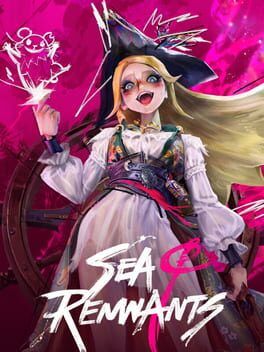
NetEase and Joker Studio are not shy about which waters Sea of Remnants is sailing into. On paper, this is another colorful pirate game with co‑op, ship battles, and an open sea full of loot. In practice, the closed alpha reveals something that sits much closer to a turn‑based RPG stitched onto a naval action layer, starring a cast of unnervingly charming puppetfolk rather than the usual grizzled buccaneers.
Those differences are exactly what might let it carve out space next to Sea of Thieves and Skull & Bones, instead of getting swept under by them.
A puppetfolk pirate story instead of a faceless captain
The most immediate separation from Rare and Ubisoft’s takes on piracy is who you are and how the game treats that identity.
Sea of Thieves and Skull & Bones both lean into the fantasy of being a pirate, but they keep your captain largely blank. You are an avatar, a cosmetic shell that exists to hoist sails and fire cannons. Sea of Remnants instead casts you as a specific being: a puppetfolk sailor, literally made of wood and cloth, who wakes up adrift with no memories.
The closed alpha wastes little time establishing that this isn’t a grounded Caribbean swashbuckler. You tumble through a surreal waterfall and moonlit portal and wake up in a world where every person is a stylized marionette with painted eyes, porcelain faces, and mismatched outfits. The protagonist’s amnesia is a familiar hook, but it pairs well with that unsettling doll aesthetic, and the writing leans into it by immediately introducing RS, a chaotic puppet pirate who feels like a co‑lead more than a quest‑giver.
Where Sea of Thieves builds personality almost entirely through player antics and cosmetics, and Skull & Bones centers the progression of a ship more than a character, Sea of Remnants aims for a JRPG‑style cast. RS and other recruitable crew members have defined roles, signature combat kits, and flashy ultimates. The alpha positions them as characters you’re meant to care about and build around over dozens of hours, not interchangeable deckhands.
That character‑forward approach matters for replayability. If Joker Studio can keep adding new puppetfolk with distinct mechanics and story hooks, the roster itself becomes a reason to come back, similar to how gacha RPGs live and die on their character lineups.
Turn‑based brawls on land, arcade chaos at sea
The other major split from its pirate contemporaries is structural. Sea of Thieves and Skull & Bones are real‑time action games top to bottom. You swing swords or fire guns on land, then run to the wheel to angle your broadside, all under the same control scheme. Sea of Remnants, by contrast, flips into a turn‑based battle system whenever steel is drawn on land.
Exploration plays out in real time. You guide your puppet through island hubs, dungeons, markets, and taverns, poking at treasure chests, chatting to NPCs, or triggering story scenes. Engage an enemy and the game snaps to a JRPG‑like battle arena. Here each party member gets a basic attack, two skills tied to their class, and an ultimate that charges up over time. It feels closest to Honkai: Star Rail’s rhythm rather than something freeform like Genshin or a pure tactics grid.
This split matters because it makes the on‑foot part of the game more deliberate than its peers. In Sea of Thieves, a skeleton fight on an island is a quick action interlude between voyages. In Skull & Bones, leaving the deck at all is rare. In Sea of Remnants, the island firefights are the main meal once you dock. You think in turn orders, synergies, and status effects, not twitch headshots.
At sea, though, the game switches gears again. Sailing and naval combat are real time and deliberately arcadey. You steer with snappy handling closer to Assassin’s Creed IV than Skull & Bones’ heavier ships, trading quick broadsides and dodging incoming cannon fire. The alpha throws you into absurd encounters, like a gorilla captain lobbing explosives from its own ship, that underline the game’s willingness to be silly rather than simulate naval history.
Compared to Sea of Thieves’ emergent sandbox sailing or Skull & Bones’ heavier, progression‑gated ship duels, Sea of Remnants’ ocean layer feels more like the connective tissue between story beats and dungeons. It’s there to deliver you to interesting places, throw occasional arcade dogfights your way, and drip‑feed resources, rather than exist as the sole centerpiece.
That layering is the core of what separates it: ship for movement and light action, islands for structured, turn‑based RPG combat.
On‑foot exploration that actually matters
Because combat on land is where your build really lives, Sea of Remnants treats on‑foot exploration as more than just a way to refill your pockets between voyages.
The alpha’s main hub, Orbtopia, is a dense puppet pirate city full of shops, taverns, and NPCs that track relationship stats and daily routines. Essential progression lives here: you upgrade character stats, unlock subclasses, pick up quests, and slowly untangle who your amnesiac sailor used to be.
Other islands function more like traditional RPG dungeons. You clear small combat arenas, solve basic navigation problems, and push deeper toward bosses and big chests. It is structurally closer to running JRPG story chapters than Sea of Thieves’ open‑ended Tall Tales. There is less improvisation but more authored pacing.
This is also where the puppetfolk aesthetic pays off in ways that will likely matter long term. Different factions of puppets, each with distinct silhouettes and outfits, give the world a strong visual identity and make even minor characters readable and memorable. In a space where both Sea of Thieves and Skull & Bones lean on fairly standard human pirates, Sea of Remnants’ doll‑like citizens and crew sit in your mind the moment you see them.
What the closed alpha reveals about long‑term replayability
For a free‑to‑play live game, the closed alpha is really a test of systems rather than raw content volume. The question is not “Is there a 100‑hour campaign already here?” but “Are the loops in place that will make a hundred hours feel different from the first ten?” Several early pillars stand out.
First is the companion roster and team‑building. Even in the alpha slice, you see the beginnings of a very large cast: over 300 potential companions are promised, with the most recent press materials pushing that number towards 400. They slot into turn‑based roles and elemental or damage‑over‑time archetypes, and some characters like Adventurer RS already have clearly defined niches.
If Joker Studio leans into mechanical variety, limited‑time events, and team compositions that change how you approach both ship skirmishes and dungeons, that character layer could give the game the same kind of build‑crafting longevity that sustains gacha RPGs. Replaying old content with a completely different puppet crew, just to see new synergies pop off, is an easy win for replay value.
Second is the subclass and progression framework. The alpha allows you to push your main character down different specializations, including tankier options that convert damage taken into sustain or more straightforward damage dealers. Because the protagonist must be in your party, the ability to re‑shape their role gives you a lever to re‑tool your whole team without starting over.
Where Sea of Thieves progression largely lives in cosmetics and Skull & Bones centers on ship upgrades and infamy, Sea of Remnants spreads growth across characters, subclasses, and vessel customization. That stack of intersecting systems should, in theory, mean that swapping a subclass or refitting your ship’s modules can substantially change how a familiar fight plays.
Third is the living‑city approach to hubs like Orbtopia. The alpha and early coverage point to NPCs with daily schedules and social stats, and to the city itself shifting in response to player actions. If those systems go beyond simple reputation thresholds and into meaningful, branching states for districts, vendors, and side stories, it could be the glue keeping the world interesting to revisit long after the main story is done.
Finally, there is the naval meta itself. While minute‑to‑minute sailing is lighter here than in Sea of Thieves or Skull & Bones, the ability to build fleets, recruit puppetfolk crew with passive bonuses, and bolt new modules onto your flagship opens room for strategic tinkering. A late‑game Sea of Remnants might see you juggling different ship configurations for exploration versus boss hunting versus co‑op challenges, all while matching crew passives to your party’s on‑foot strengths.
None of this is fully proven in a small closed alpha, but the important point is that the scaffolding for long‑term variation is already visible.
Where it still feels like an experiment
The closed alpha is also very much a testbed, and that shows in certain rough patches.
Text is inconsistent in places, with placeholder descriptions and missing lines that remind you you’re playing something not yet ready for the spotlight. Some encounters on land can feel overly straightforward once you understand the turn‑based rhythm, and naval combat, while energetic, currently lacks the kind of emergent chaos Sea of Thieves gets from mixing players, storms, and mechanics like boarding.
There are also open questions around how the free‑to‑play economy will intersect with character collection. The puppetfolk roster resembles a gacha framework on paper, but the alpha does not show a finalized monetization model. How generous the game is with new companions, and how many systems are locked behind time gates or currencies, will heavily influence whether players want to revisit its seas for months at a time.
Still, compared to Skull & Bones’ long, troubled route to launch and Sea of Thieves’ famously barebones early state, Sea of Remnants looks surprisingly self‑assured this early. The art direction is confident, the core land combat loop is already satisfying, and the tone manages to be both whimsical and slightly unsettling in a way that fits its puppetfolk cast.
A different flavor of pirate fantasy
Sea of Remnants’ closed alpha makes it clear that Joker Studio is not trying to beat Sea of Thieves at its own emergent sandbox game, nor Skull & Bones at its heavier naval focus. Instead, it is splicing familiar JRPG DNA into a pirate wrapper and trusting that its doll‑like crew, split combat layers, and social systems can do the work of keeping players hooked.
If the team can deepen its turn‑based battles, keep expanding the puppetfolk roster, and deliver on the promise of evolving hubs and fleets, Sea of Remnants could become the pirate game you play for the builds and the characters rather than for the sea stories alone.
For now, the closed alpha does its job: it proves that this particular experiment in puppetfolk piracy has a beating heart and enough systemic ambition to justify keeping it on your radar as it sails toward full release.