
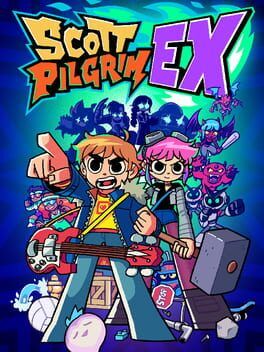
Scott Pilgrim EX trades linear levels for a quest‑driven Toronto, deepens progression, and remixes Anamanaguchi’s soundtrack to stand out in today’s beat ’em up revival.
Scott Pilgrim vs. the World: The Game became a cult favorite by fusing River City Ransom‑style brawling with Bryan Lee O’Malley’s hyper‑referential universe and an all‑timer chiptune soundtrack. Scott Pilgrim EX arrives in a very different landscape, where TMNT: Shredder’s Revenge, Streets of Rage 4, and a wave of throwback indies have already pushed the genre forward. Rather than simply polish the 2010 game, Tribute Games has rebuilt Scott Pilgrim as what they call an “adventure beat ’em up,” stitching an explorable Toronto, layered progression, and a reimagined Anamanaguchi score into something that feels surprisingly modern.
From Linear Levels To An “Adventure Beat ’Em Up”
The original Scott Pilgrim game was built around themed, linear stages. You picked a level on a Super Mario‑style map, marched right, and punched your way from one boss encounter to the next. It fit the era, but by today’s standards it feels rigid compared to the more expressive structures of recent brawlers.
Scott Pilgrim EX blows that up. Instead of a row of disconnected stages, the action unfolds across a single, interconnected version of Toronto that calls to mind Castlevania and River City Ransom as much as classic arcade beltscrollers. Neighborhoods bleed into each other. You backtrack for side paths and shortcuts. Shops, venues, and oddball NPCs are woven organically into the streets rather than tucked into menu screens.
This shift does more than give you a bigger map. It reframes the cadence of the entire game. Where the original shuffled you briskly from fight to fight, EX lets conflict ebb and flow. Some stretches are dense brawling gauntlets, others are low‑pressure strolls to a new gig or quest marker. The effect mirrors the comics more closely: a hangout‑heavy story occasionally detonated by spectacular violence.
The structure also leans into the new time‑and‑space premise. Metal Scott kidnaps Scott’s bandmates and scatters them across warped eras. Instead of simply clearing Stage 1, 2, 3, you track rumors, chase leads through Toronto, and unlock portals to prehistoric wastelands or gothic fantasy realms. It is still a focused, sub‑10‑hour brawler, but the connective tissue makes each detour feel like part of a small adventure rather than a checklist of levels.
Quests, Side Errands, And A Busier Toronto
Within that broader map, Scott Pilgrim EX layers in light quest design. You are not juggling RPG‑style quest logs, but you are doing more than walking to the right until the boss appears.
NPCs in alleys and venues hand out simple errands: retrieve a lost item, clear out a trouble spot, prove yourself to a faction. These are not sprawling subplots, yet they add an extra axis of decision‑making. Do you detour to grind cash and rewards with a side objective, or press on toward the next portal to rescue your band?
Crucially, these errands are staged as excuses to recontextualize combat. Returning to a familiar block in Toronto feels different when you are looking for an item rather than simply enduring another spawn wave. The city becomes a hub of repeatable hotspots instead of disposable scenery you never see again.
That makes Scott Pilgrim EX feel more aligned with the current beat ’em up revival. Streets of Rage 4 and Shredder’s Revenge still lean on linear mission design, but they use secrets, branching routes, and challenges to keep repeat runs interesting. EX goes further by treating its city as a miniature playground, subscribing to a looser “adventure” structure without slipping into full Metroidvania complexity.
Combat That Borrows From Fighters, Not Just Brawlers
Moment to moment, Scott Pilgrim EX still satisfies the basic urge the original did. You are tossing punks into each other, juggling them off walls, and weaponizing whatever junk you can get your hands on. What has changed is how the systems underpinning that chaos are framed.
The move set now feels closer to a 2D fighting game than a pure arcade brawler. Characters have defined strings, launchers, and directional specials that evoke Street Fighter archetypes. Inputs are tighter and more deliberate. The designers clearly want you to think about spacing and timing rather than permissionlessly mashing light attack until everything falls over.
That direction lines up with where the genre has gone. Modern standouts like Fight’N Rage and River City Girls have proven that players will learn deeper move sets if the feedback is crisp. Scott Pilgrim EX follows suit, but grounds its depth in readability. You are encouraged to experiment with aerials, blocks, and juggles, yet the input language is still inviting to anyone whose touchstone is the 2010 game or the film, not a history with arcade boards.
Environmental weapons remain a key part of the vocabulary. Just as the original reveled in throwing trash cans and concert hardware, EX litters Toronto with oddities like game‑referential turnips and magic wands that flip the feel of a skirmish. Weapons act as rhythm changers. They interrupt the comfort of your go‑to combo, nudging you to adapt your route through a crowd instead of just repeating one optimal string.
Co‑op also keeps its place at the center of the design. Up to four players can smash through Toronto together, either locally or online. The stronger move vocabulary and busier arenas give each player a better sense of identity on screen than the original’s more straightforward kit. As with most modern brawlers, EX is fine solo but makes the most sense as controlled chaos with friends.
Progression That Blends Permanent Growth With Run‑To‑Run Flexibility
The 2010 game already flirted with RPG elements. You collected money, bought snacks, and slowly buffed your stats. It was a charming layer, but also a little opaque. You could grind your way out of trouble without fully understanding what you were building toward.
Scott Pilgrim EX clarifies and expands that idea. You still earn cash from fights and sink it into food, gear, and upgrades, yet the game is more explicit about how these systems support different play styles. Some items are short‑term boosts suited to a tough stretch you are about to enter. Others stick around as persistent buffs, forming a lightweight build over the course of the campaign.
This split between permanent and temporary progression gives EX a modern texture. Beat ’em ups like Hades‑flavored roguelites and roguelike‑adjacent brawlers have trained players to expect some sense of growth that survives individual sessions. EX is not a roguelite, but it borrows a similar satisfaction loop. Even an unproductive night of brawling tends to push your Scott or Ramona a little further along.
The connected Toronto map helps that loop breathe. When you hit a wall, you are rarely forced to slam against the same screen again and again. You can swing back to a lower‑risk area, knock out a quest, earn some cash, and return a little stronger. It is a subtle quality of life upgrade, yet it matters. Difficulty spikes feel like design beats instead of progress blockers.
Compared with other modern brawlers, Scott Pilgrim EX lands somewhere between the clean, stage‑by‑stage permanence of Streets of Rage 4 and the meta‑progression sprawl of roguelike hybrids. It respects the arcade DNA but acknowledges that players now expect some degree of agency over how their character grows.
A Remix Of A Legendary Soundtrack
Any Scott Pilgrim project is going to live or die on its soundtrack. Anamanaguchi’s score for the original game was as responsible for its cult status as the combat itself. Scott Pilgrim EX faces the problem of revisiting something that has already been canonized while also trying to stand out in a crowded chiptune‑literate scene.
Tribute and Anamanaguchi respond by treating EX’s soundtrack as both sequel and reinterpretation. Familiar motifs and textures return, but they are bent to fit a structure that is less stage‑based and more exploratory. Themes are allowed to linger, recur, and evolve as you pass through Toronto’s neighborhoods and the time‑warped pockets beyond the city limits.
The music is also framed more deliberately. Instead of simply scoring discrete levels, tracks are allowed to map emotionally onto your current arc. Chill, shimmering pieces underline quieter stretches in Toronto where you are shopping, talking, or detouring toward a quest. Sharper, denser tracks pin down boss arenas and setpiece battles, often riffing on earlier melodies to sell the feeling that you are circling back on a motif from a different point in time.
In the wider context of the beat ’em up revival, Scott Pilgrim EX’s soundtrack stands as a conscious counterpoint to the crunchy synth rock of Streets of Rage 4 and the TV‑toon bombast of Shredder’s Revenge. Where those games evoke specific arcade and console eras, EX leans into chiptune punk as an identity in itself, something that can flex from nostalgic to melancholic without breaking character. It is retro, but it is also distinctly Scott Pilgrim.
Fitting Into The New Beat ’Em Up Golden Age
Scott Pilgrim EX does not reinvent every part of the genre. It is short, structurally straightforward compared with sprawling action RPGs, and uninterested in the roguelike experiments that have produced some of the most replayable 2D brawlers of the last few years. What it does do is carve out a smart niche in the current “golden age” by modernizing the parts of the original that have aged the most.
The adventure framing gives the fights context without bogging them down in narrative. The progression system borrows just enough from contemporary design to keep runs sticky. The soundtrack acknowledges its own legacy while taking advantage of a looser, more exploratory structure. And the whole thing is still grounded in Tribute’s punchy animation and Bryan Lee O’Malley’s knack for fusing heartbreak and headbutts.
For players who have been drowning in retro brawlers, those adjustments might be enough to make room for one more. Scott Pilgrim EX feels less like a remaster of a beloved tie‑in and more like a confident reply to a genre that has grown up around it, comfortable existing alongside its peers rather than coasting on nostalgia alone.