
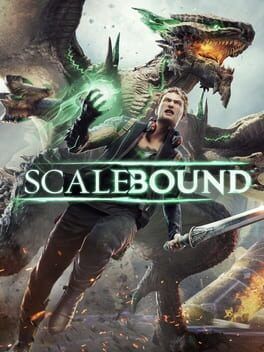
Hideki Kamiya says he is “100% serious” about reviving Scalebound with Xbox, but the canceled PlatinumGames project remains unannounced and complicated.
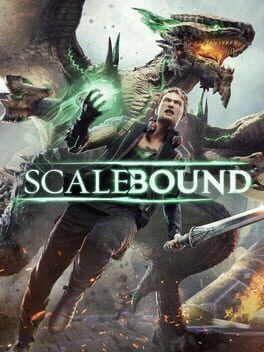
Image: IGDB
Kamiya is inviting Xbox back to the table, but no deal exists yet
Hideki Kamiya has renewed his pitch to revive Scalebound, the canceled Xbox action RPG he directed at PlatinumGames, telling VGC that if Xbox wants to do it, “let’s make it happen.” The concrete news is not that Scalebound is back. It is that Kamiya, now studio head and chief game designer at Clovers, is publicly signaling that he remains willing to return to the project nearly a decade after Microsoft canceled it.
VGC asked Kamiya whether he had contacted new Xbox CEO Asha Sharma about reviving Scalebound. His answer was direct: “Well, no,” followed by the open invitation. IGN, Eurogamer, Polygon, and Pure Xbox all picked up the same VGC exchange, with Eurogamer highlighting Kamiya’s later clarification that he is “100% serious” about wanting to see the project through if possible.
That distinction matters. This is a Scalebound revival signal, not Scalebound Xbox news in the form of an announcement. There is no confirmed development restart, no platform list, no publisher statement from Microsoft, no trailer, no release window, and no pricing. What is confirmed is Kamiya’s stated interest, Kento Koyama’s support according to Kamiya, and the fact that Clovers is currently building another long-awaited comeback, Capcom’s Okami 2.
Scalebound still sits in Xbox’s unfinished-business file
Scalebound was announced during Microsoft’s E3 2014 presentation as an Xbox One exclusive from PlatinumGames, with Kamiya directing. The pitch had the shape of a big-stage Xbox bet: a headphone-wearing swordsman fighting alongside a massive dragon, blending character-action timing with action RPG scale. Eurogamer describes the footage shown before cancellation as a dragon-filled romp where the companion could tear into enemies and spread fire across the battlefield.
The game resurfaced at gamescom 2015, was delayed to 2017, then went quiet enough that concerns about its status grew. Microsoft officially canceled Scalebound in January 2017. Eurogamer’s account says the game spent about four years in development before Microsoft pulled the plug, while IGN notes that it had been announced 12 years before Kamiya’s latest comments and canceled a little more than nine years ago.
That timeline is why Xbox fans still treat Scalebound as unfinished business. The game was shown, discussed, delayed, and then removed before players could judge whether its combat rhythm actually worked. Unlike a pitch that died behind closed doors, Scalebound left behind public trailers and screenshots, which means the imagined version has kept breathing long after the production stopped.
The design hook remains unusually easy to remember
Scalebound’s staying power comes partly from how legible its fantasy was. PlatinumGames built its reputation on action systems where animation, spacing, cancel timing, and spectacle feed each other. Kamiya’s credits, cited by Eurogamer and Polygon, include Bayonetta, Resident Evil 2, Devil May Cry, and Okami. Scalebound looked like his attempt to put that lineage against a larger partner-combat canvas.
The footage described by the sources centered on a protagonist fighting beside a dragon rather than simply calling one in as a finishing move. That matters from an action design perspective because a persistent companion changes the tempo of encounters. The player’s swordplay has to share space with a creature that can chomp enemies, cause chaos, and alter the battlefield with fire. If the old Scalebound concept ever returned, the hardest creative question would likely be the same one the trailers raised in 2014 and 2015: how do you make a dragon feel powerful without letting it flatten the player’s own mastery curve?
None of the current reporting confirms whether a revived Scalebound would reuse old designs, restart from scratch, or keep the original hero and dragon structure. Kamiya’s request that VGC include footage for Sharma, reported by IGN and Pure Xbox, shows that the old public material is still part of the pitch. It does not prove that the same game would be technically or creatively viable in 2026.
Clovers gives Kamiya a new home, but also a real scheduling problem
The revival talk lands at a complicated moment because Kamiya no longer works at PlatinumGames. IGN reports that he helped form Clovers in late 2024, and VGC’s interview describes a studio that has grown substantially since its public reveal at The Game Awards 2024 alongside Okami 2. VGC quotes Clovers president Kento Koyama saying the studio has surpassed 70 staff, with offices in Osaka and Tokyo and an expanded development environment.
That growth gives Kamiya a credible development base, but it does not make Scalebound an immediate project. VGC’s interview centers on Clovers’ current work on Okami 2, published by Capcom. Eurogamer notes that Kamiya acknowledged Clovers “might not be in a position to do that right this second.” That is the key practical brake on any Hideki Kamiya Scalebound revival talk.
Kamiya tied his optimism to Okami itself, saying in the VGC interview, as quoted by Polygon and Eurogamer, that if someone wants something strongly enough, a way can eventually appear. That is an emotional argument, not a production schedule. Okami 2 is the active commitment. Scalebound is a desire that would require Xbox alignment, business terms, staffing, and a development plan that has not been announced.
The cancellation history still hangs over any comeback pitch
Any credible Scalebound revival would have to contend with the original cancellation rather than simply trade on nostalgia. The public record from the provided sources is blunt: Microsoft canceled the project in 2017 after years of development, and later comments from PlatinumGames leadership did not frame the collapse as one-sided. Eurogamer cites former PlatinumGames CEO Atsushi Inaba saying both parties were to blame for Scalebound’s demise.
Pure Xbox adds that Microsoft did not give a detailed public explanation at the time, while noting that various PlatinumGames staff have since suggested the project had development problems. Those are important caveats because Scalebound was not a finished game waiting to be switched back on. It was a large, technically ambitious action RPG that failed to cross the line under the conditions of the Xbox One era.
Kamiya also appears to remember the project as both rewarding and difficult. Polygon and IGN report that he recently had dinner with former Scalebound developers, and that the game came up during the gathering. Kamiya said they remembered how fun it was to work on it, while also acknowledging tough times. That mix is probably the most honest version of the Scalebound myth: a project with a powerful creative image, public disappointment, and production scars that would need to be respected if it ever returned.
For Xbox, a revival would be a statement as much as a release
A revived Scalebound would carry symbolic weight for Xbox because the canceled version became shorthand for a certain era of Microsoft’s first-party uncertainty. The sources do not report Xbox’s current position on the game, and there is no comment from Sharma in the provided material. Still, Kamiya’s comments are pointed at Xbox leadership for a reason: the project was announced on Microsoft’s stage, canceled by Microsoft, and remembered by many players as a missing Xbox promise.
The platform question is also unresolved. Scalebound was originally announced as an Xbox One exclusive, while Eurogamer’s game listing mentions PC and Xbox One. No source provided confirms how a modern version would be distributed, whether it would target current Xbox consoles, PC, cloud, Game Pass, or multiple storefronts. Any claim beyond that would be speculation.
The business case would also be different now. Clovers is independent from PlatinumGames, Kamiya is attached to Okami 2 with Capcom, and Xbox has changed leadership since the 2017 cancellation. A new Scalebound would likely need to be renegotiated as a fresh production rather than revived as a simple continuation. That makes Kamiya’s public readiness meaningful, but it also shows how many locks remain on the door.
The safe read for fans: hope is real, the game is not announced
Readers searching for Scalebound revival news should separate the confirmed signal from the wishful noise. Confirmed: Kamiya told VGC he has not asked Asha Sharma directly, but said that if Xbox wants to make Scalebound, he is ready to make it happen. Confirmed: he said Koyama is on board too. Confirmed: he remains strongly interested and described himself as “100% serious.” Confirmed: Clovers is busy with Okami 2 and may not be able to take on Scalebound immediately.
Unannounced: a development restart, an Xbox publishing deal, a trailer, platforms, release timing, Game Pass availability, price, or even whether a revived game would resemble the old build. There are no ratings-board signals, no store-page changes, and no public listing in the supplied sources that points to an imminent release.
That still leaves the story with a pulse. Scalebound endures because it promised a rhythm Xbox rarely had in its lineup: Platinum-style action built around a dragon-scale set-piece partner. Kamiya’s latest comments do not bring that dragon back into the arena. They do put the invitation in public, aimed at the one company that would have to decide whether unfinished business is worth reopening.