
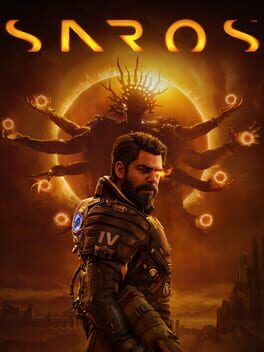

Early reviews position Saros as one of 2026’s standout shooters, with critics praising its incredible combat feel, refined run-based structure, and atmospheric presentation on the alien world of Carcosa.
Housemarque has made a habit of turning pure mechanical obsession into genre-defining games, and Saros is shaping up to be its next big leap. Ahead of its April 30, 2026 launch, the studio’s new PS5-exclusive shooter is already sitting on an impressive OpenCritic average of 89, with 95% of critics recommending it. That scoreline is only part of the story. What is really driving the early “Game of the Year” buzz is how consistently reviewers are zeroing in on the same strengths: the feel of the combat, the evolution of the studio’s run-based formula, and a thick, unsettling presentation that makes Carcosa feel like a place you actually survived rather than just visited.
Combat That Feels Obsessively Tuned
If Returnal was Housemarque proving it could weld arcade DNA onto a third person shooter, Saros is being framed as the moment everything clicks. Across outlets, the common refrain is that Saros simply feels phenomenal to play. Reviews highlight the snap of its aiming, the weight and feedback of every weapon, and the relentless tempo of engagements that rarely let you coast.
Critics describe firefights that demand constant motion, where dodges, sprints, and ability usage become as instinctive as pulling the trigger. Enemies pressure you from multiple angles and ranges, forcing you to treat every arena like a shifting puzzle rather than a shooting gallery. That constant decision making under fire is something reviewers keep returning to when explaining why Saros stands out in a crowded genre.
Upgrades and weapon synergies deepen that core feel rather than distracting from it. Arjun Devraj’s arsenal is built to be expressive, and critics note that experimentation is not just allowed but rewarded. A single run can take you from a cautious mid range marksman to a close quarters aggressor built around risk and reward mechanics, with each playstyle supported by weapon behaviors, perks, and abilities that visibly alter how you approach the next room.
Run Based Structure, Refined Rather Than Replaced
Housemarque’s history with roguelike and arcade sensibilities looms large over Saros, and reviewers make it clear that the studio has not abandoned its run based roots. Instead, Saros is described as a refinement of the Returnal template, taking the unpredictability and tension of roguelite design and layering it with more deliberate progression and narrative structure.
Critics talk about Carcosa as a place that reshapes itself from run to run, with biomes that remix enemy compositions, encounter pacing, and traversal routes. This keeps repetition at bay while still allowing players to learn patterns and grow more confident over time. The sense of improvisation is a big part of why the combat feels so alive. You are not just replaying content; you are re negotiating each space every time you drop in.
At the same time, reviewers point out that Saros is more approachable than it might appear from the outside. Persistent upgrades, unlockable gear options, and narrative milestones survive between attempts, trimming the harshest edges of the roguelite loop without diluting its stakes. Death still matters, but it feels like a step in a long term climb rather than a full reset.
Several outlets specifically highlight how Saros improves on Returnal’s meta progression and onboarding. Where Returnal could sometimes feel hostile to newcomers, Saros seems more intentional about teaching its systems while still trusting players to rise to the challenge. That balance is a big part of why reviewers are comfortable calling it one of the standout shooters of 2026 instead of a niche passion project.
Carcosa’s Presentation And Atmosphere
Housemarque’s games have always been visually loud, and Saros continues that tradition with a more grounded science fiction horror twist. Critics repeatedly call out the presentation on the alien planet Carcosa as one of the game’s defining traits. This is a world under the influence of an eclipse like corruption that warps flora, fauna, and even the landscape itself. The result is a layered, oppressive atmosphere that reinforces the stakes of every run.
Reviewers describe dense, moody environments cut through by violent bursts of color. Ability effects, weapon fire, and the eclipse’s corruptive presence turn firefights into controlled chaos, but Saros apparently maintains enough visual clarity that players can still read threats in the middle of the spectacle. That balance between style and readability is a tricky one, and critics give Housemarque credit for largely getting it right.
Sound and performance are also part of the positive consensus. The audio mix sells both the immediacy of combat and the unease of exploring a hostile world. Weapon reports, enemy shrieks, and ambient environmental noises work together to keep tension high even in quieter moments. Combined with responsive controls and smooth technical performance on PS5, reviewers say Saros feels built from the ground up to take advantage of the hardware without using tech as a crutch.
Story Ambition, With Some Divided Opinions
If there is one area where early reviews deviate from near universal praise, it is the narrative. Critics broadly agree that Saros is more ambitious on the storytelling front than Returnal, thanks in part to a larger cast orbiting around Arjun Devraj and the mysteries of Carcosa. There are more characters to interact with, more lore to uncover, and a clearer sense of structure to the overarching plot.
Where opinions diverge is in how successfully that ambition meshes with the demands of a punishing, run based shooter. Some outlets appreciate the attempt to thread a continuous narrative through repeated runs, arguing that it lends weight to your progress and makes Carcosa feel like a living, suffering place rather than a series of disconnected arenas. Others feel that the story occasionally clashes with the kind of experience Saros clearly wants to be, slowing the momentum in ways that do not always pay off.
What critics do tend to agree on is that the narrative never fully undermines the core action. Even when some outlets question specific story beats or pacing choices, they still walk away impressed with the overall package. For players who value mood and worldbuilding alongside mechanical depth, Saros looks to offer more to chew on than Housemarque’s previous work.
A Consensus Forming Around A 2026 Heavyweight
Across the early coverage, the message is consistent. Saros is not simply a strong exclusive or a spiritual successor to Returnal. Critics are already positioning it as one of 2026’s strongest releases, full stop. The praise clusters around a few key points that show up in review after review: combat that feels tailored and thrilling from the first encounter to the last, a run based structure that rewards mastery without shutting out newcomers, and a presentation that turns Carcosa into one of the most memorable settings of the year.
There are caveats, particularly around how well the story keeps up with the rest of the experience, but they read more like critiques of an ambitious swing than deal breaking flaws. For players who loved Returnal’s intensity but wanted more narrative grounding and a more forgiving meta structure, Saros looks like a direct answer. For those who simply want one of the tightest feeling shooters on PS5, critics suggest that Housemarque has delivered that too.
As launch approaches, Saros already feels less like an underdog surprise and more like a clear 2026 contender that other action games will be measured against. If the full release holds up to these early impressions, Housemarque’s reputation as one of the most reliable action game studios in the industry is about to be reinforced in a big way.