
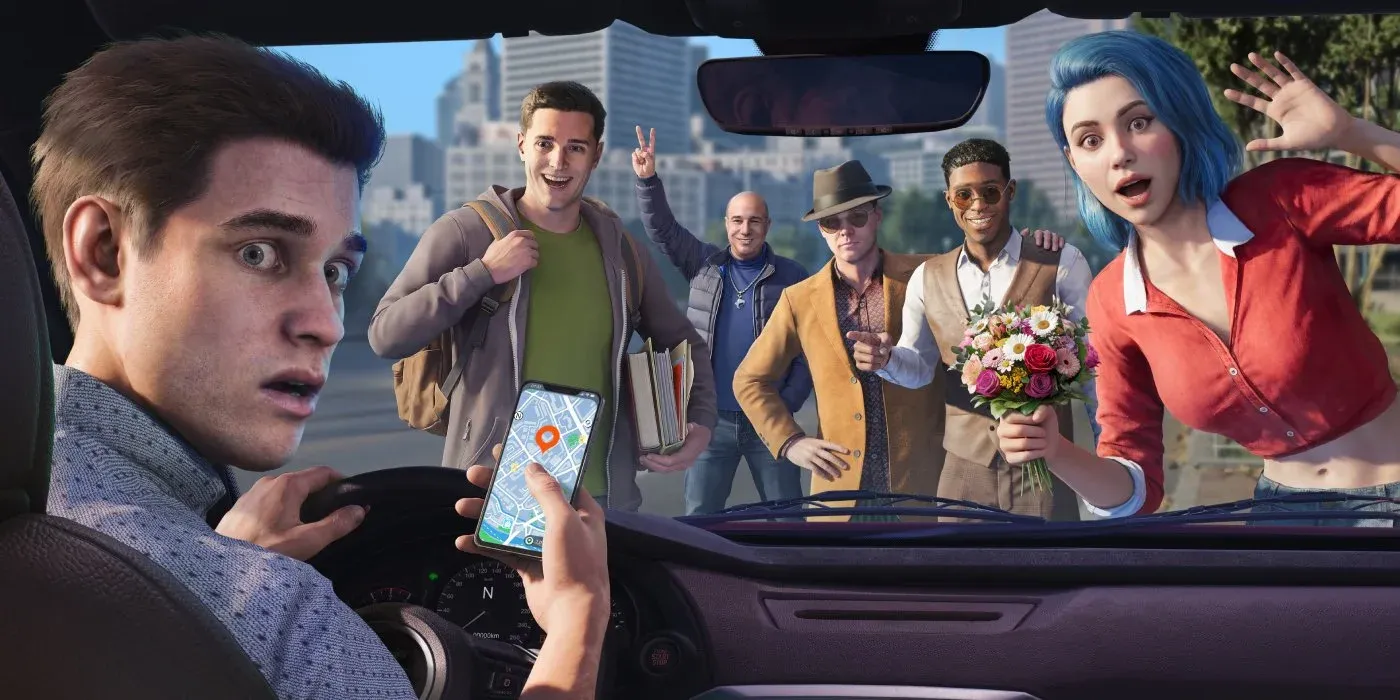

Tim Willits says Saber’s generative AI use is limited to Rideshare, but the disclosure fight around the game shows why AI remains a reputational risk for major studios.
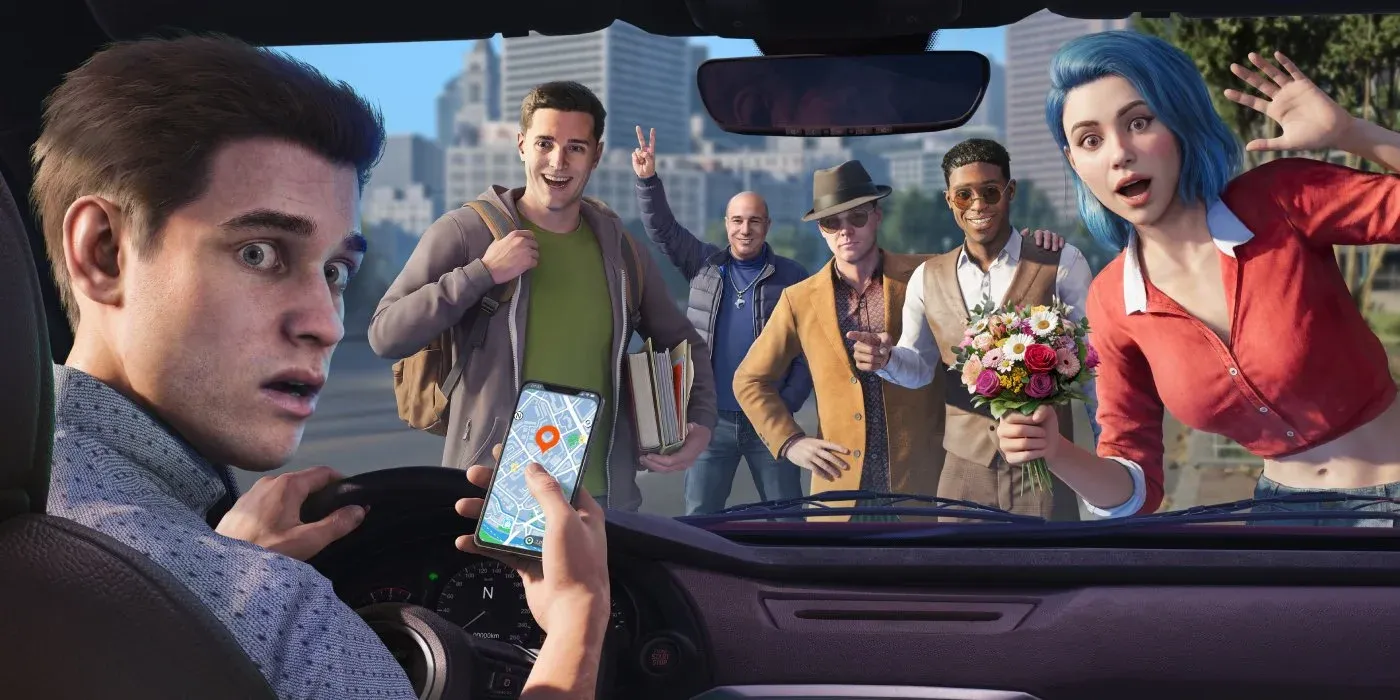
Image: outof.games
Saber’s AI defense arrives after a disclosure problem
Saber Interactive chief creative officer Tim Willits has pushed back on the idea that Rideshare “Stimulator” has damaged the studio’s reputation, telling Rock Paper Shotgun in a Gamescom interview that the company is using generative AI in a limited way and only in that game. The tension is that Saber is trying to frame Rideshare as a contained experiment, while the controversy around it began with a missing Steam disclosure, a former writer’s public claim, and CEO Matthew Karch’s hostile response to that writer, which Rock Paper Shotgun and Eurogamer both report he has since apologized for.
That sequence matters because player trust around generative AI games is being decided less by abstract promises and more by the order in which studios reveal their choices. In Saber’s case, the studio did eventually clarify that Rideshare uses generative AI, but the first public impression was shaped by a former writer alleging she had been replaced by ChatGPT, followed by Saber denying that replacement claim and Karch attacking the writer in comments to the press, according to Rock Paper Shotgun and GamesIndustry.biz.
Willits’ line is consistent across multiple interviews: Saber says it has not replaced anyone with AI, does not use generative AI across its major projects, and is treating Rideshare as a test case. GamesIndustry.biz quotes him saying, “We’ve never replaced anybody with AI,” while Rock Paper Shotgun reports his explanation that Rideshare is using the technology in “a small part of a small game to test the waters.” That is the confirmed position. The reputational risk comes from everything around it: delayed disclosure, labor anxiety, and uncertainty over whether a successful experiment would encourage broader use later.
What Saber says Rideshare actually uses AI for
The clearest dividing line in Willits’ explanation is between Rideshare’s authored structure and its open-ended Free Ride mode. Rock Paper Shotgun reports that the game has a main narrative, comparable in structure to other simulator games, where players start a business in a city and grow it by completing jobs. Willits told the outlet that “all the missions are written by humans” and that the main narrative is human-written.
The generative AI appears in Free Ride. According to Rock Paper Shotgun, passenger dialogue in that mode will be generated using a large language model, with Willits describing a goal where current events could be fed into the system so a passenger might talk about something timely, such as a soccer game. Eurogamer, citing Rideshare’s updated Steam declaration, reports a broader set of disclosed uses: some generated voices and localisation, some music on in-game radio stations, and generative AI for missions and localized dialogue in the optional Free Ride mode.
That distinction gives Saber a cleaner design argument than a blanket “AI game” label would. A rideshare sim depends on repetition, ambient chatter, and the sense that every passenger is another small variable in the economy of a shift. A controlled AI mode could, in theory, add variety to a low-stakes loop. But that same design logic is exactly where trust becomes fragile. If the authored campaign is the human-made backbone and Free Ride is the procedural lab, players need to know which parts they are buying for writing, which parts they are buying for novelty, and which parts rely on ongoing generative systems.
The Steam disclosure gap is the trust issue
Valve’s rules are central to the dispute because Steam is not a side channel for a PC release, it is where many players make their first judgment about a game. Rock Paper Shotgun notes that Rideshare’s Steam page did not initially disclose generative AI use, despite Valve having a policy requiring developers to disclose both generative AI used in production and features that make ongoing calls to live AI systems.
Willits told Rock Paper Shotgun that Saber “had an announce plan” that “got a little sideways.” His explanation was that the studio intended a staged rollout: a sneak peek first, then later feature reveals, including disclosure of the generative technology. He also pointed to Rideshare not being present at Gamescom as evidence that the game was early in its reveal cycle, and said people discussed the game before they were supposed to, causing the situation to escalate.
That may explain the production-side misfire, but it does not fully solve the player-facing one. In a normal marketing rollout, holding back features can build anticipation. With generative AI, holding back information can read as avoidance, especially when platform policy already gives developers a clear disclosure lane. The strategic lesson for major studios is blunt: AI communication cannot be treated like a late-cycle feature beat. Once the store page is public, the trust economy is already active.
Saber is ring-fencing its bigger games, at least publicly
Willits has repeatedly stressed that Rideshare is the exception inside Saber’s current slate. Rock Paper Shotgun quotes him saying Saber does not have AI in Space Marine, Hellraiser, or Jurassic Park. GamesIndustry.biz similarly reports him saying Saber does not use generative AI in Space Marine, Hellraiser, Stuntman, “and everything,” while GamingBolt, citing an IGN interview, reports Willits saying there is “absolutely no generative AI” in Space Marine 3, Stuntman, Turok, Jurassic Park, or Wick.
Eurogamer also reports Willits saying Saber does not use generative AI on its projects except for the Rideshare experiment, and that the company does not have an official policy or use it outright across all projects. GamesIndustry.biz adds another important boundary: Willits said Saber does not use generative AI in production pipelines for code, environments, or textures.
For a company of Saber’s scale, that boundary is commercially important. GamesIndustry.biz reports that Saber has about 3,500 employees across 15 studios, with development spread across countries including Serbia, Armenia, Georgia, Spain, Portugal, Sweden, Argentina, and Australia. Eurogamer notes the company’s upcoming roster includes a John Wick action game, a new Stuntman game, Turok, Hellraiser, Jurassic Park Survival, and the Star Wars: Knights of the Old Republic remake. When a studio with that many teams and licenses experiments with AI, players and IP holders will naturally ask whether the experiment stays quarantined or becomes a template.
The backlash is about labor, authorship, and future leverage
The game industry AI backlash around Rideshare is partly about the product, but it is also about fear of precedent. The original dispute became public because a former writer alleged she had been replaced by ChatGPT. Saber has denied replacing anyone with AI, with Willits calling that idea “crazy” in comments to GamesIndustry.biz, but the allegation landed in an industry already sensitive to layoffs, outsourcing, and automation pressure.
Willits’ forward-looking argument is that the medium has not found its defining AI use case yet. GamesIndustry.biz quotes him predicting that a developer will eventually find a clever and brilliant use case for modern AI integration that makes people understand where it fits. Eurogamer reports a similar comment from Willits, who said developers and consumers do not really know how the technology fits yet. GamingBolt, again citing IGN, quotes him saying that anyone who claims to have AI figured out “don’t,” and that it may take a couple of years for things to settle.
That uncertainty is honest, but it cuts both ways. From a design strategy perspective, experimentation is how studios find the next useful tool. From a player and worker perspective, experimentation by a large publisher can look like a live market test for cheaper content, especially when the first public case involves a writer dispute. Saber’s current position is that Rideshare is a limited trial, not a staffing model. The reputational risk remains because audiences are judging not only what Rideshare is, but what Saber might decide if the experiment works.
How players should read Rideshare before launch
For now, the practical guidance is to treat Rideshare “Stimulator” as a disclosed AI experiment rather than as evidence that every Saber game is using generative AI. The sources support a narrower conclusion: Saber says the main narrative and missions are human-written, while Free Ride uses generative AI for passenger-related content, and the updated Steam declaration cited by Eurogamer includes generated voices, localisation, some radio music, missions, and localized dialogue.
Players who want to avoid generative AI should watch the Steam page closely before purchase, since Valve’s disclosure box is the key public listing for this issue. The provided source material does not confirm a release date, price, console versions, system requirements, or whether the AI-driven features require online connectivity at all times. Until Saber publishes those details, the safest buyer’s approach is to wait for the final store disclosures, launch coverage, and user reports on how optional Free Ride actually feels in play.
For Saber, the next move is less about persuading players that one controversy caused no lasting damage and more about proving its boundaries are stable. If Rideshare remains a clearly labeled, optional AI experiment, the studio can argue that it is learning in public. If disclosures arrive late again, or if AI language around larger licensed projects becomes ambiguous, the Rideshare game AI debate will follow Saber into every future announcement.