
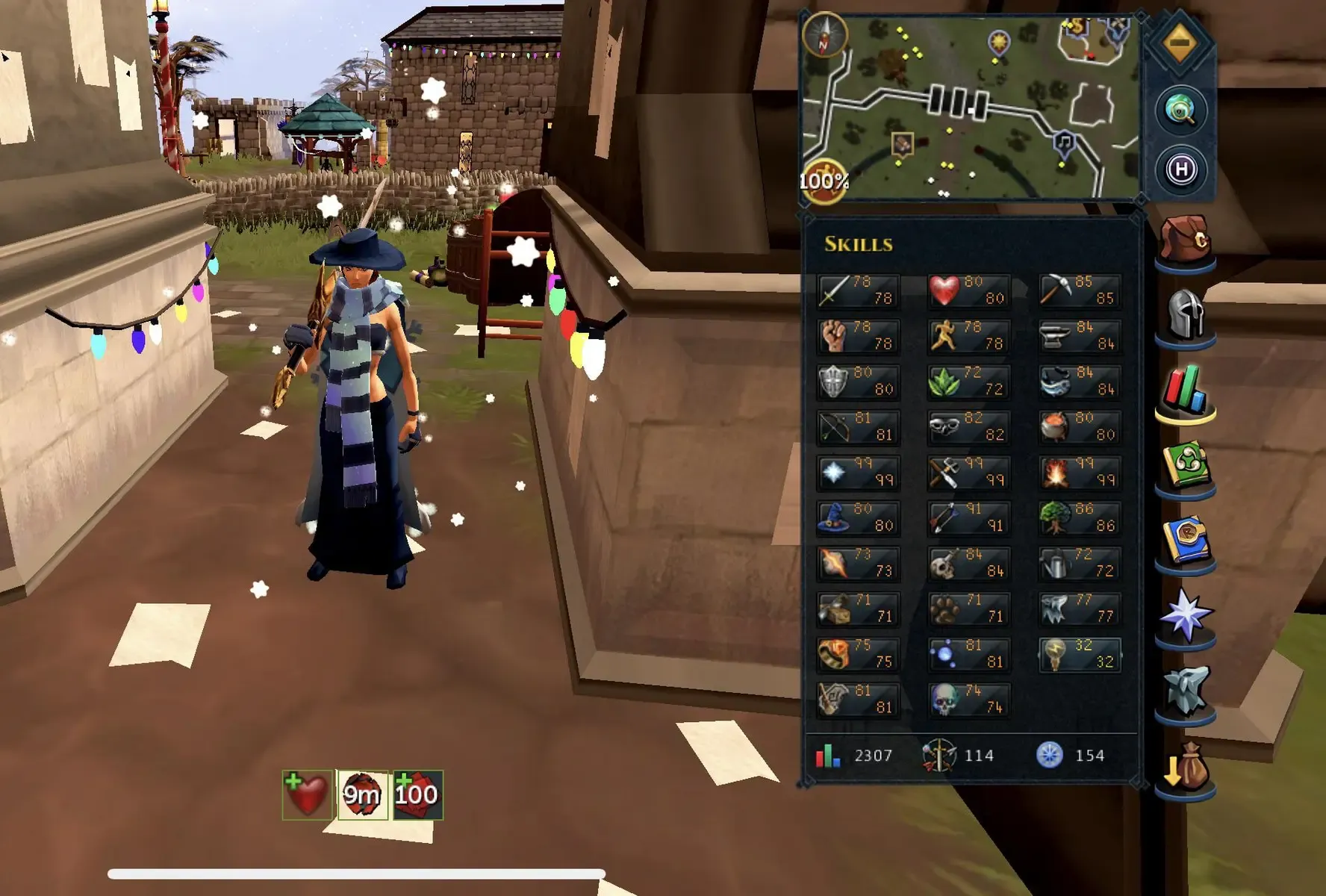

RuneScape Leagues II Equilibrium is live through September 21, bringing fresh characters, region locks, Relics, Blessings, free-to-play League Worlds, and faster progression built around irreversible choices.
Image: mmos.com
RuneScape Leagues II Equilibrium is live, and the pressure is in the pathing
RuneScape Leagues II Equilibrium is now live, with Jagex’s limited-time seasonal mode running from August 10 through September 21, 2026. The central hook is clear from Jagex’s own launch build-up: every player begins again on a fresh League character, progresses at accelerated speed, and makes choices that determine which parts of Gielinor, which powers, and which progression routes are available during the season.
The tension this time is that RuneScape fast progression comes with harder boundaries. Jagex says players will not be able to unlock everything in Equilibrium, and that every region, Relic, Task, and Blessing is meant to carry weight. Pocket Gamer describes the new structure as a locked-up Gielinor where completing tasks opens regions, bosses, and skilling spots, while going one way can close off another. That is the key difference returning players should internalize before treating RuneScape Leagues 2 as a normal sprint to max efficiency.
Leagues has always compressed the long arc of RuneScape into a seasonal chase, but Equilibrium is being framed less as a checklist and more as a build plan. You are still earning League Points, chasing exclusive rewards, and climbing a leaderboard before the season ends. The change is that the route itself now functions like a character sheet.
A fresh character, accelerated XP, and a separate seasonal save
Jagex’s official countdown post explains the baseline rules for Leagues II: Equilibrium. When the league begins, players create a dedicated League character and enter special League Worlds. That character exists separately from the main RuneScape adventure, so the mode does not overwrite or disrupt a player’s primary account.
For subscribed players, Jagex says the League character is included with existing membership. The same post also confirms an Account Nomination feature, which lets players play on one account while choosing the account that receives the ultimate rewards earned from the League. That matters for returning players who may have an old main, a newer account, or an alt they use for seasonal content. The sources provided do not list a separate purchase price for Equilibrium, but they do confirm that existing membership covers the member experience and that a dedicated free-to-play route exists.
The official wording emphasizes “supercharge XP rates” and “ludicrously accelerated” progression. That should not be read as a casual catch-up server where everything is simply faster. The progression boost is the fuel, while Tasks, Relics, Blessings, and region locks are the steering. In practical terms, returning players should expect early choices to snowball quickly because levels arrive faster, but access to the right skilling methods, bosses, quests, and equipment depends on what the League actually lets you open.
Region locks turn Gielinor into a routing problem
The most important structural change is the map. Jagex says this League’s journey is defined by the choices players make, including every region unlocked and every Task pursued. The official post states that those decisions unlock different bosses, skilling opportunities, and rewards, while also stressing that players cannot unlock everything.
Adventure Gamers reports that Equilibrium begins with access to Misthalin and the recently introduced Havenhythe, with additional regions unlocked by completing tasks. Pocket Gamer similarly reports that new regions, bosses, and skilling spots are opened through task completion. Taken together, the picture is of a League where the early game is not simply about rushing familiar milestones, but about deciding which content ecosystem your character will live inside.
That changes the usual RuneScape mental math. A region is no longer only a place on the map. It can be a boss route, a quest package, a training plan, an equipment pipeline, and a source of League Points. If you choose a region because it accelerates Agility, Thieving, or gathering, you may be giving up a different combat ladder or a preferred boss. If you chase a familiar questline, you may lock yourself away from a better long-term skilling engine. The mode’s title, Equilibrium, fits the design: power is being offered through imbalance, but the game asks you to decide where that imbalance belongs.
Relics are back, but their value depends on the map you build
Relics return in Leagues II Equilibrium, and Jagex says players unlock powerful Relics by completing Tasks and earning League Points. The RuneScape Wiki’s Equilibrium League page lists Relic tiers tied to point thresholds, beginning at Tier 1 with 10 points and continuing through higher tiers shown at 750, 1,750, 3,500, 6,000, 12,000, and 20,000 points. As with any public wiki, that is a community-maintained listing rather than a publisher statement, but it lines up with the official framing of Relics as staged seasonal unlocks.
Pocket Gamer highlights several Relics that show how broad the system can be. Endless Harvest is described as automating banking so gathering can continue. Survivalist is described as stretching resources further. Golden Touch is described as turning Agility and Thieving into meaningful income sources. These are not minor convenience choices in a locked-map League. They can decide whether a region feels abundant or starved, whether a skilling route becomes self-sufficient, and whether a money-making plan exists without relying on normal trade routes.
That last point is especially important because Jagex confirms there is no player-to-player trading in Equilibrium. Without trading, a weak routing decision cannot be patched over by buying missing materials from another player. Relics that generate resources, conserve supplies, or create gold are stronger when your region path cuts you off from alternatives. Returning players used to Grand Exchange problem-solving should plan for a more self-contained character economy.
Order, Balance, and Chaos Blessings give combat a seasonal identity
Equilibrium adds Blessings alongside Relics, and the combat layer is built around Order, Balance, and Chaos. Pocket Gamer reports that committing to one of those Blessing paths can eventually lead to a God Tier Blessing, which Jagex is billing as among the strongest combat effects the MMORPG has had. The official reveal post also says Blessings and Relics could define an entire League journey, while warning players that its pre-launch reveals contained spoilers for those who wanted to discover the systems in-game.
The RuneScape Wiki identifies the League’s Order, Balance, and Chaos themes with Saradomin, Guthix, and Zamorak respectively, while Jagex’s official countdown post frames the season as an alternate reality where Guthix, the God of Balance, remains central to the world’s fate. That lore framing is more than decoration for progression players. RuneScape’s gods have always carried ideological weight, and Equilibrium appears to use those identities as build lanes: stability, moderation, or volatility expressed through combat power.
The unanswered question for many returning players is not whether the strongest Blessing will exist. Jagex and Pocket Gamer both point to unusually powerful effects. The question is whether your preferred Blessing path will match the regions and Relics you choose. A combat Blessing that looks dominant on paper may be less useful if your unlocked bosses, gear sources, or supply chain do not support it. Equilibrium’s design pushes players to evaluate powers as part of a route rather than as isolated prizes.
Free-to-play League Worlds lower the barrier, with limits attached
One of Equilibrium’s most practical changes is access. Jagex says Leagues can be experienced “in limited fashion” through Free-to-Play for the first time, with a dedicated Free-to-Play experience available from day one. Pocket Gamer also reports that Free-to-Play League Worlds are now available, and the RuneScape Wiki notes that Equilibrium differs from Catalyst League by having dedicated free-to-play worlds.
That does not make the entire League equivalent for free and subscribed players. Jagex’s wording is careful: the free-to-play version is limited, while the member League character is included with existing membership. For lapsed players, this creates a sensible test route. You can sample the seasonal pace, the task structure, and the feeling of starting over without committing immediately to the full member path. If the build planning hooks you, membership opens the broader version described in Jagex’s posts.
For returning RuneScape players, the free-to-play option is also a useful calibration tool. RuneScape has accumulated years of systems, names, regions, and mechanical expectations. A fresh League character with accelerated progression can soften that re-entry, but Equilibrium’s locked structure can also punish autopilot. Trying the early League Worlds before committing serious time to a member route may help you decide whether you want a skilling-first build, a combat Blessing plan, or a more exploratory seasonal run.
Before jumping in, plan around exclusions rather than completion
The safest way to approach RuneScape Leagues II Equilibrium is to stop thinking like a completionist in the main-game sense. Jagex explicitly says players will not be able to unlock everything. That single rule changes the emotional contract of the mode. Missing content is not necessarily failure; it is part of the seasonal build.
Your first practical decision should be whether you care most about exclusive rewards, leaderboard placement, boss access, skilling efficiency, or experimenting with Relic and Blessing combinations. Those goals may overlap, but Equilibrium is designed so they can also compete. A region that gives excellent skilling opportunities may not support the combat route you want. A Blessing path that promises spectacular damage may need gear or supplies your route does not easily provide. A Relic that looks dull in a normal account may become essential when trading is disabled and your map is constrained.
The confirmed calendar also matters. With the League ending September 21, this is a finite seasonal commitment rather than a permanent alternate account. If you are returning after a long break, the best use of the RuneScape Equilibrium update may be to relearn systems through a faster, stranger version of Gielinor. If you are a veteran, the appeal is harsher: Equilibrium asks whether you can build a plan when the game refuses to give you every tool. That is where the League’s faster progression earns its tension.