
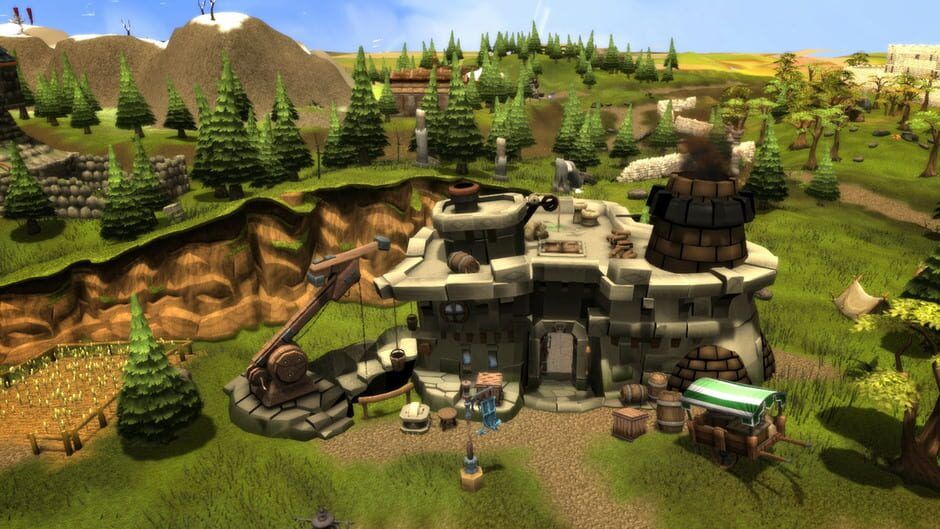

Jagex’s new Havenhythe region is billed as RuneScape’s largest area expansion in 25 years. Here’s what Part 1 actually adds right now, how its quests and skilling hooks work, and whether it lands as meaningful long-term content for veterans and a strong re-entry point for lapsed players.
Havenhythe Part 1 is a statement of intent for RuneScape as a live-service MMO. After years of god wars, Elder God arcs and escalating cosmic stakes, Jagex is opening a new corner of Gielinor east of Morytania and calling it the biggest area expansion in the game’s 25-year history. What matters for players, though, is not the marketing line but what this first slice of the region adds right now, and whether it feels like a place you will actually live in for months rather than tour for an afternoon.
A grounded, regional story instead of another apocalypse
Jagex is very clear about the tonal pivot for Havenhythe. The studio is pitching this as a return to a more classic RuneScape feel, rooted in local troubles rather than world-ending gods. Part 1 delivers the opening chapter of that experiment through two core quests and a handful of side stories that all circle around Havenhythe’s identity as a frontier port trying to find its footing.
The free-to-play intro quest, Visions of Havenhythe, is the on-ramp for everyone. It gives you the prophetic glimpses and the basic political and social lay of the land, then turns you loose in the docks. From there, Hearts of Sanguine picks up as a members quest that digs deeper into the region’s factions and hints at the darker forces lurking beyond Morytania without immediately detonating another global crisis.
Around those headline quests, Jagex has seeded smaller, character-driven stories that push the “local drama” angle hard. You help a kid chase their wizarding ambitions, you get tangled in a very RuneScapey housing crunch involving crabs, and you meet traders, hunters and settlers trying to carve out a new home. It is intentionally smaller in scope, but that is the point: Havenhythe is meant to feel like a place where people live first and a stage for gods second.
The other crucial detail is that this is only Part 1. Narrative threads laid here are designed to stretch forward into later updates, including future quests and eventual access to deeper First Age lore and even Vampyrium. If you like RuneScape’s long-running narrative arcs, Havenhythe feels built to spool out over the 2026 roadmap rather than blow through its story in a single patch.
Why Jagex calls it the biggest area expansion yet
When Jagex calls Havenhythe the largest area expansion in RuneScape history, it is talking about both square footage and density. Even with only half the planned landmass unlocked in Part 1, this is a broad coastline of marshes, forests, hunting grounds and town spaces that already rivals some established regions.
More importantly, almost every corner is wired into progression systems. You are not just getting a scenic harbor; you are getting an island that ties into Hunter, Fishing, Slayer, construction-style management and new bossing all at once. The second half of the landmass is still to come later in the year, with a First Age-themed Archaeology dig site, more quests and new bosses slated to extend the loop even further.
In practice, that makes Havenhythe feel less like a single patch zone and more like a live-service platform area, similar to how Anachronia became the permanent home of Big Game Hunter and various skilling hubs. Havenhythe is designed to absorb future systems rather than be left behind by them.
Skilling hooks: 110 Hunter and a living island
The headline progression hook is the Hunter expansion. Havenhythe raises Hunter’s cap to 110 and introduces a suite of new creatures and methods that are explicitly built to be the backbone of higher-level skilling for years.
Across the island you find new tracking setups, updated Big Game Hunter style encounters and a proliferation of skilling nodes that give Hunter a more continuous journey from early levels to the new cap. Birdhouses make the jump from novelty to serious long-term method, scaling all the way to Eternal Birdhouses at level 101. You craft them from increasingly higher tier logs and clockwork, then place them around Havenhythe where they double as both XP generators and a way to make the island feel lived in.
The important distinction compared to older expansions is that Hunter here is not a bolt-on minigame. Havenhythe’s food chain feeds into other skills and economies. Rare materials from high-end beasts plug into new gear and crafting paths, and many of the island’s other skilling nodes are positioned to be used alongside Hunter, not instead of it. If you are chasing 120 capes and archetype-perfect accounts, this is content you can fold into your daily loops rather than a one-time novelty.
Outside Hunter, Jagex has scattered incentives for a laundry list of skills. There are new resource spots for gathering and artisan skills and new training pockets for things like Slayer and Fishing. Havenhythe is meant to be a skilling circuit you can run, not just a Hunter arena. That makes it a natural alternative to older hotspots like the Wilderness, Anachronia or Menaphos when you want a change of scenery without sacrificing efficiency.
Fish farming and softer, long-haul progression
If Hunter is the mechanical centerpiece, fish farming is the tone-setter. In Havenhythe you can set up and maintain fish farms that function almost like a slow-life sim game embedded inside RuneScape’s MMO shell.
You stock ponds, manage populations and keep them clean so your fish do not die off, then harvest the rewards. It is not as twitchy as big-game hunting or bossing, which makes it ideal for players who like AFK-adjacent progression that still asks them to care about a place rather than stand in a generic hub.
Because the farms are literally built into Havenhythe’s geography, there is a sense that you are tending the island itself rather than clicking an abstract interface. The long timers and periodic maintenance requirements are clearly tuned for long-term engagement. This is content designed to sit on your account for months, slowly paying off while you do other things.
New bosses for early and midgame players
Jagex has not ignored combat. Part 1 brings two new bosses in and around the Silverquill area, both pitched at lower to mid-level players in the roughly 40 to 50 combat band.
These fights are framed as on-ramps into modern RuneScape boss design. Attacks are clearly telegraphed, arenas demand some movement and positioning, and one encounter leans on weapon pairing to encourage you to think about synergy even at modest gear levels. They are not meant to challenge endgame PvM experts so much as prepare the next generation of them.
That is important for Havenhythe’s long-term health. When Part 2 lands with its trio of planned new bosses, including more advanced encounters and ties into the Hunter endgame, the game will need a steady flow of players who are comfortable with mechanics a step above quest bosses. Silverquill’s early bosses are the tutorial tier for that future ecosystem.
Exploration appeal: a classic-feeling frontier
Visually and structurally, Havenhythe is built as a frontier coast. There are damp lowlands, weather-beaten docks, forested interiors and elevated hunting grounds, most of which layer in their own skilling hooks or points of interest.
Crucially, the island is not fully exhausted by quest markers. Jagex has deliberately held some systems and discoveries back from patch notes so that players can stumble over secrets, world events and small skilling optimizations on their own. Combined with the mix of active and more relaxed activities, that gives Havenhythe the vibe of a place you learn by living there.
For explorers, the long-term appeal will lie less in a single secret and more in how the region evolves as new updates land. With a First Age dig site, more story quests and additional bosses already teased, this is one of the rare RuneScape regions that is designed from day one to keep changing rather than freeze once its launch patch passes.
Is this meaningful long-term content for veterans?
For long-time players who have weathered a lot of one-and-done updates, the natural suspicion is that Havenhythe Part 1 might be another scenic detour. The structure of the content suggests otherwise.
Raising Hunter to 110 alone guarantees long-term relevance. Any skill cap increase rewires the efficiency meta, and the fact that the majority of the new Hunter methods are rooted in Havenhythe’s geography means the island will be on the skilling circuit for high-level accounts by default. Eternal Birdhouses, high-tier Big Game style hunts and the interconnected crafting outputs all nudge veterans to stake some of their account progression on this landmass.
The new bosses are not aimed at them, but they do help widen the PvM funnel, which is healthy for the endgame. More importantly, Jagex is very public about Havenhythe being a phased expansion that will keep receiving content across the year. The promise of additional bosses, a dig site and deeper lore access to Vampyrium makes Part 1 feel like the foundation of a system rather than its conclusion.
If there is a caveat, it is that a good chunk of the more lucrative hooks, like fish farming and much of the Hunter expansion, are members-only. Free players get to explore the island and experience the opening chapter, but the deeper skilling economy is unsurprisingly paywalled. For established members, though, Havenhythe looks and feels like a region you will keep coming back to as new metas settle and later parts roll out.
A strong re-entry point for lapsed players?
For lapsed players wondering whether this is the moment to reinstall the client, Havenhythe Part 1 is a better landing pad than another Elder God climax ever could be.
The story framing starts small with Visions of Havenhythe, which is free-to-play and self-contained enough to ease you back into the lore without needing a PhD in the last decade of quests. The region’s focus on everyday problems and frontier politics makes its characters easier to latch onto than yet another elder deity, and the early Silverquill bosses offer a forgiving way to relearn modern combat mechanics.
On the systems side, Havenhythe gives returning players a clear progression ladder. You can walk in as a mid-level character, start engaging with Hunter in a more interesting way, experiment with fish farming and wrap your head around RuneScape’s current skilling philosophy without diving straight into max-efficiency setups. Because the region is designed to span years of content, you are not “late” to the party if you come back a few weeks after launch.
The biggest adjustment for anyone who has been gone a long time will be the live-service cadence. Havenhythe is explicitly Part 1: you are buying into an ongoing arc rather than a finished expansion box. If you are comfortable with that, the island offers exactly what a returning player needs: a fresh map, approachable quests, clear skilling loops and a sense of being present at the start of something, not picking through leftovers.
A new home, not just a new map square
Havenhythe Part 1 is less interested in blowing your mind in a single evening than in giving RuneScape a new geographic and mechanical anchor for the next few years. The region ties together a Hunter cap increase, soft-life systems like fish farming, approachable bosses and a grounded story about settlers on a strange shore.
It already feels like a place characters can plausibly call home, and Jagex’s roadmap suggests it will only grow denser as Part 2 and beyond arrive. For veterans, the skilling relevance and future-proof design make it hard to ignore. For lapsed players, the approachable tone and clear progression hooks make it one of the best excuses in a long time to sail back to Gielinor and see what has changed.