
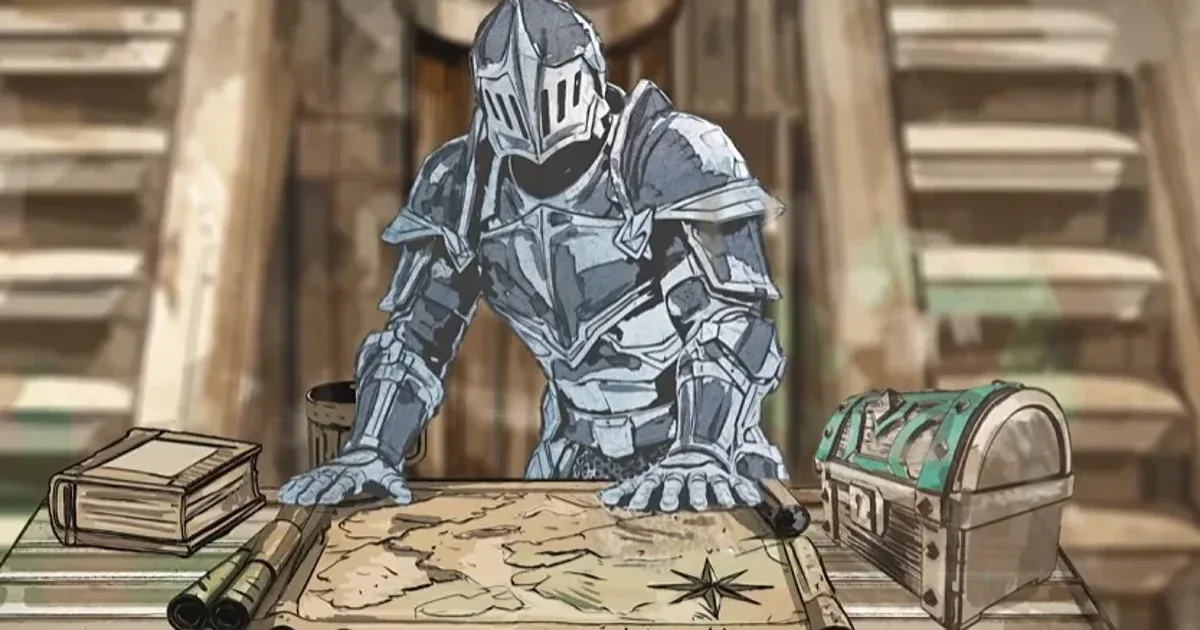

Jagex removed the RuneScape Dragon Slayer II AI trailer after player concerns and says it will overhaul partner reviews while commissioning community creators.
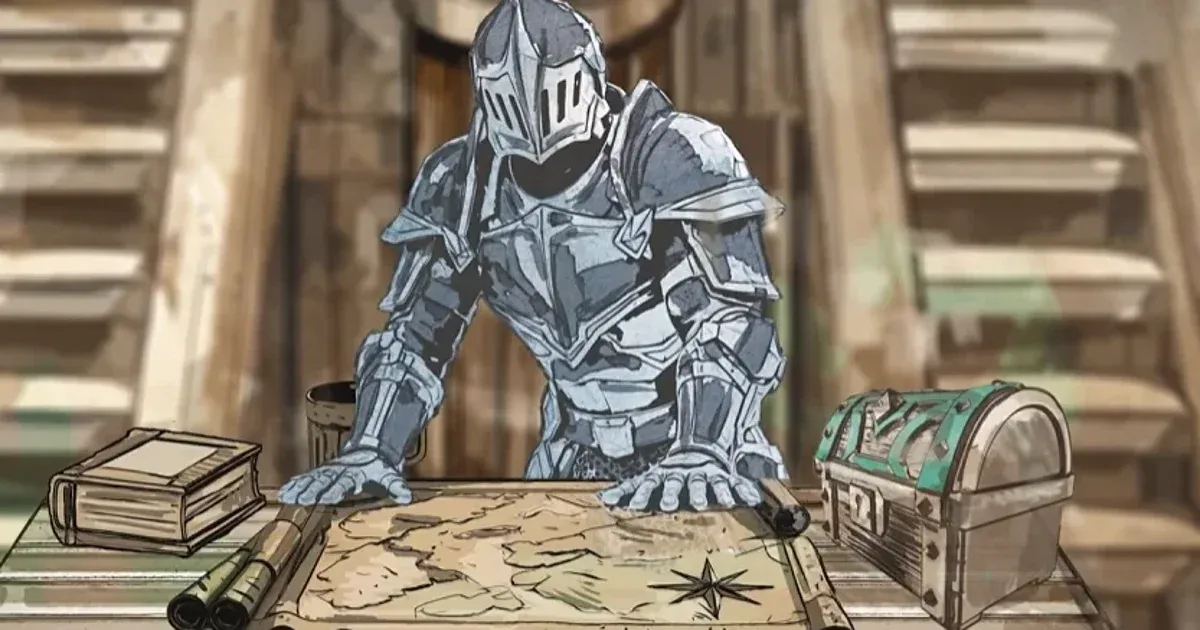
Image: eng.pressbee.net
Jagex pulled the trailer, and the tension is bigger than one bad reveal
Jagex has taken down the Dragon Slayer II trailer shown around RuneFest 2026 after RuneScape players raised concerns that the video appeared to contain generative AI artifacts. According to Jagex’s own Reddit statement, the studio removed the promotional material while it investigates urgently. That is the confirmed development: the RuneScape trailer removed from official channels is no longer being treated as a normal marketing asset, but as evidence of a breakdown in Jagex’s partner approval pipeline.
The studio said the Dragon Slayer II trailer was produced by a “trusted external partner” that had explicitly confirmed generative AI would not be used. Jagex apologized after players highlighted visual errors in the sketch-styled cinematic, including a hand with six fingers. Multiple outlets, including Eurogamer, Kotaku, MMOHuts, PCGamesN, and GamesIndustry.biz, reported the same core sequence of events: the trailer appeared during the RuneFest period, fans flagged details that looked like GenAI tells, and Jagex pulled the video while publicly restating its anti-GenAI policy.
The important caveat is that Jagex has announced an investigation, not a completed finding. The company’s statement acknowledged that the sixth finger was “pretty hard to explain away,” but the public record supplied so far stops short of a published forensic explanation of how the trailer was made. For readers searching the RuneScape Dragon Slayer II AI trailer controversy, that distinction matters. The evidence prompted removal and an apology, while the investigation is still the formal mechanism for determining exactly what happened.
Players spotted the kind of mistakes that instantly break trust
The backlash centered on visible details that players read as generative AI artifacts. Eurogamer reported that the trailer was a cinematic reveal for RuneScape 3’s Dragon Slayer 2 quest, presented in a sketched style, and that players quickly pointed to a six-fingered hand and footwear that looked out of place in a medieval fantasy setting. MMOHuts described the boots as looking more like modern sneakers than medieval gear. GamesIndustry.biz and Eurogamer both noted comparisons to Air Jordans, while Kotaku described one shot as seemingly showing Nikes.
Those are small frame-level details, but in a marketing trailer they are strategically costly. RuneScape’s community is used to scrutinizing quest reveals, item art, and visual language because those assets signal tone, reward fantasy, and respect for the game’s long-running identity. A sixth finger would be a throwaway meme in some contexts. Here, it became the visible contradiction between Jagex’s public stance and an asset carrying the RuneScape brand during its biggest convention window.
That is why the Dragon Slayer II trailer became a trust issue rather than a simple art-quality complaint. Jagex had already been under pressure over generative AI concerns in a separate partner project only days earlier. When a company says it will not use GenAI in creative work, then two partner-linked assets raise concerns in quick succession, players do not only judge the final image. They judge the control system that allowed the image to reach them.
Jagex says the trailer was external, but accepts the process failed
Jagex’s public response tried to separate intent from outcome. In the statement quoted by Kotaku, Eurogamer, PCGamesN, and GamesIndustry.biz, the studio said the trailer came from a trusted external partner that had explicitly confirmed GenAI would not be used. Jagex also said its position is clear: it does not use GenAI to create its games, artwork, or creative assets, and will not knowingly allow it to be used on its behalf.
MMOHuts reported an even broader version of that policy, saying Jagex restated that it does not use generative AI to create its games, artwork, creative assets, marketing materials, merchandising, or partnership work. That broader list is important because this controversy sits squarely in marketing rather than a playable in-game asset. The studio is not only defending the development team’s pipeline. It is defending the entire public surface area of RuneScape.
Jagex’s strongest admission was not that the trailer was made by a partner. It was that partner assurance was not enough. The company said this was the second time in quick succession that generative AI concerns had arisen through partners it trusted, and that the pattern highlighted an issue with its own processes. That phrasing matters. Jagex did not simply point outward and stop there. It said the approval structure itself must be addressed.
The 100 Thieves incident made this a pattern, not an isolated error
The Dragon Slayer II trailer arrived shortly after another AI-related controversy involving an Old School RuneScape collaboration with 100 Thieves. Kotaku reported that Jagex and 100 Thieves had apologized after generative AI use was spotted in a collaborative Old School RuneScape T-shirt design. PCGamesN reported that 100 Thieves said “AI has no place in our apparel design.”
Jagex’s earlier Reddit response to that apparel issue, quoted by Eurogamer, Kotaku, and GamesIndustry.biz, said the company was “as angry as you are” and would not have approved AI use in any designs. Jagex also said it does not use generative AI to replace the artists and developers who make its games, does not use it in marketing materials, and will not use it in merchandising or allow its use in partnerships. The studio framed RuneScape as a product of human craft and creativity.
GamesIndustry.biz added wider context from earlier in the year, when Jagex SVP of product James Dobrowski said the company had “a commitment that no generative AI will ever be present” in any asset a player can touch, hear, or feel. Dobrowski said Jagex was open to AI for tooling efficiency, but did not want AI driving creativity. He also said Jagex was auditing and speaking with external partners to ensure AI was not being used in inappropriate ways that might filter into games or promotional material.
That prior audit claim sharpens the current problem. If Jagex was already having those conversations with partners, the Dragon Slayer II trailer suggests that policy language and partner assurances did not create a reliable enough gate. In strategy terms, the failure point is not the stated rule. It is enforcement at the edge of the production chain, where external agencies, merchandising partners, and marketing collaborators produce assets under time pressure.
The approval overhaul puts RuneScape marketing under heavier scrutiny
Jagex says it will overhaul its review processes immediately following RuneFest. The studio also says it will work with and commission creators from the community to make sure the story of Dragon Slayer II is told to the standard befitting the update. Those are the two concrete changes announced so far: a review-process overhaul and a shift toward community creator involvement for the Dragon Slayer II marketing replacement.
Jagex has not publicly detailed the exact new approval gates, so any prediction about the final process should be treated as interpretation. Still, the practical direction is clear. A partner saying “no GenAI” can no longer be the only control point. If Jagex wants its public policy to survive contact with outsourced production, marketing review likely has to check provenance, source files, revision history, and visual consistency before assets are released. The company has not promised those specific steps in the source material, but the phrase “overhauling our review processes” only has force if it changes the path from partner delivery to public upload.
The community creator piece is also revealing. Rather than only replacing one trailer with another agency asset, Jagex says it will commission people from within the RuneScape community. That is a reputational repair move as much as a creative one. RuneScape players have decades of shared visual memory around the series, and community artists are often closer to the game’s tone than a general-purpose outside vendor. The tradeoff is that community-led or community-adjacent production may require tighter coordination, clearer briefs, and more time. For a live-service MMO with multiple announcements around RuneFest, that may slow marketing cadence, but it can also reduce the risk of another brand-damaging asset slipping through.
What remains unknown for Dragon Slayer II players
For now, the original Dragon Slayer II trailer is gone from official presentation, and Jagex’s investigation is ongoing according to its public statement. The sources provided do not include a new trailer date, a revised marketing schedule, pricing information, platform changes, system requirements, or a confirmed release window for the quest itself. Readers should treat any replacement timing as unannounced unless Jagex publishes it directly.
The safest practical guidance is to wait for Jagex’s official follow-up before using the removed trailer as a reliable source for Dragon Slayer II details. The trailer’s job was to sell the story and tone of the update, but because Jagex pulled it over GenAI concerns, its value as promotional canon is compromised until the studio clarifies what is being replaced and what still reflects the actual quest.
The larger question is whether Jagex can convert this from a public embarrassment into a durable process change. The company has said the right things for a player base that cares deeply about human-made RuneScape art, quests, merch, and marketing. The next test is operational: whether the next Dragon Slayer II trailer arrives with the same anti-GenAI promise backed by review controls strong enough that players are no longer the first quality-assurance pass.