
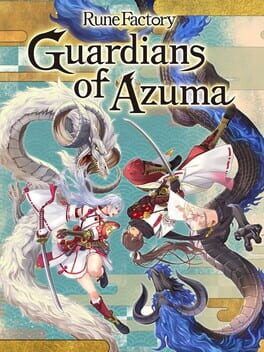

How Guardians of Azuma’s bold new take on Rune Factory, strong Switch 2/PC reception, and a feature-complete PS5 port on February 13, 2026 make it one of next February’s most interesting JRPGs.
Rune Factory: Guardians of Azuma has quietly gone from “interesting spin‑off” to one of 2026’s most talked‑about JRPGs. After debuting on Nintendo Switch, Switch 2, and PC back in June 2025, Marvelous’ farming and dungeon‑crawling hybrid finally lands on PS5 on February 13, 2026, with all post‑launch updates baked in.
For players who skipped the handheld and PC releases, this is the moment Guardians of Azuma graduates from platform curiosity to a full‑blown PS5 contender, arriving in the middle of one of the busiest JRPG months Sony’s system has seen.
A New Rune Factory In More Than Just Name
Guardians of Azuma is pitched as a “bold reimagining” of Rune Factory rather than a simple sequel. Instead of another sleepy Western‑style frontier town, the story shifts to the eastern land of Azuma, shattered by the Celestial Collapse. A catastrophic impact broke the continent apart, sending landmasses into the sky and sea while the mystical runes that sustained life dried up.
That setup gives the game a more urgent, overarching narrative than most past entries. You play as an Earth Dancer, a martial artist who channels elemental powers through dance‑like movements in combat. Previous Rune Factory titles framed combat as simple action RPG skirmishes that broke up days of tending crops and chatting with villagers. Guardians of Azuma makes combat and exploration feel central, with the whole loop framed around pushing back the Blight that is corrupting both monsters and the environment.
The result is a much stronger sense of progression than usual. Reclaiming corrupted zones, rebuilding shrines, and restoring nature are baked into the main story, not just side content. The eastern fantasy aesthetic also helps Guardians of Azuma stand apart from predecessors, with shrines, floating isles, and terraced fields replacing the more pastoral European‑style towns of earlier games.
Farming With A Purpose
Rune Factory has always lived where farming sims and action RPGs intersect, but Guardians of Azuma tightens the connection between those halves rather than letting farming exist as a cozy distraction.
Fields are scattered across Azuma’s fragmented regions instead of sitting as a single homestead. Each reclaimed plot contributes specific resources needed to purify nearby Blight, unlock new dungeons, or stabilize floating islands. Rotating crops becomes less of a min‑max puzzle and more about supporting your next expedition, since certain plants power up Earth Dancer abilities or provide key materials for defensive gear.
Village rebuilding goes beyond placing a few buildings. You help resettle refugee villagers in broken hamlets, restoring services that then feed directly into your adventuring. Blacksmiths forge talismans and martial gear tailored to your combat style, while shrines reward offerings with permanent buffs or new movement options in dungeons. The loop of “clear a zone, make it livable, unlock new tools to clear the next zone” gives Guardians of Azuma a forward thrust previous games sometimes lacked.
Social systems are still here, of course. You can befriend and romance residents, take on their personal quests, and slowly mend communities traumatized by the Collapse. Where older games often leaned heavily on the dating‑sim side, Guardians of Azuma uses its relationship arcs to reflect the world’s recovery as a whole, tying emotional payoffs to the broader theme of healing the land.
Faster, Flashier Dungeon Crawling
Guardians of Azuma’s dungeons and combat are where the series’ “bold reimagining” is most obvious. Movement is snappier, and the Earth Dancer toolkit brings light character‑action flavor to what used to be fairly simple hack‑and‑slash encounters.
Different stances and rune arts let you weave together martial arts blows with wind‑dashes, stone‑guard counters, and wide elemental finishers. The Switch 2 and PC versions were praised for how fluid the combat felt compared to prior Rune Factory games, with reviews highlighting its “slick” action from the outset. Enemy designs also lean into the corrupted‑nature theme, with familiar farm monsters twisted by the Blight into larger, more aggressive variants that demand pattern recognition and timely dodges rather than pure stat checks.
Crucially, dungeons feel more authored. Floating shards of Azuma link together zones that mix combat arenas with light environmental puzzles, platforming segments, and shortcuts you unlock as you cleanse each area. That structure gives Guardians of Azuma a more modern action RPG flavor compared to the simple, floor‑by‑floor layouts earlier fans might remember.
Co‑op And Online Features
Guardians of Azuma remains primarily a single‑player life‑sim and action RPG. The Switch 2, Switch, and PC releases focused squarely on a solo experience, and the PS5 port follows suit. There is no full online co‑op campaign or shared farm mode in the vein of some modern farming sims.
Instead, the game leans on lighter online hooks. There are online rankings and optional challenge missions that compare completion times or efficiency, plus periodic limited‑time requests delivered via in‑game notices that encourage players to tackle specific dungeons or crop goals during an event window. These were rolled out as free updates on Switch and PC and will be folded into the PS5 version at launch.
The absence of full co‑op might disappoint some players who hoped the series’ move to more action‑heavy combat signaled a multiplayer shift, but Guardians of Azuma is very much about carving out your own story in a recovering land rather than sharing a single save file.
How It Was Received On Switch 2 And PC
When Rune Factory: Guardians of Azuma launched on Switch, Switch 2, and PC in June 2025, it arrived with a fair bit of skepticism. Longtime fans were wary of the heavier action focus and new setting, while newcomers had a crowded slate of JRPGs vying for attention around the Nintendo Switch 2’s debut.
The game quickly justified its experiment. Review aggregates have settled in the low 80s, with outlets regularly citing its satisfying day‑night rhythm and much more kinetic combat. Push Square refers to it as a “highly rated” Switch 2 RPG, while sites like RPG Site and Game8 have praised how the village‑rebuilding loop keeps both halves of the gameplay engaged instead of letting farming or dungeon crawling drift into busywork.
Players have been especially positive about the Switch 2 version when played docked, thanks to its sharper resolution and steadier performance compared to the base Switch release. On PC, Guardians of Azuma has become a favorite on handheld PCs and the Steam Deck OLED, where its colorful art style sings on a good panel and, with some settings tweaks, largely hits its 60 frames per second target.
The biggest points of criticism have tended to land on late‑game pacing and occasional frame dips on portable hardware, but overall impressions settled on Guardians of Azuma being the freshest and most confident Rune Factory entry since the series’ early days.
From Switch Exclusive To Feature‑Complete PS5 Port
Marvelous has now confirmed what age ratings and leaked Trophy lists already hinted at: Rune Factory: Guardians of Azuma is coming to PS5 on February 13, 2026. The port includes every free update released on Nintendo and PC platforms from day one. That means launch‑day PS5 buyers get access to all balance patches, extra sidequests, event requests, cosmetic outfits, and crossover DLC that were rolled out over the months following the original release.
It also resolves one of the biggest frustrations from the game’s debut. Many JRPG fans on PlayStation watched the Switch and PC launch from the sidelines in 2025, assuming a timed exclusivity window but never getting a firm confirmation. Now that the date is locked in, PS5 players effectively receive the “definitive” version of Guardians of Azuma, with content parity and a more mature patch history baked in.
Marvelous has also confirmed a physical PS5 edition, which will be available at retail. For collectors who associate Rune Factory with shelves of Nintendo cartridges, the chance to line up a PS5 case alongside other 2026 JRPG heavyweights is a subtle but meaningful bonus.
Performance And Visuals On Current‑Gen Hardware
While final PS5 performance details are still to be fully broken down, there is a lot we can infer from how Rune Factory: Guardians of Azuma has already scaled between base Switch, Switch 2, and PC.
The game uses a bright, stylized look rather than chasing photorealism, with painterly textures and strong color saturation defining Azuma’s floating islands and terraced fields. On Switch 2, docked play already pushes higher resolutions and smoother edges over the base Switch, though handheld mode can exhibit variable frame rates in effects‑heavy areas. PC versions, when tuned properly, generally hit 60 frames per second, even on modest GPUs.
On PS5, that art direction should translate into a crisp presentation without pushing the hardware to its limits. Expect a native 4K‑targeted image for quality mode, with a strong anti‑aliasing solution that keeps character outlines and foliage clean, alongside a performance mode that locks the action at or near 60 frames per second. Given how central responsive combat is to the Earth Dancer playstyle, that performance mode is likely to be the go‑to for many players.
Loading is another area where PS5 is set to benefit. The fragmented world of Azuma involves hopping between floating landmasses and shifting dungeons, which on older hardware occasionally brought noticeable transitions. The PS5’s SSD should make zone transitions feel near‑instant, smoothing out the daily rhythm of bouncing from fields to town to dungeons without the brief pauses found on Switch.
Even without a radical visual overhaul, higher‑fidelity lighting, texture filtering, and more stable shadows should give Azuma a subtly richer look. Character portraits and UI elements, already sharp on PC, will benefit from 4K output, while DualSense haptics have room to add flavor, from the rumble of earth‑shaking rune arts to the patter of rain across your fields.
Another Giant JRPG In The Busiest Month Yet
February 2026 is shaping up to be relentless for PS5 owners. Guardians of Azuma’s February 13 slot drops it amidst a cluster of heavyweight JRPG and action titles, from new mainline epics to long‑awaited remasters. In that crowd, Marvelous’ game stands out by occupying a slightly different niche.
Rather than demanding 80 hours of straight dungeon runs, Rune Factory: Guardians of Azuma offers a life‑sim cadence. You dip in for in‑game weeks at a time, balancing dungeon pushes with relaxed farm work and village errands. That makes it an ideal “second game” for the month, the title you unwind with between boss marathons in the bigger, darker RPGs headlining the calendar.
The Switch and PC versions have already proven that Guardians of Azuma is more than a comfort‑food spin‑off. Its eastern fantasy setting, refined combat, and more deliberately structured dungeons give it a distinct identity within the Rune Factory lineage. Bringing that complete package to PS5, fully updated and running on far stronger hardware, all but guarantees it a spot in the conversation when players look back at which JRPGs defined 2026.
If you skipped the Switch 2 and PC versions or have been waiting for a console with trophies, faster loading, and a big TV to do Azuma’s landscapes justice, February 13 might be the perfect time to finally become an Earth Dancer.