

Limited Run’s six‑game Rugrats collection is more than a nostalgia play, it is another test case for how 90s licensed games can be preserved, fixed up, and reintroduced to a new audience.
Rugrats: Retro Rewind isn’t just a cute excuse to put Tommy and Chuckie on a box again. It is the latest sign that Limited Run Games has found a real niche in treating 90s licensed games as something worth preserving, curating and gently modernizing, instead of leaving them trapped on aging discs and carts.
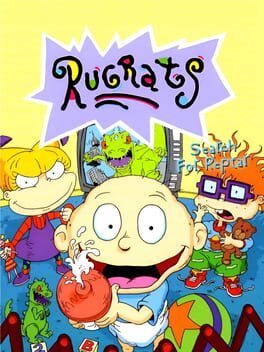
The collection, launching digitally on May 15, 2026, bundles six Rugrats titles that originally sprawled across PlayStation, Nintendo 64, Game Boy, Game Boy Color and Game Boy Advance. At its core is Rugrats: Search for Reptar, the 1998 PS1 platformer that many kids of the era remember as their first 3D "open" cartoon world. Around it, Limited Run has wrapped five more games pulled from the show’s peak years to form a snapshot of how licensed platformers and tie-ins actually played in the late 90s.
Retro Rewind includes Search for Reptar, Rugrats: Studio Tour and Rugrats in Paris to represent the console side, along with handheld entries The Rugrats Movie, Rugrats: Time Travelers and Rugrats: Castle Capers. That spread matters. It shows how the same license was interpreted across wildly different hardware, from chunky 3D collectathons to side-scrolling adventures that had to squeeze the cast into a Game Boy Color screen.
On original hardware a lot of these games were clunky, inconsistent and often locked behind practical hurdles. You needed a memory card that still worked, a TV that still accepted composite, cartridges whose save batteries had not died and a tolerance for lives systems that could bounce you back to the title screen for a single mistake. Retro Rewind’s most important contribution is how it strips away those barriers with quality-of-life options like save states and a built-in rewind feature.
Save-anywhere support quietly transforms this kind of collection. Search for Reptar’s big house hub and episode-inspired levels become less of an endurance run and more something you can dip into for ten minutes, grab a puzzle piece and hop out again. A portable-focused title like Castle Capers, made for short sessions on GBA, finally behaves that way on a living room console, without demanding long stretches to find a password or reach a scarce save point.
Rewind belongs in the same category of modern patchwork that has kept classic platformers alive. Anyone who grew up wrestling with fixed-camera 3D platformers on PS1 will instantly understand the appeal of being able to roll back a missed jump or camera-induced fall. For younger players whose first point of reference might be something like Spyro Reignited or more recent 3D platformers, it can be the difference between trying these games at all or bouncing off their rough edges.
Screen filters and a music player might look like minor extras on the feature list, but they speak directly to how Limited Run is pitching this as a time-capsule. Filters let you lean into the PS1 fuzz or sharpen the image for modern displays without losing the original art, while a dedicated soundtrack player pulls composer work out of the background so it can be appreciated on its own. That is a more archival mindset than most licensed game tie-ins ever received in their day.
The timing of Retro Rewind also lines up with Limited Run’s broader strategy. The publisher has been steadily reclaiming 90s and early 2000s licensed fare, packaging it for Nintendo Switch, current PlayStation systems and other modern hardware. Rugrats sits in the same mental space as the company’s work on other Nickelodeon properties and cult cartoon games, treating them as part of gaming history rather than disposable promo items.
By selecting one standout title in Search for Reptar and surrounding it with its handheld and sequel offshoots, Retro Rewind effectively becomes a mini-museum for how a hit kids’ show moved across formats. There is the show-episode structure and kid-height perspective of Search for Reptar, the more standard mascot platforming feel in Castle Capers, and the way the movie tie-in entries tried to track film plots within the strict limits of Game Boy cartridges.
The real test will be whether people come to this collection purely to relive a childhood rental or whether a new audience finds something worth exploring in a bundle of unpolished, very specific 90s design. Features like rewind and save states give the games a chance to speak for themselves without their worst friction points getting in the way.
If Retro Rewind works, it strengthens the case for more licensed compilations treated with the same care. The Rugrats games are not timeless in the way of a first-party platformer, but they capture a particular moment when Saturday morning cartoons, VHS movies and videogames all fed into each other. Preserving that loop, rather than letting it disappear into collector-only obscurity, might be the most important thing this collection does.
Rugrats: Retro Rewind arrives digitally on May 15, 2026, with Limited Run planning standard and deluxe physical editions afterward, and it continues the slow, welcome shift in how the industry values its licensed past: as history worth replaying, not just old marketing spend.