
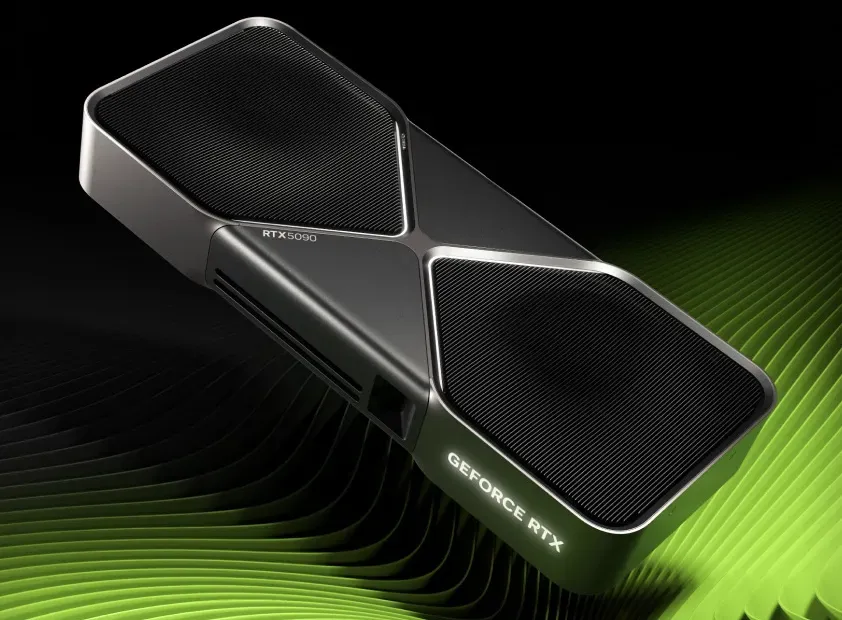

Nvidia says RTX 5090 production has not ended, but official availability remains thin. Here is what the statement does and does not solve for high-end PC upgrades.
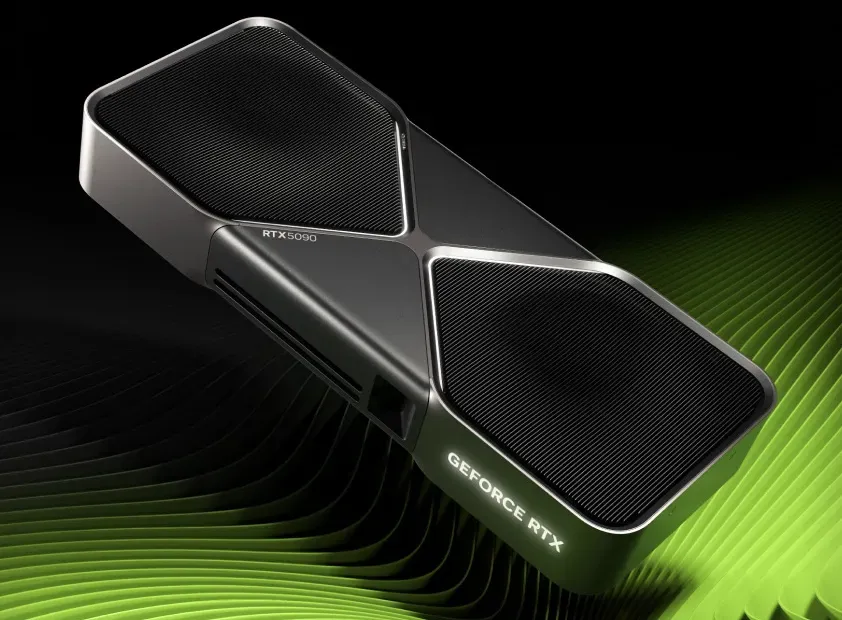
Image: archyde.com
Nvidia denies the RTX 5090 is dead, but the buying problem remains
Nvidia’s clearest public position is now on the record: the GeForce RTX 5090 has not been discontinued. According to reports from 4Gamers cited by VideoCardz, Nvidia Senior Vice President Jeff Fisher addressed the issue at the RTX Spark Launch Party in Taipei and said the card remains in production and will continue shipping, while also acknowledging that production capacity is constrained.
That statement settles one narrow question and leaves the larger RTX 5090 supply problem intact. Nvidia is denying a production halt, but buyers are still seeing the flagship card disappear from places where a flagship product would normally be visible and purchasable. PC Gamer reported that the RTX 5090 had vanished from Nvidia’s official marketplace. Shattered, citing Guru3D’s tracking of the story, noted the split between Nvidia’s GeForce 50-series product page, where the RTX 5090 remained listed, and Nvidia’s own store, where it was unavailable for direct purchase.
For PC players planning a high-end build, that distinction is the whole story. Nvidia RTX 5090 production continuing does not mean normal RTX 5090 availability. It means the card is still part of Nvidia’s product plan, while the retail layer remains too thin to serve demand at predictable prices.
What Nvidia actually confirmed in Taipei
The strongest sourced detail comes from Fisher’s Taipei comments. VideoCardz published a translated version of his remarks, in which Fisher said the supply chain, or production capacity, is “somewhat constrained,” and that Nvidia is doing what it can to bring products to market. He also said that although there are other variants of the RTX 5090 chip, the card “has certainly not been discontinued” and Nvidia will continue shipping it.
Egamers reported the same core position: Nvidia denied reports that production of its top graphics card had ended, while admitting that supply remains limited. Shattered dated Fisher’s interview to October 16, 2026, and described it as Nvidia’s most direct response after weeks of speculation that the $1,999 GPU was approaching end-of-life status.
The important qualifier is that none of the cited reports say Nvidia provided shipment numbers, regional allocation details, or a timeline for when RTX 5090 stock will normalize. Egamers specifically noted that Nvidia did not explain how long supply would stay constrained. VideoCardz also emphasized that Fisher did not provide future shipment volumes or clarify how many GB202 GPUs would remain allocated to GeForce products.
So the confirmed fact is limited but meaningful: Nvidia says the RTX 5090 is still being made and shipped. The unconfirmed part is the part buyers most need, which is how many cards will reach consumer channels, when they will arrive, and whether the $1,999 suggested price will be realistic outside rare drops.
Why the card can be alive and still vanish from the store
The apparent contradiction between Nvidia’s production statement and the missing store presence is less strange when treated like a supply-chain problem instead of a simple yes-or-no product status question. A product can remain in production while being absent from direct retail if inventory is too scarce, if batches are being allocated elsewhere, or if available units are moving through board partners and retailers rather than Nvidia’s own storefront.
The sources support the first part clearly. Egamers reported that Nvidia acknowledged supply-chain difficulty and that retailer listings keep showing out of stock because stock is thin. PC Gamer’s framing adds the second pressure point: even after Nvidia denied the RTX 5090 was dead, the card had “mysteriously vanished” from the company’s official marketplace. Tom’s Hardware also reported that the RTX 5090 disappeared from Nvidia’s marketplace amid reports of a production halt, with its headline noting that stock had vanished.
That does not prove discontinuation. If anything, Nvidia’s response is an attempt to separate absence from end-of-life status. But the store-page behavior explains why the rumor had traction. In PC hardware, a flagship GPU remaining on a product page while direct purchase options disappear is exactly the kind of pattern that enthusiasts read as a signal. Nvidia has now said that signal should not be interpreted as death, but it has not replaced it with a clean availability roadmap.
There is also a business tension around the chip itself. The earlier rumor, as summarized by Egamers, claimed that Nvidia would halt production of the RTX 5090 and the China-specific RTX 5090 D so chips could be diverted to professional graphics cards and AI systems. Nvidia has denied the shutdown portion. Separately, TweakTown reported that Nvidia is prioritizing some GB202 production for RTX Pro GPUs while still working to keep the RTX 5090 on the market. That is not the same as saying every GeForce chip is being redirected, but it does explain why PC gamers are sensitive to allocation decisions in a market where AI and professional hardware can compete for the same high-end silicon.
The rumor cycle came from a real market signal
This was not a random forum panic. VideoCardz reported that earlier claims came from multiple hardware sources, including two established leakers, BenchLife, and PC Games Hardware sources across retail, distribution, and Nvidia’s manufacturing partner network. Those reports claimed, in different forms, that new allocations of GB202 GPUs for the GeForce flagship had stopped or that RTX 5090 production was ending.
Nvidia’s Taipei statement directly disputes the conclusion that the RTX 5090 has been discontinued. It does not fully explain why so many supply-chain watchers and retail observers saw the same direction at roughly the same time. VideoCardz raised that tension directly, saying it was difficult to dismiss all those reports as a misunderstanding and noting that Nvidia had not explained why sources had received similar information.
A careful reading leaves three categories. Confirmed: Nvidia says the RTX 5090 remains in production and will keep shipping. Also confirmed through multiple outlet reports: supply is constrained and official availability is weak. Unconfirmed: that Nvidia had fully ended production, reversed an internal plan after negative coverage, or permanently diverted GeForce-bound GB202 chips away from RTX 5090 cards.
For buyers, the practical risk is not whether the label “discontinued” applies today. The risk is opportunity cost. If you build a system around an expected RTX 5090 purchase and the card only appears in tiny waves, your budget, case choice, power planning, monitor purchase, and resale timing for an older GPU all get dragged into an availability game with no posted end date.
Price is the pressure point Nvidia did not solve
The RTX 5090’s official suggested price is reported as $1,999 by Shattered and VideoCardz, but the current stock situation makes that number feel less like a normal checkout price and more like a reference line. VideoCardz’s coverage framed the issue bluntly: Nvidia says the card is not discontinued, but finding one for $1,999 is another matter.
Nvidia’s statement, at least as reported in the provided sources, focuses on production status and continued shipments. It does not address whether enough cards will reach retail to keep market pricing near the suggested level. That omission matters because scarcity changes the effective price of a high-end upgrade. The purchase is no longer only about performance per dollar. It becomes a timing decision, a tolerance-for-markup decision, and a risk-management decision.
From a strategy perspective, this is similar to playing a late-game economy with an unstable resource node. The strongest unit is technically available, but if the spawn rate is low and the auction price is inflated, forcing the buy can damage the rest of the build. A flagship GPU can anchor a premium PC, but it can also consume money that would otherwise go into a better display, storage, cooling, power supply, or simply a less stressful upgrade path.
The buyer trap is treating Nvidia’s denial as a green light to pay any price. The statement reduces the fear that today’s cards are the final cards forever. It does not guarantee near-term RTX 5090 stock at MSRP. Until Nvidia or retailers provide clearer availability, the $1,999 figure should be treated as the price to wait for, not a promise that every serious buyer can actually access it.
How high-end PC players should approach an upgrade now
If you are planning a high-end gaming PC around the RTX 5090, the most defensible plan is patience with hard rules. Nvidia says shipments will continue, so there is no sourced reason to assume every future chance is gone. At the same time, the company has admitted supply constraints and has not given a recovery window, so there is also no sourced reason to plan around easy near-term availability.
Set a maximum price before you start hunting. If the goal is a rational high-end build, use the reported $1,999 suggested price as the reference point and decide how much of a premium, if any, is acceptable. If a listing clears that ceiling, walk away. Scarcity makes emotional buying easy, especially when official marketplace visibility is inconsistent, but Nvidia’s own position says more shipments are coming.
Do not dismantle a working PC around a card you do not have in hand. Because RTX 5090 availability remains unreliable, the safest upgrade order is to secure the GPU first, then finalize the rest of the build around the actual model’s size, power requirements, and cooling needs. The provided sources do not include board-specific dimensions or power details, so those decisions should be made from the exact manufacturer listing once a card is available.
Watch official and major retailer channels, but treat “listed” and “available” as different states. The current story exists because the RTX 5090 can remain part of Nvidia’s product family while still being absent from direct purchase. A product page alone is not stock. A rumor alone is not discontinuation. A retailer placeholder is not a buyable card.
If your current GPU can still meet your target games and settings, waiting is the cleaner play. If you need a system immediately for work or play, build around what is actually in stock at a price you can defend. Nvidia’s statement improves confidence that the RTX 5090 has not exited the market, but it does not remove the supply risk from an upgrade plan today.
The open questions Nvidia still needs to answer
The next useful update will not be another denial. It will be numbers, dates, or allocation guidance. Buyers need to know whether RTX 5090 stock is expected to improve in weeks, months, or only through sporadic drops. Retailers need enough visibility to stop product pages from looking like end-of-life breadcrumbs. Nvidia has answered the discontinuation rumor, but not the availability problem that made the rumor believable.
There are also unanswered questions around variants. Fisher’s translated comment, as published by VideoCardz, acknowledged that there are other variants of the RTX 5090 chip while saying the RTX 5090 itself has not been discontinued. Egamers noted that Nvidia did not provide more detail on the card’s various versions. That leaves room for continued confusion around which models, regions, or partner cards will receive supply first.
For now, the cleanest reading is this: RTX 5090 supply remains tight, Nvidia RTX 5090 production continues, RTX 5090 stock is inconsistent across official and retail channels, and RTX 5090 availability has no confirmed normalization date. That is better than a confirmed cancellation, but it is not a normal buying environment.
Players planning a premium upgrade should behave accordingly. Track stock, avoid panic markups, and keep the rest of the build flexible until the card is secured. In a constrained market, the winning move is not being first at any cost. It is keeping enough budget and patience to avoid letting a scarce GPU dictate the entire system on bad terms.