
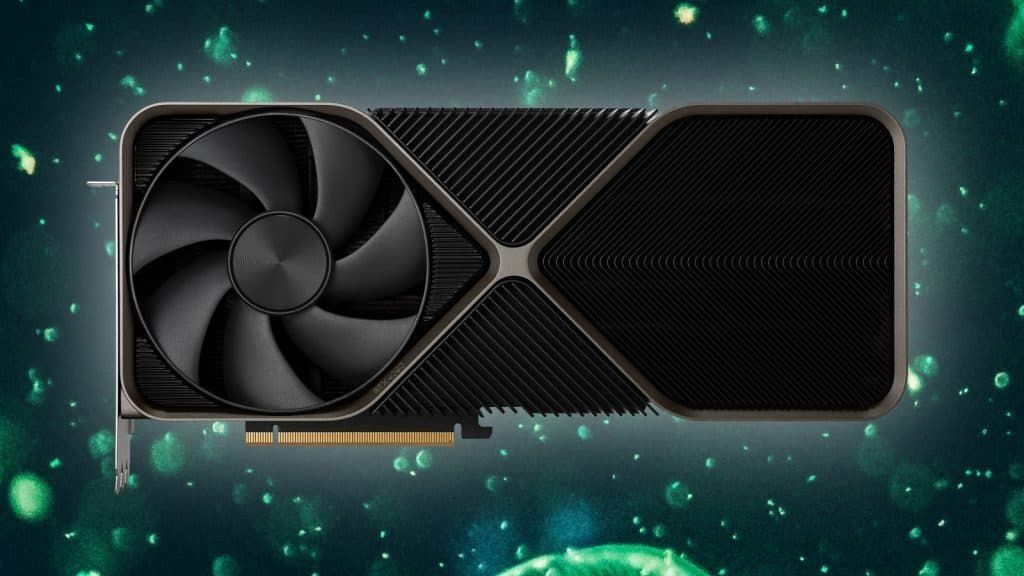

Nvidia has not confirmed the reported RTX 5090 production stop, but multiple hardware rumor reports point to GB202 silicon shifting toward RTX Pro cards, with availability and prices already under pressure.
Image: dexerto.com
The RTX 5090 rumor lands in a market already acting like supply is gone
The strongest concrete development is also the one PC gamers can see without a factory memo: the RTX 5090 is already extremely difficult to buy at anything close to its launch price. Video Games Chronicle reports that Nvidia introduced the RTX 5090 in January 2025 at $1,999, but says current street prices have climbed into the $4,000 to $5,000 range or higher as retailers sell through new stock quickly. Tech Insider, citing the current US retail picture, goes further and says the card has vanished from first-party US retail shelves while some third-party sellers are asking as much as $9,500.
That retail reality now sits under a new Nvidia RTX 5090 rumor. Hardware leakers MEGAsizeGPU and hongxing2020 have claimed, according to VideoCardz, VGC, Tom’s Hardware coverage cited by VGC, and Tech Insider, that Nvidia is ending or winding down RTX 5090 production and redirecting future GB202 GPU supply to RTX Pro professional cards. VideoCardz tags its report as a rumor and states clearly that Nvidia has not confirmed the plan or announced an end-of-production date.
That distinction matters. “RTX 5090 production stopped” is the phrase spreading across hardware circles, but the confirmed facts are narrower. Nvidia has not issued a discontinuation notice in the provided source material. Nvidia has not confirmed that GeForce RTX 5090 cards are end-of-life. Nvidia has not announced the rumored RTX 5080 24GB that some reports say could become the new top GeForce card. What is confirmed by the reporting is that several hardware rumor sources are pointing in the same direction, and that the buying market already looks stressed enough that a production stop would not feel abstract to anyone trying to upgrade.
GB202 is the strategic square everyone is fighting over
The useful way to read this story is as a silicon allocation problem. VideoCardz identifies GB202 as Nvidia’s largest Blackwell desktop GPU. The RTX 5090 uses a cut-down GB202 configuration with 21,760 CUDA cores and 32GB of GDDR7 memory, while the RTX Pro 6000 Blackwell series uses the same GPU family with 24,064 CUDA cores and 96GB of GDDR7 memory. VideoCardz also says Nvidia uses GB202 in the RTX Pro 5000 series.
That overlap is the core tension. A chip that can be sold into a gaming flagship can also be sold into workstation and AI-adjacent professional products. Tech Insider cites pricing that puts RTX Pro 6000 Blackwell at roughly $16,000, compared with the RTX 5090’s reported $1,999 launch price. VGC frames the business logic through AI demand: high-powered GPUs are useful for the parallel processing work behind neural networks, and AI companies have been buying powerful cards that gamers would otherwise want for games.
Tom’s Hardware, as relayed by VGC, offers one theory for the move: if Nvidia removes the RTX 5090 from production, AI data centers cannot buy the cheaper GeForce version to save money and must instead buy the more expensive RTX Pro cards. That is analysis, not an Nvidia statement. But it fits the incentive map. If the same scarce class of silicon can feed a consumer card with a lower list price or a professional card with far higher revenue per unit, the pressure on gaming supply is obvious.
Availability could tighten even if the rumor takes time to prove
A formal end-of-production announcement is not the only event that can change RTX 5090 availability. If board partners and retailers believe new GB202 allocation for GeForce cards is ending, the remaining channel stock becomes more valuable immediately. That is how a supply rumor can behave like a supply shock before Nvidia confirms anything.
VGC says retailers sell out quickly when RTX 5090 stock appears. Tech Insider says the practical question for shoppers has shifted from whether prices are high to whether the card is being phased out altogether. VideoCardz reports that the rumored shift would affect the standard RTX 5090 and its China-specific variants, since they use the same GPU family. If accurate, this would mean the RTX 5090 market increasingly depends on existing inventory, previously allocated board partner stock, and resale listings rather than a continuing flow of new GB202-based GeForce production.
There is still room for uncertainty. The source material does not include Nvidia guidance on remaining inventory, partner shipments, regional allocation, or a last-buy window. It also does not establish whether every RTX 5090 model would disappear at the same pace. A high-end GPU can appear “gone” in one region and intermittently available in another. That is why the most reliable short-term signal for buyers is actual retailer behavior: restock frequency, price movement, seller quality, and whether listings are sold by major retailers or third-party marketplace accounts.
RTX 5090 price pressure now has two engines: scarcity and AI demand
The RTX 5090 price story is no longer a simple enthusiast tax. VGC reports that the card launched at $1,999 and now sees street prices around $4,000 to $5,000 or above. Tech Insider reports third-party asking prices up to $9,500. Those figures are not identical, but they do not conflict so much as describe different slices of a distorted market: active street pricing in one report, extreme marketplace asking prices in another.
If the production rumor is true, scarcity becomes the second engine alongside AI demand. AI buyers already have an incentive to acquire powerful GPUs when professional hardware is more expensive or harder to source. Gamers and creators, meanwhile, have an incentive to buy before the last stock disappears. Resellers then have the cleanest incentive of all: hold inventory and test the ceiling.
For PC gamers, the danger is paying a future-proofing premium on a card whose price is being set by non-gaming demand. That matters because the utility calculation changes. A $1,999 flagship can be a luxury upgrade for players chasing uncompromised 4K performance, heavy ray tracing, or long ownership cycles. A $4,000 to $5,000 card is a very different proposition. At $9,500 marketplace asks, the card has drifted into collector, professional, or speculative territory for most gaming buyers, regardless of how strong it is.
The rumored RTX 5080 24GB is not a confirmed escape route yet
Several reports tie the alleged RTX 5090 wind-down to a possible RTX 5080 24GB. VideoCardz says hongxing2020 claimed Nvidia notified a factory that the RTX 5090 would end and that a 24GB RTX 5080 would replace the current 16GB version as the highest-end GeForce card. Tech Insider also reports that the same alleged notice refers to the RTX 5080 24GB and says the current RTX 5080 16GB would be discontinued. VideoCardz adds an important caveat: MEGAsizeGPU has not confirmed that part of the story.
Nvidia has not confirmed the RTX 5080 24GB, its specifications, price, launch timing, or positioning in the provided source material. That leaves buyers with a familiar hardware-market trap. Waiting could avoid paying a panic price for the RTX 5090. Waiting could also leave a buyer stuck with no 5090 supply and no confirmed 5080 24GB launch to move to.
If the rumored card exists, the extra memory would make it more credible as a top GeForce option than the current 16GB RTX 5080 for some high-end users. But memory capacity alone does not define flagship performance. The provided sources do not establish its CUDA core count, bus configuration, performance target, power draw, or MSRP. Until Nvidia publishes those details, the RTX 5080 24GB should be treated as a possible replacement strategy, not a confirmed upgrade path.
The upgrade strategy for PC gamers is now about risk management
For anyone waiting to upgrade, the cleanest advice is to separate need from fear. If you need a GPU now for work or gaming and can only find an RTX 5090 at multiples of MSRP, the current reports argue for caution rather than urgency. Paying $4,000 or more for a GeForce card only makes sense if the card’s value to you is immediate and measurable, because the price is being shaped by scarcity, AI demand, and rumor momentum rather than a normal consumer launch curve.
If you already own a strong high-end card, the rational play is patience. PC Gamer’s framing around the RTX 4090’s fourth anniversary underlines how unusually long a previous flagship can remain relevant in enthusiast discussions, even as the RTX 5090 rumor cycle builds. The provided sources do not give fresh performance comparisons, so this is not a claim that older cards match the 5090. It is a strategy point: if your current setup still handles the games you play, waiting for Nvidia confirmation or a verified next GeForce launch reduces the chance of buying into a peak-price market.
If you are set on the RTX 5090 specifically, the safest approach is to buy only from reputable retailers, watch for actual shipped-and-sold-by listings, and treat marketplace prices as signals of scarcity rather than fair value. The risk is not only overpaying. In a hot GPU market, counterfeit, misrepresented, or warranty-complicated listings become more tempting to bad sellers. The source material does not document a specific RTX 5090 fraud wave, but any supply drought pushes buyers toward less protected channels.
The bigger strategic read is that the GeForce flagship may no longer be insulated from the AI hardware economy. If GB202 supply is being steered toward RTX Pro, the top of the gaming GPU stack becomes less predictable, even for buyers with the budget to participate. That does not mean a gaming GPU shortage across every tier is guaranteed from these reports alone. It does mean the RTX 5090 availability problem is unlikely to be solved by gamers simply waiting for the next routine restock.
What remains unanswered before this becomes an official end-of-life story
The central unanswered question is still Nvidia’s own position. The company has not confirmed the reported RTX 5090 production stopped claim, has not announced RTX 5090 end-of-life status, and has not confirmed that all future GB202 supply is RTX Pro exclusive. Until that changes, this remains an unconfirmed production rumor supported by multiple hardware leaker reports and reinforced by a brutal retail market.
The next confirmations to watch are concrete rather than social. Nvidia could update its GeForce product listings, brief partners, announce or deny an end-of-production plan, reveal an RTX 5080 24GB, or leave the market to communicate through absence. Retailers could also show the answer indirectly if RTX 5090 restocks become rarer, prices keep rising, and listings consolidate around third-party sellers.
For PC gamers, the decision tree is uncomfortable but clear. Do not treat the RTX 5090 as a normal flagship sitting between launch and discount season. Treat it as a scarce high-end part caught between gaming demand and far richer professional demand. Until Nvidia says otherwise, the production-stop report is a rumor. The availability and RTX 5090 price problem, however, is already real.