
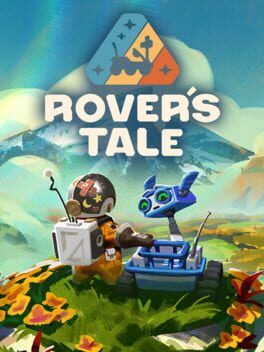

Hands-on impressions roadmap and what to watch in the Rover’s Tale demo and upcoming beta, from its dog-centric hook to its ecosystem-driven creature collecting.
Rover’s Tale starts with a question that is equal parts silly and disarming: what if not all dogs go to heaven, because some of them go to space instead?
In Observer Interactive’s creature-collecting metroidvania, dogs live on as LAIKA Space Rovers, mechanical bodies housing the memories and personality of someone’s beloved pet. When a strange anomaly pings on the scanners above the remote planet Terra II, one of these dormant rovers boots back up and pads out into a world that is at once alien and faintly familiar. That mix of wholesome premise and eerie mystery is the core of Rover’s Tale, and the new Future Games Show trailer, Steam demo and beta sign-ups finally let us see how it plays.
Below the adorable pitch of “dogs in space” sits something a little stranger, closer to Dredge’s unsettling undercurrent and WALL‑E’s lonely optimism. The question for anyone eyeing the demo and upcoming beta is whether Rover’s Tale can use that tone, its ecosystem-driven design and its pet‑roidvania structure to stand out in a very crowded indie field.
A cosy sci-fi about letting go
Rover’s Tale is very openly a love letter to pets. The lead rover you control is inspired by a real dog, and the LAIKA program that keeps canine minds alive in robotic shells is pitched like a desperate, slightly unsettling form of grief management. People can upload their dying dog into a LAIKA Rover, sending them off to work among the stars rather than saying goodbye.
On Terra II, that premise plays out as a gentle, mostly non-violent adventure. You team up with a human explorer who serves as your anchor back to the LAIKA program, and the pair of you push deeper into the planet’s biomes looking for the source of the anomaly. The writing and trailers lean on soft humour and earnestness more than snark. Expect scene-setting about memory, loss and companionship, rather than grim twists or cynical reveals.
If the game nails this tone, Terra II should feel like a place where adorable robo-dogs and strange wildlife coexist in a way that is comforting first and melancholy second. That balance will be one of the most important things to watch across the demo and beta. If the sentimentality runs too thick or the sci-fi strangeness never really surfaces, the narrative might not have enough bite to linger.
Dogs exploring an alien world
Mechanically, Rover’s Tale drops you into Terra II as a four-legged explorer with a scanning visor and a growing toolbox of tricks. At the outset you are trotting across rocky plateaus and through gently glowing caverns, sniffing out critters, scanning flora and learning how the local food chain fits together.
The hook is that Terra II is an actual ecosystem rather than a set of theme park zones. Creatures have behaviors and relationships, and the world keeps ticking whether you interact with it or not. You might find a timid herbivore hiding under glowing ferns until a larger predator lumbers past, or a flock of airborne pests that only emerge during a certain time of day. These are not just window dressing. You are capturing, researching and ultimately harnessing these critters so that their abilities feed back into how you traverse the map.
It gives Terra II a feeling somewhere between a nature documentary and a Saturday morning cartoon, with your rover as the curious host. Whether that ecosystem really matters or just feels like dressing on a cute sci‑fi platformer will be another key test for the public builds.
A “pet‑roidvania” that borrows from Dredge and Pokémon
On paper Rover’s Tale is a fully fledged metroidvania. Progression is built around ability gates, looping routes, fast-travel opportunities and secrets tucked behind traversal upgrades. Where it gets interesting is the way those upgrades are split between hard tools and soft creature powers.
Your rover can equip new modules, tools and capture gear that provide the classic set of “you couldn’t go here before” abilities. Think more power to your jump-jets, sturdier tethers, scanners that reveal hidden platforms or structural weaknesses. Parallel to that is your growing roster of captured fauna. Each critter is effectively a contextual power-up. One might project a shield that lets you cross a poisonous swamp, another might bash through brittle rock or freeze a waterfall so you can climb it.
Layered over that exploration loop are creature-collecting and research systems that feel closer to something like Dredge or Pokémon than a traditional action platformer. You are not just farming stats or optimizing a combat party. You are observing, cataloguing and gradually upgrading your understanding of Terra II’s wildlife. Filling in research entries, unlocking new uses for familiar species and discovering how two creatures interact in the wild is as important as finding the next ledge to double-jump to.
The alpha and public demo suggest that this will be a slower, more deliberate style of metroidvania, focused on curiosity and tinkering rather than frame‑perfect combat. How well that pacing holds up across a full run will be hard to judge until later, but in the short term the demo’s early areas should give a good sense of whether the loop of “see creature, catch creature, use creature to go somewhere new” stays satisfying.
A cosy, strange tone that lives between WALL‑E and Dredge
From the publisher’s own marketing to hands-on previews, Rover’s Tale keeps getting framed as “Dredge meets WALL‑E.” That shorthand is potent because it captures two key pieces: an eerie, slightly off‑kilter world you slowly come to understand, and a core duo of non-human protagonists who are trying to do the right thing in systems far bigger than they are.
The demo’s narrative beats lean into quiet time more than bombast. Short conversations radioed in from orbit, memory tapes scattered around the environment and wordless environmental storytelling carry just as much weight as any direct exposition. You can feel a similar cadence to Dredge’s ominous side quests, but tuned toward melancholy rather than outright horror.
Your rover itself helps sell this tone. Animations are soft and doglike. Tail wags, head tilts, the way your body language changes when you sniff out something interesting, they all sell the idea that a real dog is inside this hunk of metal. The more those little character touches land in the demo, the more likely it is that players will care about the overarching questions of what the LAIKA program is really doing, and what it means to keep pets alive this way.
Art direction: cosy biomes and tactile robots
Rover’s Tale uses a stylized 3D look rather than pixel art, immediately setting it apart from a lot of indie metroidvanias. Terra II’s biomes range from lush forests and mossy ruins to swampy lowlands and snowy ridges, each painted with a soft, pastel-leaning palette that keeps things inviting even when the shapes get weird.
Lighting does a lot of heavy lifting. Underground caverns glow with bioluminescent plants and insects. Surface areas shift from warm twilight to cold, clinical starlight. A lot of the early footage is about small contrasts: a cosy rover outpost bathed in warm lamp light sitting at the edge of a dark, foggy valley that feels distinctly less safe.
On the character side, the rovers and critters lean into chunky silhouettes and clear reads. Limbs are exaggerated just enough to communicate personality at a glance, while the mechanical parts layer on cute toy‑like detailing. Expect plenty of stickers, paint jobs and cosmetic tweaks earned as rewards that let you emphasize “scrappy explorer,” “clean corporate prototype” or “someone’s spoiled golden retriever with a jetpack.”
If there is one thing to keep an eye on visually, it is whether the game can maintain that clarity once you are juggling multiple creatures and environmental effects at once. A strong art direction on a quiet forest path is one thing, but the real test will be how readable it is in the busier hub areas later in the game.
What to look for in the demo
The Steam demo functions as a vertical slice of the opening hours, and there are a few specific things worth scrutinizing if you are trying to decide whether Rover’s Tale deserves a spot on your wishlist.
First is how quickly the core loop locks into place. Ideally, you should be scanning and capturing your first creatures within minutes, then encountering your first gated route that explicitly teaches “use this critter’s power to open up a new path.” If the demo drags its feet with too much exposition or tutorial chatter before letting you poke at Terra II’s systems, that could be a red flag for the final pacing.
Second is how the ecosystem concept shows up in practice. Look for emergent little moments, like a predator chasing prey into a trap you can then exploit, or a puzzle that can be solved in a couple of different ways depending on which creature you’ve chosen to bring along. If animals feel more like static keys than inhabitants of a living world, the game risks undershooting its own promise.
Third is how much personality seeps through in the writing. The early story beats surrounding the LAIKA program and your human companion should hint at bigger questions without overexplaining everything. A little ambiguity can go a long way in keeping the mystery of the anomaly interesting over the long haul.
Finally, pay attention to how moving and controlling your rover feels. The game is not selling itself as a precision platformer, but metroidvania exploration still lives or dies on responsive jumps, snappy camera work and clear feedback when you interact with the environment. Any floatiness or input lag you notice here will be harder to forgive in the full release.
What the beta needs to prove
Beyond the short slice offered by the demo, the upcoming beta will be the first real chance to see whether Rover’s Tale has depth to match its premise.
The most obvious question is structural. A good metroidvania needs a world that curls back on itself in satisfying ways, making earlier areas feel freshly interesting once you come back with new tools. If Terra II’s map turns out to be too linear or segmented, the creature-collecting backbone might start to feel like a series of disconnected levels rather than a cohesive frontier.
The beta should also reveal how varied the creatures really are. Early footage shows a handful of charming designs and a clear mechanical role for each. Over a longer playthrough, the game needs to keep introducing new species that shake up how you approach traversal, light combat and puzzle solving instead of just providing slightly stronger versions of what you already have.
Progression and upgrade pacing will be another critical factor. You earn new research options, homebase improvements and rover modules over time. Those systems need to interlock so that there is always something meaningful to chase, whether that is a new gadget, a new region of the map or a new thread in the story about your canine companions. If upgrades feel too incremental or grindy, the cosy tone might start shading into tedium.
One more subtle thing the beta can highlight is how well the game handles optional content. Side quests, hidden memory tapes and detours to discover secret critters are what give a metroidvania its texture. Watch for whether these optional paths feel like genuine discoveries that reward curiosity or just checklists that exist to pad out playtime.
Can Rover’s Tale stand out?
At a glance, Rover’s Tale has serious competition. The indie space is packed with metroidvanias, creature collectors and cosy sci‑fi adventures. Its pitch cuts across all three, and that hybridity might be the very thing that helps it stand out.
The dog-centric angle is easy to market and, more importantly, emotionally potent. If the writing sticks the landing on its themes of loss, legacy and letting go, the game could occupy a similar niche to titles like Spiritfarer or Beacon Pines, games that are mechanically approachable but remembered for how they made players feel about their companions.
The ecosystem-driven design and focus on research over combat give Rover’s Tale a distinct identity compared to more action-heavy peers. If Observer Interactive can keep surfacing delightful little interactions between creatures and environments, that alone will make Terra II a world people want to thoroughly comb through.
Finally, the art direction and cosy tone are aligned with the current appetite for kinder, more reflective adventures without completely sanding off the weird bits. If the demo and beta show that Rover’s Tale is willing to get a little strange with its sci‑fi premise and ask uncomfortable questions about the LAIKA program, there is a path here to something special rather than merely pleasant.
For now, the newly released demo is a strong proof of concept and the beta looks set to answer the bigger structural questions. If you are at all susceptible to dogs, space mysteries and low-stress metroidvania exploration, Rover’s Tale is absolutely worth watching as it pads toward release.