
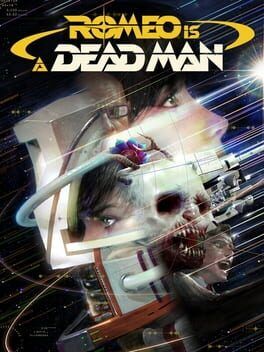
Grasshopper Manufacture is back with Romeo Is A Dead Man, a new multiverse‑hopping action IP from Suda51. Here’s what its combat, story tone, and structure suggest, and how it fits alongside No More Heroes, killer7, and Killer is Dead.
Romeo Is A Dead Man is Grasshopper Manufacture and Goichi “Suda51” Suda at their most unfiltered. It is the studio’s first new IP in over five years and, crucially, its first self‑published project in a 25 year history that includes cult favorites like killer7, No More Heroes, and Killer is Dead. Scheduled for February 11, 2026 on PlayStation 5, Xbox Series X|S, and PC, it looks like a concentrated hit of everything people associate with Suda: violent, stylish, structurally weird, and strangely heartfelt beneath all the splatter.
A Dead Agent In A Broken Multiverse
Romeo Is A Dead Man follows Romeo Stargazer, an agent with the FBI’s Space‑Time Division. A mission goes sideways, Romeo dies, and only survives by donning the DeadGear mask, a cursed device that keeps him walking somewhere between life and death. Reborn as “Dead Man,” he becomes a sort of extradimensional bounty hunter chasing fugitives across a multiverse that has slipped off its rails.
That hook immediately recalls Suda’s love of assassins and liminal protagonists. Travis Touchdown in No More Heroes was a loser otaku who became a top‑ranked killer by accident. Mondo Zappa in Killer is Dead was an executioner balancing mundane office work with surreal nighttime jobs. Romeo is cut from the same cloth, but the DeadGear twist leans harder into science fiction. He is not just a killer for hire, he is a walking paradox trying to keep time from collapsing while searching for his missing girlfriend, Juliet.
The tone of the premise leans into maximalist pulp. The FBI has a Space‑Time Division, criminals skip between realities, and the multiverse is less a sober Marvel‑style cosmology and more an excuse to throw wildly different settings, aesthetics, and rules into every mission. Grasshopper is pitching it as a “mind‑melting” sci‑fi story about shattered timelines, paradoxes, and cosmic criminals, but also a love story, with Romeo’s chase after Juliet running through the chaos.
Ultra‑Violent, Maximalist Combat
Mechanically, Romeo Is A Dead Man is a single‑player action game that fuses high speed melee with aggressive gunplay. The trailers and early descriptions emphasize close‑quarters sword work, mid‑range shooting, and frequent switching between tools in a single combo. It is pitched as a “maximalist” blend of hack and slash and shooter, with lots of swagger built into every animation.
Romeo cuts through enemies with a blade, then uses firearms to extend strings or pick off distant threats. The DeadGear mask appears to be more than a story prop. It is implied that it modifies his movement and abilities, letting him slip through time, reposition suddenly, or alter encounters in ways that go beyond simple dodge rolls. Grasshopper has not gone deep into system minutiae yet, but the language around “warping space‑time” suggests mechanics that let you cancel actions, rewind micro‑moments, or shunt between planes mid fight.
If you have played No More Heroes, you can expect the same attention to moment to moment feel. Suda’s combat is rarely about frame perfect execution the way something like Devil May Cry is. Instead it succeeds at fusing feedback, presentation, and simple inputs into something that feels wild, crunchy, and improvisational. Killer is Dead in particular feels like the clearest mechanical ancestor here: fast dashes, quick cuts, cinematic finishers, and stylish gunshots woven into swordplay. Romeo seems ready to push that template further with more ranged options and explicit sci‑fi tricks.
The violence is front and center. Blood sprays in thick arcs, enemies explode into particles, and finishers seem built to punctuate the end of an encounter with a flashy kill cam instead of subtle execution. That excess has always been part of Grasshopper’s identity. What is different here is how much the studio is leaning into the “ultra‑violent sci‑fi” branding as the core of the IP instead of an accent on a grounded world.
Structure: Multiverse Hitman With Suda’s Weirdness
While full structural details are still under wraps, the multiverse premise makes Romeo Is A Dead Man sound like a mission based action game built around discrete realities. Each fugitive exists in a different branch timeline, giving the designers license to treat levels as self contained riffs on genre and style. One mission might be neon drenched future noir, another a decaying space colony, another something closer to surreal dream logic.
This echoes the way killer7 framed each assassination as its own chapter, and the way No More Heroes used ranked battles as tentpoles between which you move through a looser hub. Romeo’s FBI Space‑Time job gives Grasshopper a similar excuse to bounce from one wild idea to the next without worrying about conventional continuity. It also lets them experiment structurally. Timelines can overlap, characters can recur in altered forms, and cause‑and‑effect can be played with in ways that traditional linear narratives cannot match.
Suda’s work often hides a surprisingly tight thematic through line under chaotic framing. killer7 used political assassination and supernatural terrorism as a metaphor for Japan’s postwar identity crisis. No More Heroes mocked gamer culture and the hollow pursuit of status while letting you revel in it. Romeo Is A Dead Man looks set to do something similar with time, death, and obsession. Romeo is literally kept alive by a mask that should have killed him, forced to exist in a permanent limbo, and is working all the while for a bureaucracy that controls the flow of history. Expect at least some commentary on institutions, surveillance, and what it means to chase a person who might not exist the way you remember across rewound timelines.
At the same time, Grasshopper jokes about “warping space‑time” just to ship before a “twice delayed” 2026 rival. That meta voice, talking directly to the audience about the realities of game development and release scheduling, is extremely Suda. If you enjoyed the constant fourth wall pokes in No More Heroes or the genre pastiche in Shadows of the Damned, Romeo’s world will likely feel familiar.
How It Fits In Suda51’s Career
The immediate comparison points are No More Heroes and Killer is Dead, but Romeo Is A Dead Man also owes a lot to killer7 and Shadows of the Damned in how it frames reality. Suda loves stories where the everyday and the impossible sit right next to each other without apology. Here, the FBI is real, but so is a Space‑Time Division. There are structured investigations, but also masks with supernatural power. That blend of bureaucracy and hallucination is straight out of killer7’s Homeland Security assassins and Killer is Dead’s gig economy executioners.
Where Romeo differs is scope. The multiverse angle puts it more in line with recent pop culture’s fascination with parallel worlds, but Grasshopper has always used structure as part of its commentary. In No More Heroes, climbing the assassin ranking board was literally the game’s menu. In killer7, selecting personalities and routes was analogous to swapping channels or threads of reality. Romeo’s hopping between branches of time feels like a natural evolution of that idea. Each mission can be a self contained short film, while the meta narrative about Romeo and Juliet flows underneath as a spine.
From a tone standpoint, expect a blend of juvenile and sincere. Suda’s best work pulls this off by letting jokes and ultraviolence exist alongside moments of genuine vulnerability. Travis Touchdown’s horniness did not stop his loneliness from landing. Mondo Zappa’s dated cheesecake did not erase the melancholy in his late game revelations. With Romeo, the premise of a dead man chasing his lost love across broken timelines gives Grasshopper fertile ground for sentiment inside the gore. If the script commits, this could be one of Suda’s more quietly affecting stories, even as it drowns in stylized carnage.
What To Expect In 2026
If you are already a Grasshopper fan, Romeo Is A Dead Man reads like a victory lap for the studio’s favorite obsessions. It is ultra violent, self aware, structurally playful, and unconcerned with conventional respectability. The decision to self publish suggests that Suda and his team have more control than ever over tone and content, which usually means sharper satire and stranger ideas instead of compromise.
If you are new to Suda’s work, this will probably be dense, loud, and sometimes baffling, but also approachable in how immediate the combat looks. You are not expected to have a long history with his back catalog. The hooks are clear: be a dead agent, use a cursed mask, cut and shoot your way through extradimensional criminals, and try to fix a love story across timelines.
With its 2026 release targeting PlayStation 5, Xbox Series X|S, and PC, there is time for more detailed breakdowns of combat systems, progression, and how much the multiverse structure will let you revisit and reconfigure past missions. For now, Romeo Is A Dead Man presents itself as exactly what fans hoped for from a new Grasshopper IP: a blood soaked, genre bending action game that wears its director’s signature on every frame.