
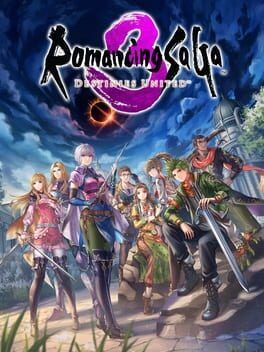
Square Enix’s latest Romancing SaGa 3: Destinies United update confirms returning companions, an expanded Zweig Tournament, business bidding, and new combat-system labels for JRPG fans to watch.
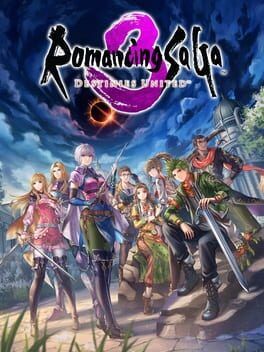
Image: IGDB
Store links: Romancing SaGa 3: Destinies United on Steam
Square Enix’s latest reveal makes the remake look systems-first
Square Enix has shared another round of Romancing SaGa 3: Destinies United details, and the strongest signal is not a single character reveal. It is the shape of the remake around them. According to materials circulated by Square Enix and reported by Nintendo Everything, Gematsu, RPG Site, Console Creatures, and Noisy Pixel, the update covers five returning traveling companions, the Romancing SaGa 3 business minigame, an expanded Zweig Tournament, and battle elements including synthesized arts and weapon-specific techniques.
That mix is important for a SaGa remake because the series has always lived or died on how much freedom it gives players before they understand the full consequences of that freedom. This update suggests Destinies United is being positioned around optional recruitment, economic side progression, combat experimentation, and repeatable or expanded challenges rather than a strictly linear nostalgia tour.
The confirmed release timing also gives this reveal practical weight. Noisy Pixel reports that Romancing SaGa 3: Destinies United is scheduled for February 4, 2027 on Nintendo Switch 2, Nintendo Switch, PlayStation 5, Xbox Series, and PC via Steam. RPG Site lists the same date and specifies PlayStation 5, Xbox Series X|S, Nintendo Switch 2, Nintendo Switch 1, and PC through Steam. The current unanswered questions are not whether Square Enix is expanding familiar material, but how deeply those systems have been rebalanced and how much of the old game’s opacity remains intact.
The new companion batch leans into SaGa’s party-building identity
The latest companion reveal is built around five familiar names: Fullbright, Ward, Undine, Herman, and Boston. Siliconera describes the update as another look at returning Romancing SaGa 3 remake Traveling Companion characters, while Noisy Pixel specifically frames the batch as confirming the return of several recruitable characters, including Boston, the scholarly lobster man from the original game.
Square Enix’s descriptions, as reproduced by Gematsu and RPG Site, place these characters in very different corners of the setting. Fullbright is the young heir to a prestigious merchant family in Wilmington and a direct descendant of Fullbright XII, one of the Matriarch’s twelve sacred knights. Ward is a hunter from Justerm, described as sharply dressed and as a descendant of Ferdinand, another of the Matriarch’s sacred knights. Undine is an accomplished Genbu mage overseeing the northern half of Mahzoz, researching magic alongside her disciples. Herman is an elderly man with a prosthetic leg who watches the sea from the Great Arch and appears to know a great deal about piracy. Boston lives on an island at the edge of the world, is described as curious and learned, and admires ancestors who fought alongside the Matriarch against Forneus.
For players evaluating Romancing SaGa 3 companions as build pieces, this reveal confirms more than cameo status. Fullbright is directly tied to the business minigame, since Gematsu reports that speaking with him unlocks it. Undine’s profile identifies her as a Genbu mage, which at least confirms her narrative association with magic scholarship. Ward and Herman point toward regional and quest flavor around hunting, Justerm, the Great Arch, and piracy, while Boston remains the kind of recruit that gives SaGa its strange texture: a party member whose appeal is partly mechanical curiosity and partly worldbuilding oddity.
Square Enix also confirmed voice actors for the group. The English and Japanese casts listed across Gematsu, RPG Site, Console Creatures, and Noisy Pixel are Hunter Peterson and Daiki Hamano for Fullbright, Bill Butts and Kenji Hamada for Ward, Eurie Nam and Sayaka Kinoshita for Undine, Cory Yee and Daichi Endo for Herman, and Joshua David King and Masashi Yamane for Boston. The presence of named voice roles does not by itself confirm expanded questlines, but it does reinforce that Destinies United is treating these recruits as voiced characters in the remake’s presentation.
The business minigame is now a clearer progression lane
The Romancing SaGa 3 business minigame may be the most concrete systems reveal in this update. According to Gematsu’s reproduction of Square Enix’s briefing, players unlock the mode by speaking with Fullbright, then engage in bidding wars between companies to buy properties and strengthen their own corporation. Agents located throughout the world provide information about local properties, which should make exploration and commercial expansion feed into each other rather than sit in separate menus.
Square Enix’s description gives the minigame several moving parts. Owned properties and overall ranking are viewed from the Business menu. The Property Acquisition option displays available properties and starts bidding. Players can request funds from owned properties, and those properties fall into five industries. The amount of funding supplied by each property or group is affected by an economic forecast that can fluctuate, so the timing of requests matters. Buying properties increases total assets.
Console Creatures adds that Negotiations and Group Actions can be used to create advantages for the player or disadvantages for bidding rivals. Gematsu similarly reports that Negotiations and Group Actions shape conditions during bidding. The more properties the player owns, the more skills and rewards unlock, according to both outlets’ summaries of Square Enix’s materials.
For JRPG players deciding whether to track the revival, this is a useful sign. The business minigame is not being described as a passive money sink. It has information gathering, bidding competition, fluctuating economic conditions, property categories, rankings, unlockable skills, and rewards. The open question is pacing. Square Enix has not, in the provided materials, clarified how much time players are expected to spend on corporate growth, whether the best rewards become essential for combat, or whether the remake has adjusted the minigame to reduce old friction. For completion-focused players, though, this already looks like a side system with enough structure to support routing decisions.
The Zweig Tournament is no longer framed as a single stop
The other major optional-structure reveal is the Zweig Tournament. Console Creatures reports that players who travel to the northern bastion of Zweig will learn about a tournament described in Square Enix’s materials as a grand showcase of power and wits. The key remake change is scope: Console Creatures states that what was a one-time event in the original has been expanded in Destinies United into a tournament with multiple rounds and categories.
That matters because SaGa combat rewards party familiarity. A tournament format gives the remake an obvious place to test how well a player understands formations, weapon coverage, magic access, and sustain under pressure. Console Creatures reports that players chasing the top spot in each tournament will face different foes and unique conditions, with major rewards such as aurums and items available. Those details make the Zweig Tournament sound less like a single story gate and more like an optional combat ladder.
The confirmed information stops short of several points players will want answered before launch. Square Enix has not, in the provided source text, detailed every tournament category, the full reward table, how early the first events can be cleared, or whether late-game tournaments are tuned around highly developed parties. It is also not yet clear how the expanded Zweig Tournament interacts with character recruitment or progression.
Still, the direction is promising for players who enjoy JRPG side challenges that ask for actual party planning. If Destinies United keeps SaGa’s flexible recruitment while adding repeatable or broader tournament goals, Zweig could become a practical benchmark for builds rather than a novelty stop on the world map.
Synthesized arts and weapon-specific techniques are confirmed, but still underexplained
Square Enix’s update also names combat elements that should matter to anyone following Romancing SaGa 3 Destinies United for battle depth. Nintendo Everything lists Synthesized Arts and Weapon-Specific Techniques among the newly detailed topics. RPG Site says the new screenshots and information cover synthesized arts, weapon-specific abilities, and more. Console Creatures describes them as battle mechanics, and Noisy Pixel summarizes the update as including adjustments to how characters perform certain spells and weapon techniques.
The cautious reading is the correct one here. The provided source material confirms that synthesized arts and weapon-specific techniques are part of the remake’s battle discussion, but it does not provide enough detail to explain exact requirements, damage formulas, learning conditions, party-role implications, or whether these systems substantially differ from the original. For a systems-heavy RPG, those missing specifics are meaningful.
What can be said is that Square Enix is foregrounding combat expression alongside side content. The same update that introduces business bidding and an expanded arena also points players toward technique identity and combined or specialized arts. That combination suggests Destinies United is trying to communicate its remake changes through systems rather than only through presentation, voice acting, or new screenshots.
For build-minded players, the unanswered questions should shape expectations. Track synthesized arts if you care about combo routes, weapon investment, or party composition, but wait for full mechanical breakdowns before assuming the remake has solved every old ambiguity. SaGa games often make discovery part of progression. Whether Destinies United preserves that mystery or adds clearer tutorials will have a major effect on how approachable its combat becomes for newcomers.
Who should keep this remake on their radar
Based on the current Square Enix information, Romancing SaGa 3: Destinies United is most worth tracking for JRPG players who like optional systems with mechanical consequences. The returning companion slate covers commerce, hunting, magic research, piracy, and one of the series’ most memorable nonhuman recruits. The business minigame has specific rules around property acquisition, rankings, funds, industries, forecasts, Negotiations, Group Actions, skills, and rewards. The Zweig Tournament is being expanded from its original one-time form into multiple rounds and categories with enemies, conditions, aurums, and items.
Players looking for a straightforward story-first remake should be more cautious. The sources confirm systems, platforms, and release timing, but they do not yet answer questions about pricing, platform performance, upgrade paths between Switch and Switch 2 versions, or how much the remake teaches its more unusual mechanics. RPG Site notes that Destinies United is planned for February 4 on PlayStation 5, Xbox Series X|S, Nintendo Switch 2, Nintendo Switch 1, and PC via Steam, while Noisy Pixel also reports the February 4, 2027 launch window and PC Steam availability. Neither supplied excerpt includes price or technical specifications.
The best practical guidance is to follow the next combat and progression updates closely. If Square Enix explains synthesized arts, weapon-specific techniques, and tournament rewards in detail before launch, players will have a much clearer sense of how demanding the remake wants to be. If those explanations remain broad, expect a revival that still asks players to experiment, recruit widely, and accept that some of its best systems may only reveal their value after several hours of wandering.
For SaGa fans, that may be the appeal. For everyone else, the latest update at least clarifies the pitch: Romancing SaGa 3 Destinies United is reviving the odd recruitments and optional structures that made the original distinct, while adding enough visible system framing to make its world easier to parse from the outside.