
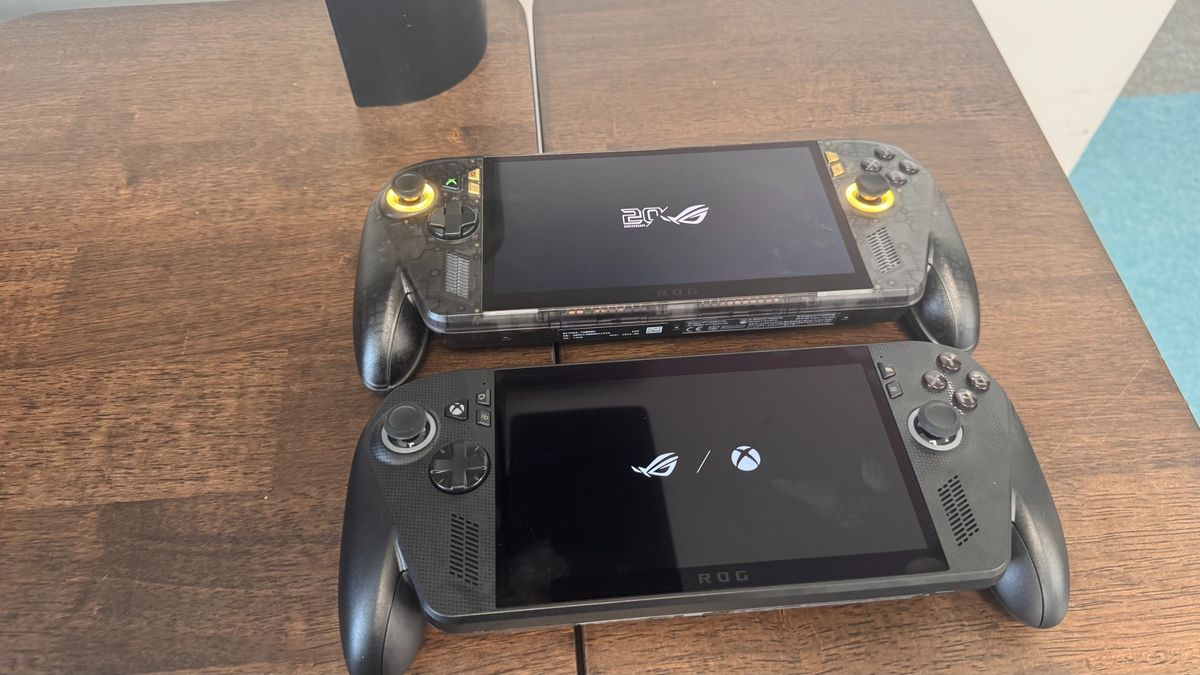

The ROG Xbox Ally X20 is officially available, and early reviews agree on the same tension: a brighter OLED, better thermals, and improved controls are real upgrades, but the $1,299 price makes it a hard sell over the Ally X.
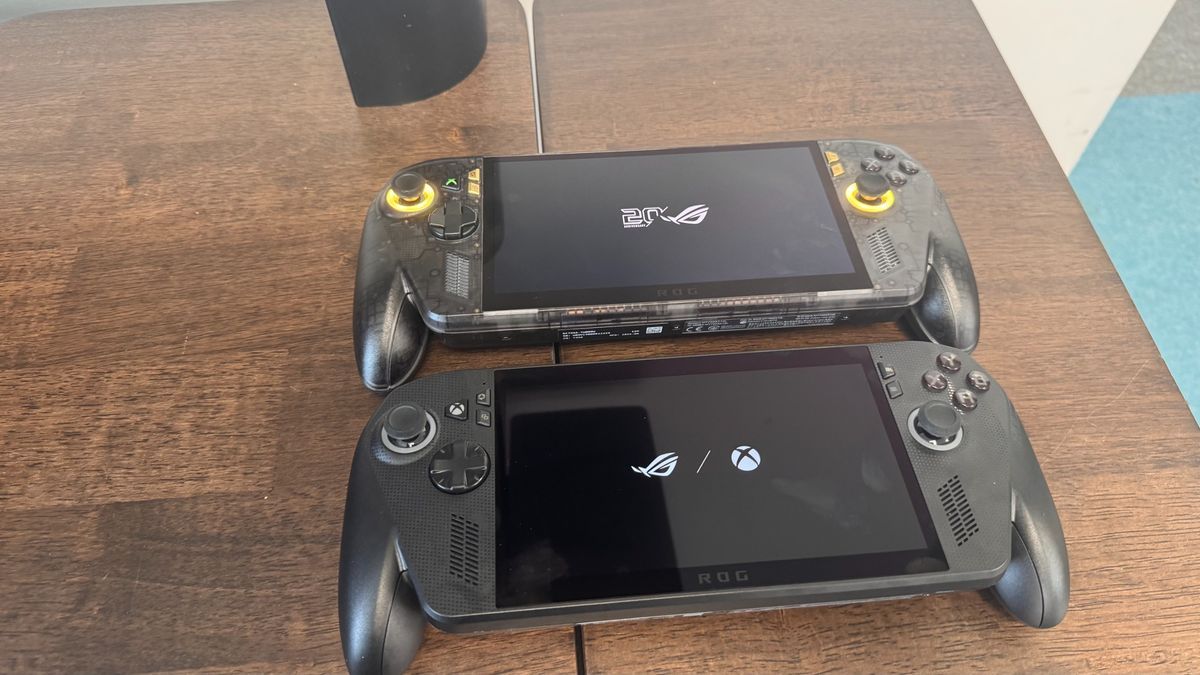
Image: pcgamer.com
The X20 is real, available, and immediately expensive
ASUS has moved the ROG Xbox Ally X20 from showcase hardware to a purchasable product. HappyGamer reports that ASUS announced availability on Xbox Wire on October 15, 2026, putting Microsoft’s own news site behind the launch rather than leaving the news to leaks, retail placeholders, or a quiet ASUS listing.
That official availability lands alongside a fairly consistent review picture: the ROG Xbox Ally X20 is a premium refresh of the existing ROG Xbox Ally X, led by a 7.4-inch OLED display, revised controls, cooler reported thermals, and a 20th anniversary black-and-gold design. It is also expensive. PCMag lists the MSRP at $1,299.99, with Best Buy and Best Buy Canada purchase links at that same price. CNET also reports a $1,300 standalone model, plus a much pricier bundle with custom Xreal R1 glasses and cases at $2,500.
The tension is unusually clean for handheld PC buyers. Reviews are not arguing that the X20 is a weak device. PC Gamer’s verdict calls the additions welcome, while PCMag praises the OLED screen and design, and CNET calls the display an excellent HDR OLED panel. The harder question is whether the improvements change the buying calculus enough when multiple outlets also say performance is roughly in line with the previous Xbox Ally X rather than a new tier of handheld speed.
What ASUS changed from the Xbox Ally X
The ROG Xbox Ally X20 keeps the basic identity of the ASUS handheld gaming PC line, but the refresh is targeted at the parts owners touch and stare at every session. Console Creatures says ASUS unveiled the X20 at Computex 2026 as an upgraded version of the previous handheld, adding a 7.4-inch Nebula HDR OLED display and upgraded TMR thumbsticks intended to reduce stick drift.
The review details shared by Console Creatures put the X20 on Windows 11 Home with an AMD Ryzen AI Z2 Extreme processor, 24GB of LPDDR5X-8000 memory, a 1TB M.2 2280 SSD, and an 80Wh battery. The outlet’s spec table also lists Wi-Fi 6E, Bluetooth 5.4, USB4 with DisplayPort 2.1 and Power Delivery 3.0, another USB-C port with DisplayPort 2.1 and Power Delivery, a microSD Express card reader, and a 3.5mm audio jack.
The controls are also part of the refresh strategy. Console Creatures lists Xbox-inspired ergonomics, impulse triggers, a transforming D-pad, full-size TMR joysticks, HD haptics, a six-axis IMU, and two assignable rear buttons. Gizmodo similarly highlights modified controls, grippy backing, anti-drift TMR joysticks, and comfort as major strengths. Tom’s Guide calls out improved ergonomics, rubberized grips, and a rotatable D-pad.
The one area that is not being sold as a generational leap is raw speed. PC Gamer’s review verdict says there is “no performance uplift on the Xbox Ally X.” PCMag’s bottom line says performance is about the same as last year’s Xbox Ally X. CNET says performance does not match newer chips, while Gizmodo argues Intel G3 Extreme handhelds can deliver better performance, although its cited MSI Claw 8 EX AI+ comparison costs $500 more than the X20.
The OLED screen is the upgrade reviewers keep circling back to
If the ROG Xbox Ally X20 review consensus has a center, it is the screen. The move from the prior IPS panel to OLED is the clearest quality-of-life upgrade because handheld PCs live or die by visible contrast, brightness control, and how games read at arm’s length.
Console Creatures describes a 7.4-inch Nebula HDR OLED panel with 120Hz refresh, FreeSync Premium Pro, up to 1400-nit peak HDR, Dolby Vision, Gorilla Glass Victus, and an anti-reflection coating. CNET says the OLED adds HDR, wide color gamut, and high contrast, and the outlet argues that the extra $300 can be worth it if the display is the feature a buyer cares about most. PCMag’s pros list leads with the 7.4-inch OLED screen, while PC Gamer lists OLED as a main point in favor.
There is one technical wording conflict worth preserving rather than cleaning up. Console Creatures’ prose says the panel includes VESA DisplayHDR True Black 1000, while its spec table lists VESA DisplayHDR True Black 1400. CNET calls it “bright DisplayHDR 1400.” The shared fact across the sources is that this is a 7.4-inch 1080p-class OLED handheld display with 120Hz refresh and HDR ambitions. The exact certification language is less consistent in the available source text.
For players, the likely impact is easier to understand than the badge. OLED’s high contrast helps dark scenes hold detail without the washed-out look common to LCD handhelds. HDR highlights can make bright effects, skies, and UI elements feel more vivid when games support them properly. CNET’s reviewer says colors pop and highlights glow, while also noting that display testing had not yet been completed at the time of the article. Gizmodo is more cautious about direct light, saying the screen is not great for direct sunlight, which is a practical warning for anyone treating this as a travel-first device.
Cooler thermals help the argument, but they do not rewrite performance
Thermals are the second part of the X20 pitch that matters in daily use. PC Gamer lists “great thermals” among the device’s positives, and its comparison headline frames the X20 against the Xbox Ally X around a bright OLED screen and “frosty temps.” That is meaningful praise, even without detailed temperature figures in the provided excerpts.
For a handheld PC, cooling is strategic rather than cosmetic. A powerful chip inside a small chassis has to trade among fan noise, heat against the hands, battery drain, and sustained performance. Better thermals can make a handheld feel steadier across a long session even when benchmark charts do not show a new performance class. They can also make 120Hz and variable refresh more useful, because the device has a better chance of holding playable frame delivery without feeling like it is fighting itself.
That said, cooler operation is not the same as a major frame-rate upgrade. The available reviews repeatedly separate the X20’s comfort and presentation gains from its performance ceiling. PCMag says performance is nearly identical to the prior model. PC Gamer says there is no performance uplift over the Xbox Ally X. CNET says it performs well for its components on lightweight games, but does not match newer chips. Tom’s Guide goes further on value, saying AAA struggles are hard to accept at $1,299.
That leaves the X20 in a very specific position in the handheld meta. It looks like a stronger version of an existing build rather than a new top-speed contender. If your problem with the Ally X was the LCD screen, stick drift anxiety, hand comfort, or heat, the X20 speaks directly to those pain points. If your problem was wanting higher settings in demanding PC games, the review record provided here does not support treating the X20 as the answer.
Availability gives the X20 weight, but price controls the match-up
The availability story matters because it turns the X20 from an interesting anniversary device into a real purchasing decision. HappyGamer reports that the announcement appeared on Xbox Wire, Microsoft’s own news site, and frames that as an official ASUS announcement rather than a rumor. PCMag’s review page lists the device at Best Buy and Best Buy Canada for $1,299.99. That gives the ROG Xbox Ally X20 availability story a concrete retail footprint, at least in the regions reflected by those listings.
The issue is that availability does not automatically create value. CNET reports that there is only one configuration of the X20, matching the top-end Xbox Ally X with 24GB of RAM and 1TB of storage. CNET also says the older Xbox Ally X has remained at $1,000 since its October 2025 launch, at least at the time of that review. PC Gamer and Tom’s Guide both frame the X20 as carrying a $300 increase over the previous model.
That $300 delta is the whole argument. Buyers are effectively deciding whether OLED, revised controls, design, and thermals are worth paying the price of a major accessory, a large microSD card collection, or several games. CNET says the premium can be worth it for the screen if you can afford it. PCMag gives the device a 3.5 out of 5 and calls it a hard sell at $1,299 because performance is about the same as last year’s model. Tom’s Guide calls it better hardware than its predecessor but says the price turns it into a luxury gamble.
The bundle makes that value split even sharper. CNET reports a $2,500 bundle with custom Xreal R1 glasses and cases, while Gizmodo says the X20 bundle includes a giant Pelican case and notes that this may be unnecessary for most buyers. For most readers, the standalone model is the relevant comparison. The bundle looks like collector or niche travel hardware unless you already wanted display glasses and rugged carry gear.
Who should upgrade, and who should wait
For existing Xbox Ally X owners, the most defensible reason to move to the ROG Xbox Ally X20 is display quality. The OLED screen is the feature most consistently praised across PC Gamer, PCMag, CNET, Gizmodo, Tom’s Guide, and Console Creatures. The comfort and control updates also matter if you use the device daily, especially with TMR sticks designed to reduce drift concerns. Console Creatures’ reviewer says the X20 is nearly perfect after several weeks of use and calls it the most impressive handheld device they have used, while still wishing it were not so expensive.
But if you already own the Ally X and are satisfied with its LCD panel, the X20 looks like a difficult upgrade to justify. The sources do not show a major performance jump. PC Gamer says there is no performance uplift against the Xbox Ally X, and PCMag says performance is about the same as last year’s model. In strategy terms, the X20 improves the board state around comfort, presentation, and thermals, but it does not change the win condition for demanding AAA PC games.
For first-time buyers, the decision is closer. The X20 is available, carries Xbox branding, and ships with the premium screen many players wanted from the previous model. Its Windows 11 foundation and Xbox Mode, which Console Creatures describes as a controller-ready full-screen experience that brings the game library together, also give it a clearer console-style pitch than many Windows handhelds. The tradeoff is that Windows handheld interfaces remain imperfect. CNET says the interface is still inconsistent and frustrating.
The practical guidance is simple. Buy the ROG Xbox Ally X20 if the Xbox handheld OLED screen, improved grips, anti-drift sticks, and reported thermals are the upgrades you will notice every session, and if $1,299 does not force compromises elsewhere. Consider the existing Xbox Ally X if price-to-performance matters more than display quality. Wait or compare against newer chip handhelds if your priority is higher AAA performance rather than a more polished version of ASUS and Xbox’s current handheld design.