
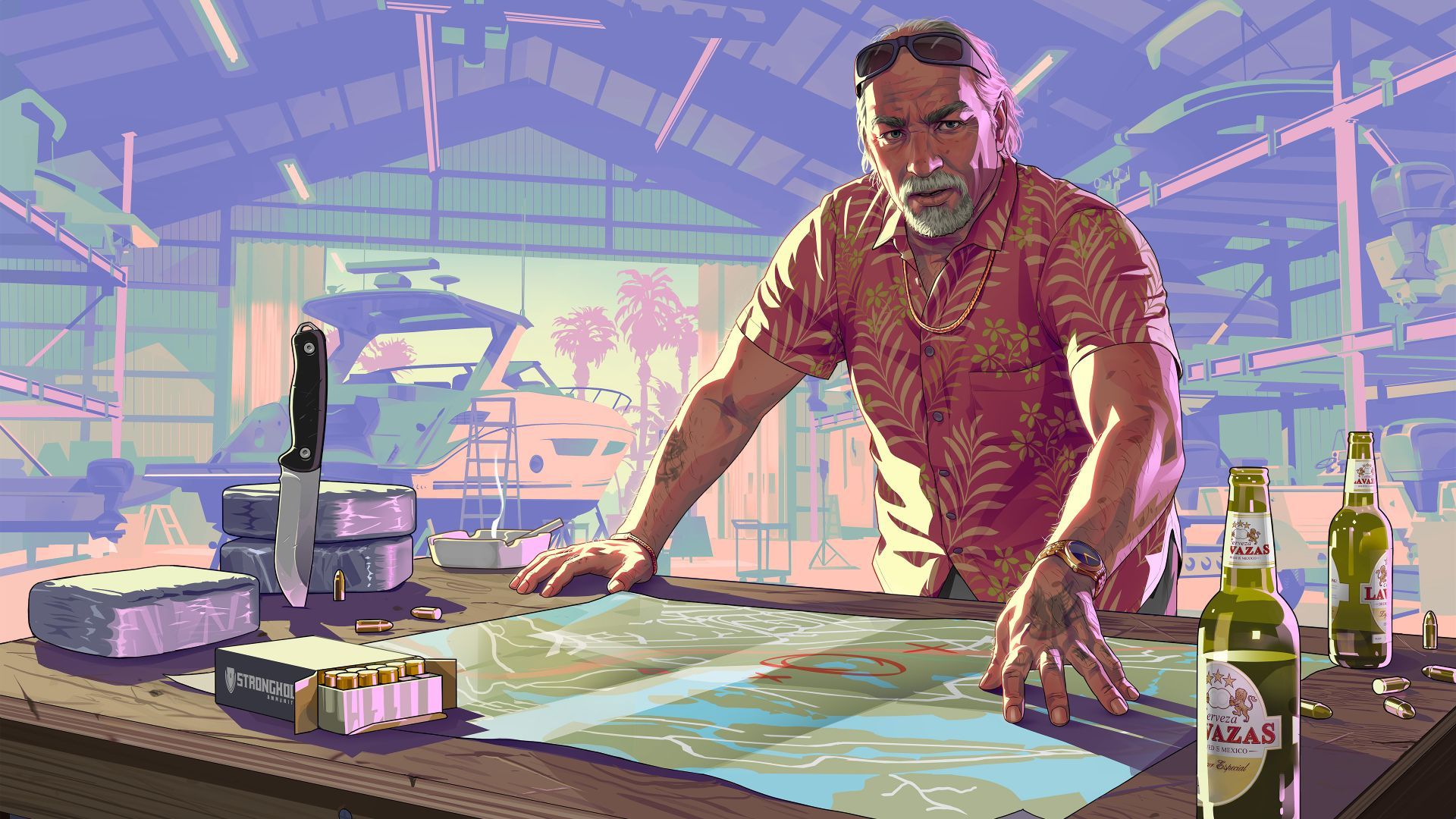
Rockstar's updated creator guidelines set stricter limits on story mods, crossovers, multiplayer servers, monetization, and likeness use before GTA 6 reaches players.
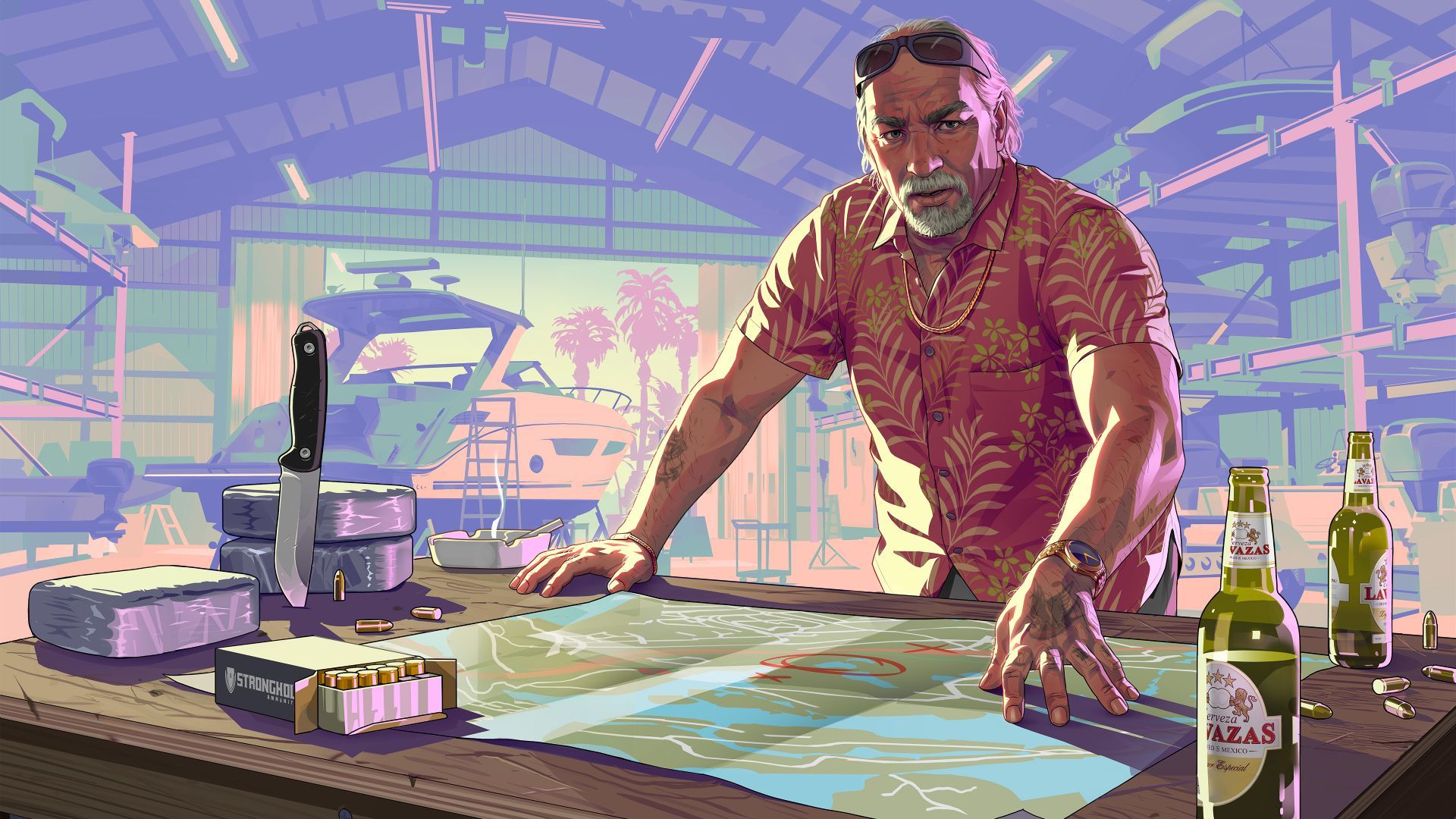
Image: pcguide.com
Rockstar sets the rules before GTA 6 modders get the tools
Rockstar Games has published updated modding guidelines that apply across its catalog, including Grand Theft Auto, Red Dead Redemption, and the still-unreleased Grand Theft Auto 6, according to reporting from Game Developer, IGN, GameRant, DualShockers, TweakTown, and Sunday Guardian Live. The strongest signal is not the timing alone, but the scope: Rockstar is drawing formal boundaries around story changes, cross-game content, multiplayer modding, platform ports, monetization, voice use, likeness rights, and third-party intellectual property before GTA 6 arrives on PC.
Game Developer reports that Rockstar shared the rulebook on September 10, 2026. Sunday Guardian Live and IGN both frame the policy against GTA 6’s planned November 19, 2026 release on PlayStation 5 and Xbox Series X|S, while IGN notes that Rockstar has not announced a PC launch date for GTA 6. That gap matters because the modern GTA modding scene has historically been a PC-centered ecosystem. The new Rockstar mod policy arrives before players can test GTA 6’s modding limits in practice, which gives Rockstar a cleaner starting position than it had with GTA 5.
The tension is obvious for creators. Rockstar’s games have benefited from a huge unofficial modding culture, especially around GTA 5 roleplay, but the new Rockstar creator rules move the conversation away from informal tolerance and toward platform-style compliance. GameRant reports that Rockstar does not endorse third-party mods, but will allow some user-created content if it follows the rules. That is the opening modders have, and the risk they now have to manage.
The new policy targets continuity, crossovers, ports, and protected assets
The clearest restriction is aimed at official fiction. Game Developer reports that Rockstar’s guidelines prohibit creators from expanding or modifying official storylines, plots, missions, characters, or other elements of the studio’s “established continuity.” GameRant reports the same limit under Rockstar’s “Respect Our Games” section, which says Rockstar creates its own worlds, characters, and stories and has the right to set limits on how others use its games and brand.
For single player creators, that is a major boundary. A graphics preset, handling tweak, interface change, or other mechanical adjustment may not raise the same continuity issue, but a fan campaign that rewrites a protagonist, adds a continuation to an official ending, remixes a main mission, or inserts new canonical beats into Rockstar’s story world now sits much closer to the red zone. The policy does not need to name every possible mod category to change the calculus. It tells creators that “offline” is not the same thing as “safe” if the work modifies Rockstar’s protected narrative framework.
Rockstar also bars modders from combining maps, locations, characters, storylines, in-game assets, or other intellectual property from one Rockstar title with another, according to Game Developer and Sunday Guardian Live. That closes off a classic fan ambition: moving pieces of one Rockstar world into another for preservation, nostalgia, or scale. Under the new Rockstar modding rules, a project that brings a major map, character, or asset set from one GTA or Red Dead game into another would conflict with the stated policy.
The guidelines also address platforms. IGN reports that modders cannot make Rockstar games available on platforms where they were never released. Game Developer similarly reports that the policy prohibits modifying games to operate on unofficial platforms. That matters for preservation-minded technical projects as well as novelty ports, because Rockstar is framing platform availability as part of its control over the game, not an open field for fan experimentation.
GTA roleplay servers face the sharpest business limits
The biggest practical shift is in multiplayer. Game Developer reports that multiplayer modding is restricted to Rockstar’s licensed Creator Platform unless Rockstar states otherwise. TweakTown similarly describes the new policy as limiting multiplayer mods to approved setups tied to Rockstar’s Creator Platform, while DualShockers reports that multiplayer modding is now limited to Rockstar’s licensed Creator Platform or officially approved setups.
That does not mean roleplay disappears. IGN notes that Rockstar acquired the developer of the FiveM modding platform and partnered with the major GTA roleplay server NoPixel on a new iteration. Those moves show Rockstar is not walking away from GTA roleplay servers as a concept. It is moving them into a supervised structure.
The monetization rules make that supervision much more consequential. Game Developer quotes Rockstar as saying creators may only monetize mods through digital storefront providers approved by Rockstar Games and in compliance with applicable laws, rules, and policies. The same report says Rockstar does not permit mods to enable real-money gambling, loot boxes, gacha, or similar chance mechanics for real money, and does not permit selling in-game virtual currency for real money. It also bars cryptocurrency or crypto assets, including NFTs, tokens, memecoins, and stablecoins.
IGN connects those rules directly to influencer-driven dreams of monetized GTA 6 RP servers, citing public claims from Adin Ross about building a GTA 6 server where players could make real money. IGN’s reading is that such servers would not be possible unless Rockstar signs off. That is an interpretation based on the policy, but it follows from the confirmed text as reported: Rockstar is blocking unauthorized real-money economies, crypto systems, gambling structures, and third-party sponsored content around mods.
From a strategy perspective, this is Rockstar preventing a parallel economy from forming around GTA 6 before the first PC mod wave even begins. GTA 5 roleplay turned community servers into social platforms with their own status ladders, creator scenes, and business incentives. The updated Rockstar creator rules do not kill that meta, but they put its economy under licensing pressure.
Single player mods are not banned, but the risk model has changed
GameRant reports that Rockstar defines mods broadly, including changes to game scripts or code as well as tweaked maps, vehicles, weapons, apparel, and NPC behaviors. That breadth is important because it prevents creators from assuming that only large projects count. The policy is about content, rights, functionality, and distribution, not only about whether a mod is technically complex.
The rules described by the outlets leave room for compliant user-created content, but they narrow the safest lane. Mods that avoid official story expansion, avoid reused Rockstar voice performances, avoid real-person likenesses without permission, avoid third-party brands and characters, avoid cross-Rockstar asset transfers, avoid unauthorized platforms, and avoid unapproved monetization appear less exposed under the reported policy. That is an analytical reading, not a guarantee of enforcement.
The highest-risk single player categories are easier to identify. Story continuations, “restored” mission arcs, character rewrites, voice-spliced performances, celebrity likeness swaps, brand-heavy realism packs, and crossover maps all touch areas the policy explicitly discusses. Even a mod that never connects to a multiplayer service can create trouble if it leans on protected continuity, voiceover, or third-party rights.
Creators are worried because the new rules reduce ambiguity in ways that cut against some of the most popular forms of fan expression. A large share of mod culture is built on “what if” scenarios: what if this protagonist survived, what if this map existed in that engine, what if a famous film character entered Los Santos, what if a real city brand made the world feel more authentic. Rockstar’s policy identifies many of those impulses as legally or creatively sensitive.
For players, the practical advice is simple: treat GTA 6 mods, when they eventually exist, as higher-risk downloads if they promise unofficial story continuations, imported Rockstar assets, monetized RP economies, crypto rewards, real-money server currency, or celebrity voice and likeness content. The policy gives Rockstar more visible grounds to act against those projects.
Rockstar is protecting the GTA 6 launch window and its platform strategy
The timing makes the policy feel bigger than a routine community update. According to Sunday Guardian Live, GTA 6 is scheduled for PlayStation 5 and Xbox Series X|S on November 19, 2026. IGN reports that the game is not releasing on PC on that date, while also noting Take-Two has teased that GTA 6 will eventually come to PC. No PC date is confirmed in the provided reporting.
That staggered platform reality gives Rockstar a reason to set expectations early. If GTA 6 follows the usual pattern of console-first excitement followed by a later PC modding surge, the studio has a long runway to define acceptable behavior before tools, scripts, and server frameworks become widespread. The rules also protect the console launch from a marketing problem where unofficial PC plans, server economies, or fan campaigns start shaping public expectations before Rockstar’s own online strategy is clear.
There is also a business logic around roleplay. GTA 5’s roleplay scene helped keep the game culturally active far beyond the normal shelf life of an open-world blockbuster. Rockstar’s reported acquisition of the FiveM team and partnership with NoPixel, both cited by IGN, suggest the company sees value in that behavior. The stricter rules point to a controlled version of that value, where creativity is welcome only if it does not compete with Rockstar’s own platforms, economies, rights management, or brand safety.
That is the meta shift. In GTA 5, unofficial communities proved demand first, then Rockstar adapted. With GTA 6, Rockstar is trying to set the board before the match starts. The studio can still benefit from creators, streamers, and RP communities, but the new rules make clear that those communities will operate closer to Rockstar’s perimeter.
The unanswered questions are all about enforcement
The policy is clearer than the old fog of informal tolerance, but it still leaves major questions. The sources do not report an enforcement schedule, an appeals process, a whitelist of safe single player mod types, or detailed criteria for what counts as modifying established continuity. Rockstar’s wording, as reported, gives the company wide discretion.
That discretion will decide how creators react. If enforcement focuses on commercial abuse, stolen IP, crypto schemes, gambling mechanics, and large unauthorized multiplayer networks, many hobbyist single player projects may continue with caution. If enforcement also targets narrative fan work, restoration projects, or asset experiments that were once treated as normal community output, the GTA 6 mods scene could become much narrower than GTA 5’s.
There is also a conflict between player expectation and confirmed availability. Fans are already discussing GTA 6 mods, but IGN reports there is no PC launch on November 19 and no confirmed PC date. That means near-term players on PS5 and Xbox Series X|S should not expect a traditional PC-style mod scene at launch. Roleplay servers and large-scale mod frameworks will depend on future platform availability, Rockstar’s approved tools, and whatever Creator Platform path the company offers.
For creators, the safest strategic move is to design around the policy now rather than retrofit later. Avoid official story extensions. Avoid importing Rockstar assets between games. Avoid third-party IP. Avoid real-world likenesses and voices without written permission. Avoid monetization unless it runs through Rockstar-approved channels. For server owners, assume that unlicensed GTA roleplay servers with real-money economies are the area Rockstar is watching most closely.
The new Rockstar mod policy does not end community creation by itself. It changes the bargaining position. Before GTA 6’s PC future is even dated, Rockstar has told creators that the next era of GTA modding will be less about what the community can technically build and more about what Rockstar is willing to authorize.